![[object Object]](https://umsousercontent.com/lib_lphGCikIbVHjRWIV/w8mzrofmgaa9b3om.png?w=52)
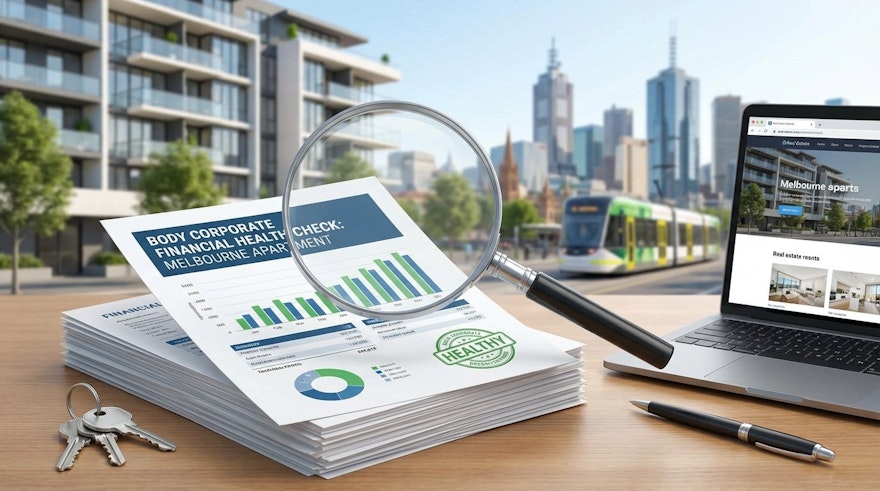
Saturday morning in South Yarra. You’ve done the shoes off shuffle at the front door, admired the view, and nodded along while the agent talks up ‘lifestyle living’. Then you spot it in the vendor statement pack: the owners corporation paperwork (what most people still call the body corporate documents).
If you’re buying an apartment in Melbourne, this is the moment to switch gears. The paint colour and the balcony size matter, sure. The building’s finances matter more. A stressed owners corporation can mean higher ongoing fees, sudden special levies, delayed repairs, and a building that slowly looks and feels tired.
This guide is a practical way to check the financial health of an owners corporation before you commit, so you’re not guessing your way into a levy surprise.
Quick read: what ‘healthy’ often looks like
A well run owners corporation usually shows a few steady patterns:
Day to day costs are covered without drama, and the admin fund isn’t constantly scraping the bottom.
There’s money set aside for bigger works, not just hope and good intentions.
Arrears (unpaid levies) are kept under control and chased early.
Minutes show decisions being made, not avoided.
The building’s condition matches the numbers. If the books say ‘all good’ but the foyer lights have been out for months, something’s off.
There’s no single magic percentage that suits every building. A 12 unit walk up in Fitzroy has different needs to a Southbank tower with lifts, basement ventilation, a gym, and a pool. What you’re looking for is whether the owners corporation is planning ahead and collecting enough to pay for what the building actually needs.
The documents you should be asking for
Before you sign, you’ll usually see an owners corporation certificate as part of the vendor statement pack. You may also be able to get copies of supporting records.
Aim to review:
The owners corporation certificate and current fee notices
The most recent budget
Financial statements (income and expenses)
Balances for the admin fund and the maintenance fund
Details of any current or proposed special levies
Minutes from recent meetings (annual general meeting and committee meetings)
Insurance certificate of currency and a summary of claims, if available
Any reports tied to major works (lifts, waterproofing, cladding, fire services, concrete repairs)
If something is missing, that absence is information in itself. A vague pack with thin detail can be a sign of poor record keeping or unresolved issues.
Admin fund vs maintenance fund
Most Victorian owners corporations collect money into two main buckets.
The admin fund pays for the regular running costs. Think common area electricity, cleaning, gardening, bins, management fees, insurance premiums, fire services checks, and smaller repairs.
The maintenance fund (sometimes called the sinking fund) is for the bigger, less frequent jobs. Lift upgrades, repainting common areas, roof work, driveway or basement repairs, replacement of major plant, and long term fixes that keep the building safe and functional.
When buyers get caught out, it’s often because the admin fund looks fine on paper, but the maintenance fund is thin and the building is at the age where big items are due.
How to read the numbers without being an accountant
You don’t need to be great with spreadsheets. You do need to ask a few simple questions as you read.
1) Does the budget match the building you’re buying into?
Scan the budget line by line and picture the property.
A building with lifts should show lift servicing costs.
A building with secure parking should show garage door maintenance.
A pool and gym should show regular servicing and higher utilities.
A newer building with lots of services should show higher contract costs.
If the building has expensive features but the budget looks bare, the owners corporation may be under collecting. That usually ends with fees rising fast or a special levy.
2) Are the balances moving in the right direction?
Look at the balance of each fund across the past year or two.
A common pattern in stressed buildings is a maintenance fund that never grows because money is constantly being redirected to cover urgent issues, or works are put off until they become emergencies.
A healthy pattern is boring: money comes in, bills are paid, and the maintenance fund slowly builds for future works.
3) Are arrears a warning sign?
Arrears are unpaid levies. High arrears can create cash flow trouble and force the owners corporation into short term decisions.
What counts as ‘high’ depends on the size of the building, yet the question stays the same: is the owners corporation regularly short because owners aren’t paying on time? Investor heavy buildings can be more exposed to this, especially when owners are interstate and less engaged.
If arrears are mentioned, check whether they are being actively pursued. Minutes may show debt recovery steps, payment plans, or ongoing disputes.
4) Is there a habit of deferring essential work?
Deferred maintenance is where the real cost hides. A building can look cheap to own for a year or two, then spring a levy that makes your stomach drop.
Look for notes about:
Leaks and waterproofing
Concrete spalling in basement car parks
Fire compliance upgrades
Lift reliability issues
Building entry systems that keep failing
External paint and sealing being ‘pushed to next year’
If you keep seeing ‘defer’, ‘monitor’, ‘review next meeting’, you’re reading a story about future levies.
What fees should you expect in Melbourne?
Owners corporation fees vary widely across Melbourne. Amenities, age, number of lots, lift count, insurance costs, and the quality of management all play a part.
A smaller older block without lifts might be in the low thousands per year. A full service building with multiple lifts, concierge style arrangements, or facilities like a pool can be several times that. The point isn’t the exact number. The point is whether the fee level makes sense for what the building offers and what it needs to maintain.
A low fee can be a bargain. It can also be a warning that the owners corporation is keeping levies down by delaying work or under funding the maintenance reserve. If the building is approaching the age where big systems start to wear out, that risk climbs.
Special levies: the levy you didn’t budget for
A special levy is an extra contribution collected from owners, usually for a specific project or a shortfall.
Some special levies are reasonable and planned. For example, repainting common areas after years of saving can be a sensible decision if the owners corporation has priced the job and is spreading the cost fairly.
Other special levies are a sign the owners corporation is reacting to trouble. Common triggers include:
Water ingress that’s become urgent
Lift replacement or major lift works
Fire safety upgrades
Defect rectification
Insurance premium spikes after claims
Legal disputes and tribunal proceedings
When you see a special levy, don’t stop at the dollar figure. Ask what it’s for, why it wasn’t covered by existing funds, and whether more stages are expected.
Can an owners corporation ‘go broke’?
An owners corporation can end up unable to pay its bills on time, especially if it faces a big liability and owners can’t or won’t fund it quickly. In practice, most buildings don’t simply shut down. They muddle through with urgent levies, payment plans, delayed works, or debt recovery against owners who haven’t paid.
The risk for you as a buyer is that the solution usually involves owners paying more. That can mean a levy soon after settlement, higher ongoing fees, or both.
If the paperwork shows debts to contractors, disputes about unpaid invoices, or repeated struggles to raise funds for essential works, take that seriously. It can also affect a lender’s comfort with the building, and it can affect resale if the building develops a reputation for constant levies.
Minutes matter more than people think
Buyers often skim minutes as if they’re just gossip. Minutes are where the money story lives.
Read them for:
Motions that were proposed and rejected (especially about repairs)
Arguments about levy increases
Discussions about defects, water ingress, cladding, fire services, lifts
Changes of owners corporation manager or committee resignations
Legal action, disputes, or insurance claims
Quotes obtained for major works and decisions to delay
A building can have decent balances today and still be heading for trouble if the owners keep voting down necessary work. A building can also have a scary moment (like a one off levy) and still be well managed if the response is organised and transparent.
Match the paperwork to what you can see
Do a second walk around the building with your eyes open.
Are common areas clean and working?
Is the foyer lighting good, intercom functional, doors aligned, lifts smooth?
Any water stains on ceilings in corridors or basement areas?
Does the car park look like it has concrete issues or rust stains?
Are there ‘temporary’ fixes that look permanent?
A building that looks neglected often has a back story in the minutes. The reverse can also be true: a well kept building usually reflects owners who are willing to spend what’s needed.
Melbourne specific traps that trip up apartment buyers
The amenities reality check
That rooftop pool in Docklands or Southbank looks brilliant on inspection day. Pools, gyms, lifts, air handling systems and basement ventilation are expensive to run and expensive to repair. If the building has premium features but thin reserves, you’re likely buying into future levies.
The twenty year wall
Many Melbourne apartment buildings start to hit bigger maintenance needs as they move through their second decade and beyond. Waterproofing, façade sealing, lift components, fire systems, and common area refurbishments start to stack up. A building that has coasted through its early years can face multiple major projects close together.
Investor heavy buildings
Where most lots are rented, engagement can be lower. That can lead to delayed decisions and more arrears. It doesn’t mean ‘avoid’, it means read the minutes closely and look at how levy collection is handled.
Defect driven costs
If the building has known defects, the financial impact can be long running. Even when there are claims in play, the owners corporation still has to keep the building safe and functioning while disputes work their way through. That can mean legal costs, expert reports, interim repairs, and insurance complications.
A simple method to do your own financial health check
Use this as a practical pass through the records.
Step one: start with the big picture
What does the building have (lifts, facilities, services), and what does it cost to run those features?
Step two: check fund balances and the direction of travel
Are balances building up over time, or being drained? Is the maintenance fund growing in a way that fits the building’s age?
Step three: scan for arrears and debt recovery
Are many owners behind? Is there active follow up?
Step four: search the minutes for repeating problems
Leaks, lifts, fire issues, disputes, insurance claims. Repetition usually means cost.
Step five: look for upcoming projects
Anything planned that could land during your first year of ownership?
Step six: sanity check the fee level
Does the current fee level make sense for the building you’re buying into? If it feels ‘too good’, find out why.
What to do if you spot red flags
Red flags don’t always mean walk away. They mean slow down and get clear on what you’re taking on.
Depending on what you find, your next steps might include:
Asking for updated records if the certificate is older
Requesting more minutes or committee notes where major works are being discussed
Getting clarity on any special levies already proposed, even if not yet struck
Factoring likely increases into your budget before you decide your offer price
Getting advice on contract wording where there are known issues
This is also where a proper contract and Section 32 review earns its keep. A good review is not just a box tick. It’s about spotting risk early, while you still have choices.
How Pearson Chambers Conveyancing can help
If you’re buying an apartment in Melbourne, we can review the vendor statement pack and owners corporation records in plain language, so you understand what you’re walking into. We’ll flag the money risks that tend to hit buyers after settlement, including thin reserves, upcoming major works, levy disputes and patterns in the minutes.
If you’d like a complimentary Section 32 contract review before you commit, contact Pearson Chambers Conveyancing at contact@pearsonchambers.com.au.
This information is general only and isn’t legal advice. For guidance tailored to your property, speak with a conveyancer before you sign.