![[object Object]](https://umsousercontent.com/lib_lphGCikIbVHjRWIV/w8mzrofmgaa9b3om.png?w=52)
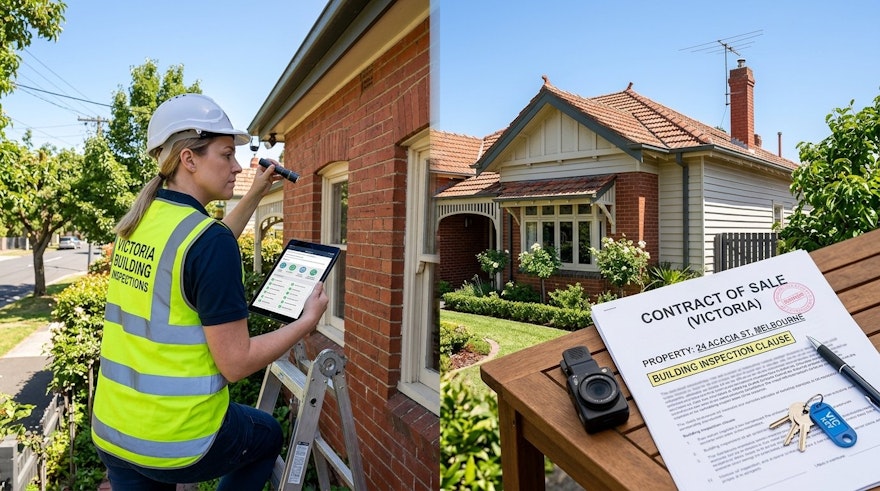
You’ve found a house in Northcote, signed the contract after a packed Saturday of inspections, and now you’re lining up a building report. That feels like the sensible next step. The part many buyers miss is this: a building report only helps you get out of the deal if your contract actually gives you that right.
The short answer is: General Condition 21, usually called GC21, can let a buyer end a Victorian contract within 14 calendar days of the day of sale, meaning once both sides have signed, if a qualifying written report identifies a major defect. That protection is not automatic. The box in the Particulars of Sale must be ticked, the report must come from the right kind of registered practitioner or architect under the contract version you signed, and any termination notice has to be served properly and on time.
What does the building inspection clause do?
GC21 gives a buyer a limited right to walk away after signing if a serious defect is found and the clause has been switched on. It sits within the general conditions in a Victorian contract of sale, which are the standard rules built into the usual LIV and REIV contract used across Victoria.
In plain language, if a valid report identifies a major structural defect and you meet the clause requirements, you may end the contract and recover the money paid under it. For a first home buyer, that can be the difference between a manageable purchase and a very expensive surprise.
The catch is that GC21 is optional. If the relevant box is not ticked before the contract is fully signed, the clause is usually not there for you to rely on. That is why a pre signing review matters. GC21 is only one of the essential clauses in a Victorian contract of sale that should be checked before you commit.
When does GC21 apply in Victoria?
GC21 only works if the contract includes it and the buyer follows every step required by the clause. In practice, your conveyancer should check three things straight away.
First, is the box actually ticked? Buyers often assume it is. Sometimes they are right. Sometimes they are not.
Second, which contract version are you dealing with? Older and newer forms do not use the same wording about who can prepare the report and what kind of defect is needed.
Third, have any special conditions changed the standard position? A seller’s solicitor can narrow timeframes or add extra hurdles. A quick read on the tram home will not catch that.
How does the 14 day building inspection period work?
The 14 days move fast. You need more than a booking confirmation. You need the inspection done, the written report in hand, the report reviewed, and a valid notice served if you want to end the contract.
A practical approach looks like this:
- Send the signed contract to your conveyancer the same day.
- Confirm GC21 is active and ask whether any special condition changes it.
- Book a qualified inspector straight away.
- Arrange access with the agent or seller.
- Read the report as soon as it arrives.
- Get advice on whether the findings justify termination.
- If you are ending the contract, make sure the report and notice are served within time.
This is why buyers often ask whether to get a building inspection before or after your offer. In a private sale, GC21 can give you a short post signing safety net if it has been included. Even then, the clock is tight, especially during a busy Melbourne spring when inspectors are booked out and agents are juggling back to back campaigns.
What changed in the 2025 Victorian contract update?
The newer LIV contract widened who may provide the report and changed the wording around defects. That can give buyers a little more flexibility, though you still need to read the contract in front of you, not the one your friend signed in another suburb.
Under the updated wording, the report may be prepared by a registered building surveyor, registered building inspector, registered domestic builder, or architect. The report also needs to be prepared in line with Australian Standard AS 4349.1 2007. The clause now refers to a ‘major defect’ rather than a ‘major building defect’.
That wording change matters because it can reduce arguments about whether the defect is framed too narrowly. Even so, the clause still does not mean every poor report gives you a right to end the deal. Age, seriousness, and the wording of the report still matter.
Older contracts are still in circulation, so your rights can turn on the exact form used for your purchase.
What can go wrong with the building inspection clause?
Most GC21 problems come from simple misses rather than fancy legal arguments. These are the traps we see buyers worry about most.
Your inspector is not the right kind of registered practitioner
A person can market themselves as a building consultant or property inspector without automatically meeting the contract wording. If the report comes from someone outside the permitted categories, the seller may argue the notice is invalid.
The box was never ticked
If GC21 was not activated, a bad building report may still tell you the property is risky, but it may not give you a contractual exit. Buyers often discover that after paying for the inspection.
You ran out of time
A report on day 13 does not help much if nobody has reviewed it and no notice has been served. The deadline is one reason buyers should move the same day the contract is signed.
You were already in default
The right to terminate under GC21 usually depends on the buyer not being in default when notice is given. A late deposit or another slip under the contract can create an ugly side argument right when you are trying to get out cleanly.
The report is serious but too vague
Some reports clearly identify a major problem. Others describe the issue in softer language that invites an argument. That is why the real question is often not just what the report says, but whether you can pull out after your building inspection under the contract you signed.
What counts as a major defect?
There is no neat checklist in the contract that spells this out. Whether a defect is major usually turns on the seriousness of the problem, the wording of the report, and the type of property involved.
Failed stumps, major structural movement, serious termite damage to structural timbers, or severe water related deterioration are more likely to raise real GC21 issues. Cosmetic cracking, patchy paint, tired sealant, and general wear are usually a different story.
Melbourne buyers know how grey this can feel. A terrace in Fitzroy may show some age related movement. A brick veneer in Reservoir may have cracking that looks awful but is not major. An older apartment in the CBD may raise issues that sit partly outside a standard house style building report. The inspector explains the defect. Your conveyancer explains whether it gives you a real contractual exit.
Does the building inspection clause help if you buy at auction?
Usually, no. Auction purchases are generally unconditional when the hammer falls, and the usual private sale cooling off rules do not apply. Offers accepted within three clear business days before or after a public auction also sit outside the ordinary cooling off position.
So if you are getting ready for a Saturday auction in Brunswick, Pascoe Vale, or Glen Iris, the smarter question is why you need a building inspection before auction, not after it.
Yes, that can feel frustrating when you spend money on an inspection and miss out to another bidder. It is still cheaper than winning the auction and discovering after the fact that the floor is sloping, the subfloor is damp, or the rear extension has bigger issues than fresh paint first suggested.
What should buyers do on the day they sign?
Act fast and keep it simple. A same day checklist can save a lot of stress later.
- Send the signed contract and Section 32 to your conveyancer.
- Confirm whether GC21 is active.
- Ask if any special condition changes the usual protection.
- Book the building inspection straight away.
- Diarise the final day for notice.
- Make sure the deposit timing is under control.
These steps sound basic. They are also where plenty of buyers trip up.
How does your conveyancer protect your position?
A conveyancer does much more than glance over the contract. They make sure the building inspection process has legal force.
Before signing, they check whether GC21 has been included and whether any special condition weakens it. After signing, they help manage the deadline, review how the report fits the contract wording, and prepare the notice if termination is the right move. They also keep an eye on the rest of the contract so you do not create a new problem while trying to solve the first one.
This is general information, not tailored legal advice. Every contract and every report is a little different, which is why buyers are usually better off getting the paperwork checked before emotions take over.
Frequently Asked Questions
Does the building inspection clause apply automatically in Victorian contracts?
No. The building inspection clause is usually optional, so it only applies if it has been activated in the contract. Your conveyancer should confirm that before you sign, not after the report arrives.
How long do I have to get a building inspection after signing a contract in Victoria?
Under GC21, the usual period is 14 calendar days from the day of sale. Inside that time, you need the report, advice on the report, and a properly served written notice if you are ending the contract.
Does my building inspector need to be registered in Victoria for the building inspection clause to work?
Yes. The report needs to come from the kind of practitioner or architect allowed by the version of contract you signed. That is one of the first checks your conveyancer should make before the inspection takes place.
What counts as a major structural defect under the building inspection clause in Victoria?
A major defect is not neatly defined in the contract, so the answer depends on the seriousness of the issue and the wording of the report. Failed stumps, major termite damage, structural movement, or serious water related deterioration are more likely to raise real concerns than cosmetic wear.
Can I use the building inspection clause when buying at auction in Melbourne?
Usually no. Auction purchases are generally unconditional, and the normal private sale cooling off rights do not apply, so buyers are usually better off arranging inspections before auction day.
What happens to my deposit if I terminate under the building inspection clause?
If the clause has been used validly, the money paid under the contract is usually refunded. Your conveyancer should still handle the notice and refund process carefully so the termination is done properly.
Can my conveyancer negotiate changes to the building inspection clause?
Yes, in some private sale deals the parties can negotiate special conditions before the contract is final. That may include changes to timeframes or inspection wording, though a seller in a hot market may refuse.
Talk to Pearson Chambers before you sign
The building inspection clause can be a real protection for Melbourne buyers, but only when it is written properly, switched on, and used the right way. If you are buying a home, unit, or investment property in Victoria, Pearson Chambers Conveyancing can review the contract before you sign and explain where you stand in plain English.
We offer a complimentary Section 32 contract review and practical guidance on the next steps, whether you are buying by private sale or getting ready for auction weekend.