![[object Object]](https://umsousercontent.com/lib_lphGCikIbVHjRWIV/w8mzrofmgaa9b3om.png?w=52)
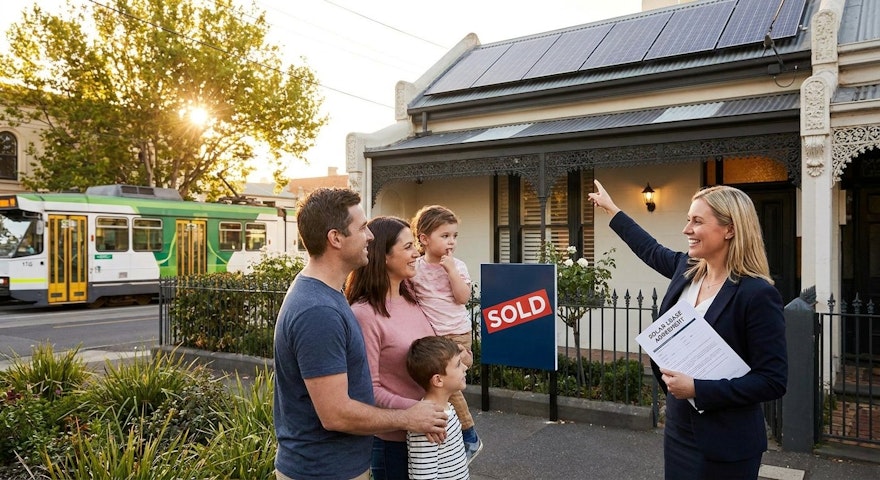
We get asked about this when a buyer spots solar panels at an inspection and assumes they come with the house. Then the contract review begins, and everyone realises the real question is not whether the panels are on the roof, but who owns them.
The short answer: In Victoria, solar panels bought outright are usually treated as fixtures and pass with the home at settlement. Leased panels or systems under a power purchase agreement are different because a solar provider or finance company may still own the equipment. Before you sign, your conveyancer should ask the seller for written confirmation, check for any PPSR registration, and add contract wording requiring the system to be transferred properly or paid out before settlement.
Why do leased solar panels matter when buying a Melbourne home?
Leased solar panels matter because the seller may not own what appears to be included in the sale. A system can be fixed to the roof in Brunswick, Bentleigh or Berwick, yet still belong to a third party under a finance or energy supply agreement.
When solar panels are owned outright, they are usually treated much like other fixed items attached to the property. They are part of the home you are buying.
A leased system is different. The seller may have agreed to regular payments over a set term, or to buy the power produced by the system from a provider. That can leave you facing a choice you were not expecting: take over the agreement, ask the seller to pay it out, or renegotiate before you are locked in.
We’ve seen this come up when a buyer’s lender asks questions late in the finance process, just as the buyer is already picturing furniture in the living room. It is much easier to deal with before signing than during the countdown to settlement.
Owned, leased or PPA: what is the difference?
The difference comes down to ownership and ongoing obligations. Three homes can have almost identical panels on the roof, yet very different legal outcomes.
- Owned outright: The seller has paid for the system. It usually passes to the buyer as part of the property.
- Financed or leased: The system may be owned by a lender, solar company or finance provider until payments are complete.
- Power purchase agreement: A provider installs and maintains the system, and the household buys the electricity generated by it at an agreed price for an agreed period.
Solar leases and power purchase agreements can run for 5 to 20 years. That is a long commitment to discover after a Saturday auction in Melbourne’s inner north, especially if you have not budgeted for extra monthly payments.
This is why your conveyancer should look beyond the marketing description and check the actual position. It is part of reviewing the encumbrances your conveyancer must check, even where the issue is not obvious from the title search.
Will leased solar panels appear in the Section 32?
A leased solar system may not appear clearly in the Section 32. A Victorian Section 32 vendor statement focuses on matters affecting the land, such as title details, mortgages, easements, covenants, zoning, outgoings and bushfire prone area declarations.
That means a standalone equipment lease can slip through. If you want a plain-English refresher on what a Section 32 covers, it helps to understand that the document is not designed to reveal every private contract connected with the home.
Do not rely on the selling agent saying ‘the solar is included’ unless ownership is clear. Ask for the documents. That includes invoices, loan papers, lease terms, PPA terms, payout figures and any provider consent needed for transfer.
A PPSR search can also help. The Personal Property Securities Register records security interests in personal property, and solar or battery equipment may have been registered if finance is involved. The catch is that once equipment is treated as a fixture, a PPSR search may not tell the whole story. It is useful, but it is not the only check.
What should your conveyancer ask before you sign?
Your conveyancer should ask direct written questions about the solar system before you commit. Clear questions make it harder for ownership issues to be brushed aside.
A sensible enquiry usually covers:
- Is the solar system owned outright?
- Is any solar, battery or hot water system leased, financed or under a power purchase agreement?
- Is there a payout figure?
- Does the provider need to approve a transfer to the buyer?
- Are there any maintenance, access or removal rights held by the provider?
- Has any security interest been registered on the PPSR?
- Will the seller provide clear ownership at settlement?
The answer should be backed by documents, not guesswork. If the seller says the panels are owned, ask for the purchase invoice or other proof. If they are leased, ask for the whole agreement, not just a payment summary.
Can leased solar panels affect your home loan?
Yes, leased solar panels can affect your home loan because they may create an ongoing obligation connected with the property. Some lenders will want the agreement paid out or the security interest removed before settlement.
Your mortgage broker should know about the issue early. The bank may ask whether the panels are owned outright, whether any third party can remove them, and whether the system affects the lender’s security.
This is especially awkward after auction, because cooling off rights are limited and finance conditions usually do not apply in the same way. If you are worried about what happens if your finance falls through, speak to your conveyancer before bidding, not after the hammer falls.
The safest approach is to make the solar issue part of the contract review before you sign. Once you know the position, your broker and conveyancer can work out whether the lender needs anything further.
What should the contract say about leased solar panels?
The contract should say exactly what happens to the solar system at settlement. Vague wording like ‘solar panels included’ is not enough if a third party still owns the equipment.
Your conveyancer may recommend a special condition in your contract requiring the seller to do one of two things before settlement:
- pay out the lease or finance and provide clear title to the system;
- obtain the provider’s written consent so the buyer can take over the agreement, if the buyer agrees.
The condition should also deal with any PPSR discharge, payout statement, transfer documents and evidence that the system will remain installed and working at settlement.
Do not leave this to a handshake with the agent. If the solar is part of the value of the home, the contract should say how that value is delivered.
What happens to a Victorian Solar Homes loan when the property is sold?
A Solar Victoria loan is generally the seller’s loan, not the buyer’s loan. Under Solar Victoria’s loan terms, if the nominated property is sold, the applicant must prepay the money owing on the settlement date.
That is a cleaner position than many private leases. The seller clears the debt when they stop being the registered owner, and the buyer should not inherit the loan.
Still, your conveyancer should confirm the details. Do not assume every solar-related debt is a Solar Victoria loan just because the seller mentions a government rebate. Ask for the paperwork and check whether there is any private finance, lease, PPA or provider interest sitting behind the system.
Do batteries and hot water systems raise the same issue?
Yes, batteries and solar hot water systems can raise the same ownership issue. If they are owned outright, they will often be treated as included fixtures, but if they are leased or financed, you need to know who owns them and what payments remain.
This comes up more often now that Melbourne homes are adding batteries, heat pumps and electric upgrades. A battery fixed to a garage wall can look like part of the home, but the agreement behind it may say something else.
If the contract talks about which chattels are included in the sale, check whether solar equipment, batteries, inverters and hot water systems are named clearly. If the list is silent, ask. If the answer is uncertain, get it sorted before you sign.
What should buyers do before signing?
Before signing, treat leased solar as a contract issue, a finance issue and a settlement issue. It is not just a nice energy feature.
A practical buyer checklist looks like this:
- ask whether the system is owned, leased, financed or under a PPA;
- request invoices, loan terms, lease documents and payout figures;
- ask your conveyancer to run a PPSR search where suitable;
- send the details to your mortgage broker;
- require the seller to pay out the system or provide transfer consent before settlement;
- make sure the contract records the agreed outcome.
This is a small amount of due diligence compared with the cost of buying a Melbourne home. It can save you from taking on a contract you never meant to accept.
Frequently asked questions
Do leased solar panels come with the house when I buy in Victoria?
Not automatically. If the panels are leased or under a power purchase agreement, a finance company or solar provider may own them, so they are not simply the seller’s to include. You either need the provider’s approval to take over the agreement or a contract condition requiring the seller to pay it out before settlement.
How do I find out if a property has leased solar panels?
Ask the seller in writing whether any solar, battery or hot water system is leased, financed or under a power purchase agreement. Your conveyancer can also request the agreement documents and run a PPSR search where suitable. Do not rely on the Section 32 alone, because an equipment lease may not be obvious there.
Will buying a house with leased solar panels affect my home loan?
It can. A solar lease, PPA or registered security interest may be relevant to your lender because it can create an ongoing obligation connected with the home. Tell your conveyancer and mortgage broker early so the issue can be checked before finance approval or settlement.
Can I take over the seller’s solar lease?
Sometimes, but only if the provider agrees and you meet its requirements. You may need a credit assessment, transfer documents and written consent before settlement. Before accepting a transfer, get the lease or PPA reviewed so you understand the term, payments, maintenance duties and payout cost.
Does a solar lease have to be disclosed in the Section 32?
A solar lease is not always disclosed in the Section 32. The Section 32 deals with required property and title information under Victorian sale of land rules, while a standalone equipment lease may sit outside that list. This is why written enquiries and document requests are so useful.
What happens to a Victorian Solar Homes loan when the house is sold?
A Solar Victoria interest-free loan is generally personal to the applicant. Under Solar Victoria’s loan terms, the money owing must be prepaid when the nominated property is sold, on the settlement date. That means the seller should clear it rather than pass it to the buyer.
About the Pearson Chambers Conveyancing team
Pearson Chambers Conveyancing is a Melbourne-focused conveyancing firm helping buyers review contracts, Section 32 statements and settlement risks before they commit. We work with first home buyers, investors and homeowners across Victorian property transactions every day. Solar leases, batteries and financed home upgrades are exactly the kind of detail we check when reviewing a contract.
Sources we consulted
- Solar Homes Program loan terms and conditions
- Solar Homes Program
- Solar panel systems and home batteries
- How the PPSR protects buyers and lessees
- Conveyancing and contracts for sellers
- Cheaper Home Batteries Program
Ready to check who owns the solar before you sign?
If you are looking at a Melbourne home with solar panels, get the contract checked before you commit. Pearson Chambers Conveyancing offers a complimentary Section 32 contract review, and we can help you understand whether the system is owned, leased, financed or needs extra contract protection.
Email contact@pearsonchambers.com.au.
General information only, current as at the date of publication. Victorian conveyancing rules and legislation change frequently. Please contact the Pearson Chambers Conveyancing team for advice on your specific contract.