![[object Object]](https://umsousercontent.com/lib_lphGCikIbVHjRWIV/w8mzrofmgaa9b3om.png?w=52)
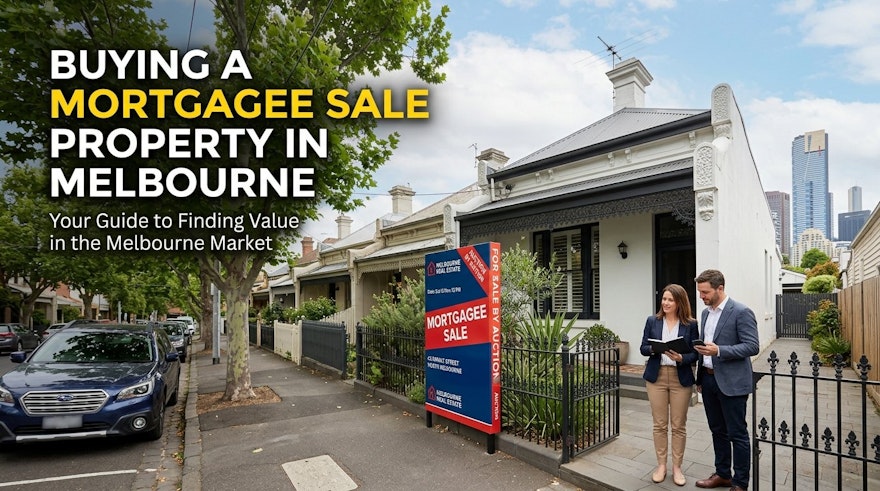
You spot a neat weatherboard in Reservoir or a brick unit in Frankston, the guide looks lower than anything else nearby, and then the listing says ‘mortgagee in possession’. For a first home buyer, that can feel like a lucky break.
Sometimes it is. Sometimes it really isn’t.
A mortgagee sale can open a door into a suburb that felt out of reach a month ago. It can also come with a contract that gives you far less breathing room than a standard Melbourne purchase. If you're already juggling finance, inspections, auction nerves and the usual pressure of trying to buy your first place, that extra layer matters.
The short version is this: a mortgagee sale is not automatically a bargain, and it is never a ‘just wing it on auction day’ kind of purchase.
What a mortgagee sale actually is
A mortgagee sale happens when a lender uses its power of sale after the borrower defaults under the mortgage. In Victoria, that power sits under the Transfer of Land Act 1958, and the lender must exercise it in good faith and with regard to the mortgagor’s interests.
On the ground, that usually means the bank or other lender appoints an agent, the property is marketed, and the home is sold so the debt can be recovered. In Melbourne, many of these sales still go to auction because an open auction campaign helps show the property was properly exposed to the market.
That point matters more than most buyers realise. The lender is not trying to be generous. It is trying to sell in a way that stands up if the former owner later complains the property was undersold. So while some mortgagee sales look cheap at first glance, the bank is not supposed to just hand the place over for a song.
Why first home buyers get drawn to them
It makes sense. You’ve spent months at inspections in Preston, Coburg or Craigieburn, every second listing feels underquoted, and then one property finally appears to sit within reach.
A mortgagee sale can be appealing because:
- the guide may look lower than nearby sales
- the campaign can feel more straightforward, with less back and forth
- the bank is often focused on a clean, unconditional result rather than a long negotiation
But that lower price guide may reflect real issues. The property may need repairs. The contract may shift more risk onto you. The lender may know less about the home than an ordinary owner would. And if the property is going to auction, you usually need to do all your homework before you bid, not after.
That’s the part that catches first home buyers out.
The biggest myth: ‘It’ll be a bargain’
Sometimes a mortgagee sale does sell below nearby comparable homes. That can happen where the home needs work, where buyer sentiment is flat, or where the campaign has been rough from the start.
Still, don’t build your plan around scoring a distressed-property discount.
Banks and other lenders are expected to sell properly. They don’t want the old owner saying the place was rushed through without enough marketing or sold well under value. So if the home is decent, well located and well presented, the final price can still be very close to normal market level.
In other words, a mortgagee sale in Melbourne can be a chance to buy. It is not a guaranteed bargain bin.
Where mortgagee sales feel different from a normal purchase
The first difference is the paperwork.
In a standard private sale, there is often a bit more room to ask questions, negotiate dates or raise issues about the property’s condition. A mortgagee sale contract is usually drafted for the lender’s protection. Before you sign or bid, it helps to know what to look out for in a contract of sale.
The second difference is the seller’s knowledge. The lender has not been living there. It often cannot tell you much about renovation history, small leaks, past disputes, fencing arrangements, whether that back pergola had approval, or why the bathroom window never quite shuts properly.
The third difference is the tempo. If the property is going to auction, everything moves fast. You may have one inspection, a contract, a Section 32, a building report to organise, finance to confirm and a decision to make, all inside a short campaign.
The risks first home buyers should take seriously
No cooling-off at auction
This is the big one. In Victoria, there is no cooling-off period in Victoria if you buy at auction, or within three clear business days before or after a scheduled auction. Once the hammer falls, you are committed.
That means you do not get to win the bid on Saturday, calm down on Sunday, and then decide on Monday that the cracked retaining wall makes you nervous. By then, you’re already in.
The property is often sold as it stands
Most mortgagee sale contracts are loaded with special conditions saying the buyer accepts the property in its present state. Put simply, you may get very few promises from the seller about condition, repairs, permits, fittings, services or use.
That does not mean you should panic. It does mean you should assume the bank is not going to step in later and sort out every unpleasant surprise.
Think about an older inner north home that has been cosmetically tidied for photos but still has tired stumps, damp under the back bedroom, old wiring, or an extension done years ago with patchy paperwork. In a normal sale, you might at least get fuller answers from the owner. In a mortgagee sale, you may get very little beyond the documents.
Special conditions can override what buyers expect
A lot of first home buyers read the headline details and skip the clauses that really matter. That’s risky in any purchase, and even more so here.
A mortgagee contract may include terms saying, in effect, that:
- you rely on your own enquiries
- the lender gives limited warranties
- settlement dates may be affected by title or discharge issues
- the buyer accepts defects, faults and non-compliance risks more squarely than usual
That is why contract review before auction is not optional in a mortgagee sale. It is part of the buying decision itself.
Encumbrances and title issues need a close look
The Section 32 vendor statement and title documents matter in every Victorian purchase, though they carry even more weight here. Consumer Affairs Victoria says the Section 32 must be given before the purchaser signs and must include key matters affecting title, such as mortgages, covenants, easements, zoning and outgoings. If it is inaccurate or incomplete, a buyer may in some cases be able to withdraw or take action.
For a mortgagee sale, you want your conveyancer looking hard at easements, restrictive covenants, caveats, owners corporation material if it is a unit or townhouse, and anything else sitting on title that could limit what you can do with the property. If you want a clearer sense of how to find encumbrances on property, this is exactly the sort of purchase where that question becomes real.
A cheap-looking block in a growth corridor may not feel so cheap if there is an easement running through the part where you hoped to extend. A townhouse with a modest price tag may be less attractive if the owners corporation records show looming major works.
Outgoings and occupancy still need checking
Rates, water, land tax adjustments, owners corporation fees and any tenancy position should all be checked carefully. You also want to know whether the contract provides vacant possession at settlement, or whether the property is sold subject to an existing lease or other right of occupation.
That is not glamourous work. It is still the work that saves trouble later.
What your conveyancer should be doing before you bid
If you’re asking what does a conveyancer do when buying a house, a mortgagee sale is a good example of why the answer is ‘quite a lot’.
Before auction day, your conveyancer or property lawyer should be helping you with things like:
- reviewing the contract and all special conditions
- checking the Section 32 for missing, stale or worrying material
- searching title and registered interests
- checking owners corporation records where relevant
- looking at outgoings and adjustment issues
- flagging whether any part of the lender’s right to sell needs closer attention
- explaining what risks sit with you the moment you sign or bid
Consumer Affairs Victoria also points buyers towards getting professional help before committing, not after.
This matters because you are not just paying for paperwork. You are paying for someone to say, plainly, ‘This clause is normal’, ‘This one is rough but manageable’, or ‘Don’t bid unless you are happy to wear this risk’.
That kind of advice can save you from making a very expensive emotional decision after one crowded open for inspection.
Don’t skip the building inspection
If there is one step first home buyers talk themselves out of, it is this one. The logic goes something like: ‘The place already looks rough, we know we’ll renovate, and we don’t want to spend more money before we even know if we’ll win.’
That line of thinking can hurt you.
A building inspection before auction is one of the smartest costs in this sort of purchase. If the report shows movement, major moisture issues, termite damage, drainage trouble, unsafe deck work or unapproved alterations, you can either lower your ceiling price or walk away before you’re locked in.
That is a much better outcome than finding the problem when you’re standing in the kitchen on settlement day with your keys in hand.
Melbourne homes can hide plenty. Older houses in Reservoir, Preston and Coburg may carry years of delayed maintenance under a fresh coat of paint. Newer homes further out can still have drainage, cracking or slab issues. A mortgagee sale can add another layer, because the home may have been under financial stress for quite some time before it reached the market.
What about stamp duty and first home buyer help?
The fact that it is a mortgagee sale does not, by itself, knock you out of first home buyer duty relief in Victoria. The main question is whether you meet the normal eligibility rules. The State Revenue Office says first home buyers may pay no duty up to $600,000 and a reduced amount from $600,001 to $750,000, and that the benefit can apply to new or established homes.
So yes, a first home buyer purchasing an established mortgagee sale property can still be in the frame for duty relief if the numbers and eligibility line up. A useful starting point is understanding the stamp duty first home buyer rules before you bid.
The First Home Owner Grant is a separate question. In Victoria, it is aimed at eligible first home buyers buying or building a new home, and it applies to newly constructed or never-occupied homes up to the value limit.
So if the mortgagee sale is an established home, the grant usually will not be available. The duty relief may still be.
One protection you do have, but don’t rely on it as a shortcut
There is one reassuring feature in the legislation. Section 77(4) of the Transfer of Land Act says that once a transfer under that section is registered, the purchaser’s estate and interest vest on registration.
In plain English, that gives buyers strong protection once the transfer is registered.
Still, that is not a reason to relax before auction. Strong title after registration does not fix a bad contract, hidden repair bills, a nasty covenant, poor finance planning or a building issue you could have found earlier.
Is a mortgagee sale worth it for a first home buyer?
It can be.
For some buyers, it is the purchase that finally gets them into a suburb they know well, near family, work or the train line they already use every day. For others, the lower entry point only looks attractive until the contract and property condition are properly checked.
A smart mortgagee sale purchase is usually the one where the buyer has done more work than usual before bidding, not less.
So if a mortgagee listing catches your eye, slow the process down in your own mind, even if the campaign feels fast. Read the contract. Get the Section 32 checked. Order the inspection. Confirm your finance. Decide on a hard ceiling and stick to it.
If you’d like tailored guidance before auction day, Pearson Chambers Conveyancing can help. We offer a complimentary Section 32 contract review and can talk you through the special conditions, title issues and first home buyer questions that come up with mortgagee sales in Melbourne.
Email contact@pearsonchambers.com.au to arrange your complimentary Section 32 contract review.