![[object Object]](https://umsousercontent.com/lib_lphGCikIbVHjRWIV/w8mzrofmgaa9b3om.png?w=52)
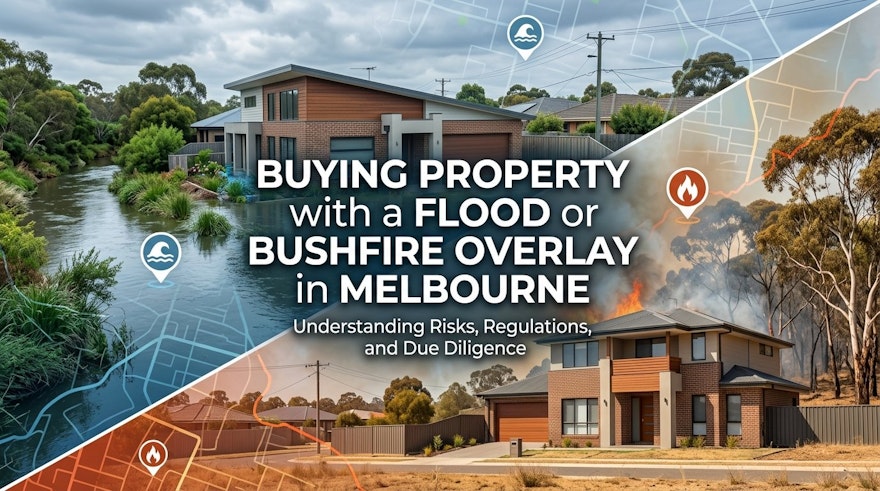
You’ve found a place that feels right. Maybe it’s a leafy home in Warrandyte with gum trees at the back fence, or a weatherboard in Maribyrnong close to the river and a quick run into the CBD. Then your contract review lands, and three letters jump off the page: BMO. Or LSIO. Or SBO.
That can rattle people fast, and fair enough. A planning overlay sounds technical, expensive, and slightly ominous.
The short answer: Buying property with a flood or bushfire overlay in Melbourne is still possible, but it is never a ‘sign first, ask later’ situation. In Victoria, the seller must disclose planning overlays and any designated bushfire prone area in the Section 32, and if required information is missing or false, section 32K of the Sale of Land Act 1962 may give the buyer a right to pull out before settlement. The real issue is not the label itself, it is what that label means for future building work, insurance, finance, and the day to day cost of owning the property.
What does a flood or bushfire overlay mean when buying in Melbourne?
A flood or bushfire overlay is a planning control. It does not automatically make a property a bad buy, and it does not mean the deal is dead on arrival.
What it does mean is that the land has been identified as needing extra planning controls because of a known hazard. That can affect what you can build later, what reports you may need, how a lender views the file, and whether your insurer asks more questions before giving cover.
This is why the Section 32 vendor statement matters so much. It is often the first place your conveyancer will see the overlay, along with the planning certificate and any other notices touching the land.
Flood and bushfire are not the only overlays Melbourne buyers run into either. Depending on the suburb and the history of the site, you might also come across an environmental audit overlay or a public acquisition overlay.
What is a Bushfire Management Overlay in Victoria?
A Bushfire Management Overlay, or BMO, is the planning control used for land that may be exposed to extreme bushfire risk. In Victoria it sits under Clause 44.06 of the planning scheme.
For a buyer, the direct answer is this: a BMO can make future building and renovation work harder, slower, and more expensive. A new dwelling, extension, subdivision, or even some outbuildings may need a planning permit and must usually meet bushfire design measures under Clause 53.02. Depending on the proposal, that can bring in issues like defendable space, siting, vegetation management, water supply, access for fire services, and a higher Bushfire Attack Level, often called a BAL rating.
In Melbourne, buyers see BMO issues most often on the city fringe and in green wedge or foothill areas. Warrandyte, Research, Eltham, Wonga Park, parts of Nillumbik, pockets of Manningham, and many Yarra Ranges suburbs are the usual suspects. The Mornington Peninsula has pockets as well.
There is also a separate building law concept called a designated bushfire prone area under section 192A of the Building Act 1993. That is not the same thing as a BMO, but it still matters. It can affect the standard you must build to, and it also has to be stated in the Section 32.
What do flood overlays mean in Melbourne?
Flood overlays tell you that flood risk has already made its way into the planning scheme. They are not all equal.
The three main ones buyers see in Victoria are:
- Land Subject to Inundation Overlay (LSIO): usually tied to land affected by the 1 per cent annual exceedance probability flood event, often called the 1 in 100 year flood.
- Special Building Overlay (SBO): often tied to urban stormwater or overland flow issues, where drainage capacity can be exceeded in heavy rain.
- Floodway Overlay (FO): the stricter end of the scale, usually where floodwaters move with greater depth or force.
That difference matters. A home affected by an SBO in an urban pocket is not the same proposition as land with a Floodway Overlay close to an active flood path.
In Melbourne, these issues often come up near the Maribyrnong River, the Yarra, Moonee Ponds Creek, the lower parts of bayside suburbs, and low lying streets that locals already know can cop water in a big storm. Maribyrnong, Footscray, Kensington, Abbotsford, Alphington, Elwood, South Melbourne and parts of the inner north are common examples.
If you are planning to extend or rebuild later, flood information can become very practical very quickly. Melbourne Water’s flood level certificate process is often part of that conversation, and councils commonly work off flood levels plus a freeboard allowance when setting minimum floor levels.
What should your conveyancer check before you sign?
Your conveyancer should do more than point at the overlay and say, ‘Keep this in mind’. The real job is to work out what the overlay means for this property, this contract, and your plans.
A careful pre-signing review usually includes:
- Checking the planning certificate and Section 32
They should confirm the planning scheme, zoning, overlays, and any bushfire prone area statement have been disclosed properly. - Comparing the paperwork against current planning data
VicPlan lets buyers and conveyancers check current zone and overlay data, and that spatial data is updated weekly. That is handy where the seller’s planning material is older than you would like. - Looking for notices, orders, or permit history
A flood or bushfire overlay is one issue. A current notice from a council, CFA referral history, or flood level requirement tied to earlier works is another. - Asking what you want to do with the property
A buyer who plans to simply live in the home now may view the risk very differently from a buyer planning a rear extension, pool, rebuild, or subdivision in three years. - Flagging insurance and finance early
This is where problems can bite. You want those calls made before you are locked into an unconditional deal.
That early review is even more useful in Melbourne’s auction market, where the pressure to move fast can be intense and the legal room to move later is much smaller.
Can you pull out if the overlay was not disclosed?
Yes, sometimes. Under section 32C of the Sale of Land Act 1962, the seller must state planning scheme details, zoning, and any planning overlays affecting the land. The seller must also state if the land is in a designated bushfire prone area.
If that required information is missing or false, section 32K may let the buyer rescind the contract before settlement.
That said, this is not a magic button for every paperwork defect. Whether rescission is open will depend on the wording, the missing information, timing, and whether the seller could try to rely on the statutory defence that they acted honestly and reasonably and that the buyer is still substantially in as good a position.
The plain English version is this: do not assume the problem is fatal, and do not assume it is harmless either. Get the contract checked quickly, before the deal rolls on and your leverage shrinks.
How can overlays affect insurance and your home loan?
Overlays can affect both, though not in exactly the same way.
Insurance is usually the first practical hurdle. A flood or bushfire overlay can lead to a higher premium, more exclusions, a larger excess, or extra underwriting questions. For houses, that can change the holding cost of the property in a way that never showed up in the glossy listing photos. For apartments and townhouses, the picture can be mixed because the owners corporation may insure the building shell, yet buyers still need to know what is and is not covered.
Lenders may also take a closer look. Some are comfortable with overlay properties where the risk is understood and insurance is in place. Others want more detail, especially if the property is in a stricter flood area or the buyer is already stretching on finance.
The smart move is simple: get the overlay in front of your broker and ask for an insurance quote before you sign. It is far better to have that awkward conversation before you pay a deposit than after.
What special conditions can help when buying an overlay property?
The right answer is often yes, special conditions can help, but only if they are drafted to suit the property and the deal.
This is where special conditions in a contract of sale can do real work. On the right purchase, they may give you time to check flood data, obtain a specialist report, confirm insurability, or make the deal conditional on finance or other due diligence.
For an overlay property, a buyer’s conveyancer may look at clauses that deal with things like:
- satisfactory finance or insurance approval
- access for a building, flood, or bushfire assessment
- clear disclosure of known past flood or bushfire damage
- time to review planning material that goes beyond the bare Section 32
- wording about what happens if fresh information shows a much bigger risk than first expected
Not every seller will agree, and auction deals are a different beast because they are usually unconditional. Still, this is exactly why contract review before auction day matters so much.
What if the property is damaged by flood or bushfire before settlement?
This is one of those points buyers often forget until the weather turns ugly.
In Victoria, the seller is generally expected to hand over the property in the same condition as when it was sold, fair wear and tear aside. If a major storm, flood event, or bushfire damages the property between signing and settlement, the buyer is not simply stuck smiling through it.
For serious damage, section 34 of the Sale of Land Act 1962 may give the buyer a right to rescind if the dwelling is so badly damaged that it is unfit for occupation as a dwelling, and written notice is given within 14 days after the buyer becomes aware of the damage. For less severe damage, the usual path is repairs, a negotiated adjustment, or a short settlement delay.
That is why the pre-settlement inspection matters, and why issues like property damaged before settlement should be raised with your conveyancer straight away, not brushed off with a promise from the agent in the driveway.
How can you check a flood or bushfire overlay yourself?
You can do a basic first pass yourself, and it is well worth doing.
Start with VicPlan. It lets you search an address, view the zone and overlays, and download a planning property report. For flood affected land in Greater Melbourne, Melbourne Water’s flood information tools can also help you understand whether the site has overlay related flood data attached to it.
That said, these tools are screening tools. They tell you that a control exists. They do not tell you, on their own, whether the contract disclosure is complete, whether a past permit creates extra obligations, or whether your future extension plans still stack up.
Are these maps and overlays still changing in 2026?
Yes. That is a big reason not to treat old planning paperwork as gospel.
Melbourne Water is still rolling out updated flood information across parts of Greater Melbourne, and VicPlan’s zone and overlay data is updated weekly. Bushfire mapping and designated bushfire prone area determinations can also be reviewed and updated over time.
So if you are looking at a property near bushland, a creek corridor, or a low lying pocket that locals talk about every winter, do not just ask what the map showed three years ago. Ask what applies now, and whether any amendment activity is already in train.
Frequently Asked Questions
What does buying property with a bushfire management overlay in Melbourne mean?
It means the land sits in an area where the planning scheme applies extra bushfire controls. You can still buy it, but future building work may need a permit and may have to meet bushfire design measures about siting, defendable space, water supply, access, and construction standard.
Can I still get a mortgage when buying property with a flood overlay in Melbourne?
Often, yes. The harder issue is whether the lender is comfortable with the level of risk and whether suitable insurance is available on acceptable terms. Your broker should be told about the overlay before the contract goes unconditional.
Does the seller have to disclose a flood or bushfire overlay in the Section 32?
Yes. The seller must disclose planning scheme details, zoning, and any planning overlay affecting the land, and must also state if the land is in a designated bushfire prone area. If required information is missing or false, the buyer may have a right to pull out before settlement.
How much does insurance cost when buying property with a flood overlay in Melbourne?
There is no single figure that fits every property. Cost depends on the suburb, the type of overlay, past claims data, the insurer’s appetite, and the way the home is built. The best move is to get a quote before you sign, not after.
What Melbourne suburbs often have a Bushfire Management Overlay?
Buyers often see BMO issues in places like Warrandyte, Eltham, Research, Wonga Park, and parts of the Yarra Ranges and Mornington Peninsula. The exact answer always comes back to the individual address, so it is worth checking VicPlan rather than relying on suburb gossip.
Can I cancel the contract if the seller did not disclose a bushfire or flood overlay?
Possibly. Section 32K of the Sale of Land Act 1962 may let a buyer rescind before settlement where required Section 32 information was not given or was false. Whether that right exists in your file depends on the facts, the wording, and timing, so do not sit on it.
How do I check if a Melbourne property has a flood or bushfire overlay?
Use VicPlan for a quick first check, then have your conveyancer review the planning report and Section 32 before you sign. For flood affected land in Greater Melbourne, Melbourne Water’s tools can add another layer of detail.
Get your Section 32 checked before you sign
If you are looking at a property with a flood or bushfire overlay, the safest time to get advice is before you commit, not after the deposit is paid and the stress kicks in.
At Pearson Chambers Conveyancing, we can review the Section 32, planning certificate, and contract before you sign, and explain what the overlay means in plain English for your purchase, your finance, and your plans for the property.
This is general information only, not personal legal advice. For tailored guidance and a complimentary Section 32 contract review, email contact@pearsonchambers.com.au.