![[object Object]](https://umsousercontent.com/lib_lphGCikIbVHjRWIV/w8mzrofmgaa9b3om.png?w=52)
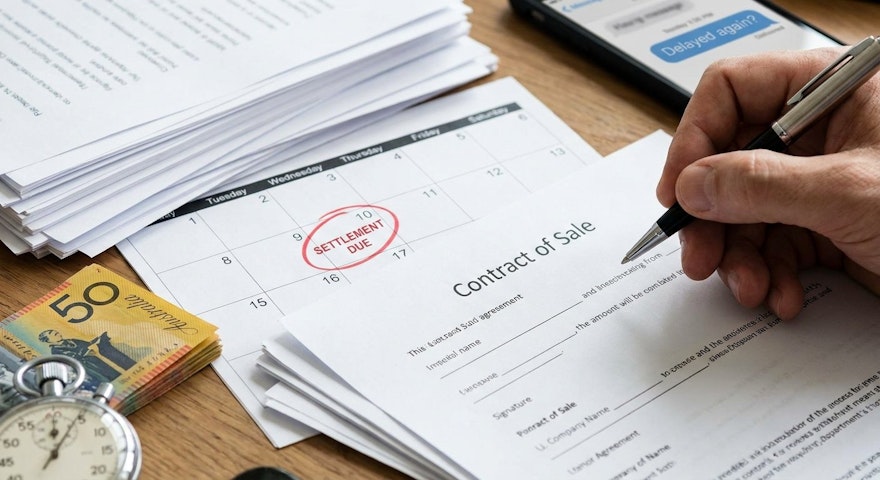
In Victoria, the standard contract of sale usually lets the vendor charge penalty interest if the buyer settles late, but it does not usually give the buyer the same automatic right when the vendor is late. If the seller misses settlement, the buyer’s usual path is to serve a default notice, often allowing 14 days to fix the breach, and claim actual, provable losses such as extra loan interest, rent, storage or re-booked removalists. The penalty interest rate fixed under the Penalty Interest Rates Act 1983 (Vic) is 10% per annum, but that rate generally helps the seller, not the buyer, unless the contract has been changed.
That feels unfair at first glance. It also catches people off guard because most buyers assume settlement rights are a mirror image: if one side is late, the other side can charge interest. Victorian contracts do not usually work that neatly.
Can a buyer charge penalty interest when the vendor settles late?
A buyer usually cannot charge the vendor penalty interest under the standard Victorian contract. The usual interest clause is aimed at unpaid purchase money, and at settlement the buyer is the person who must pay the balance of the price.
Think of it this way. If you buy a $750,000 apartment in North Melbourne and pay a 10% deposit, the balance due at settlement is about $675,000 before adjustments. If you are late, the vendor is kept out of that money, so the contract can add interest to the amount you still owe.
If the vendor is late, the problem is different. They are not failing to pay you money under the contract. They are failing to deliver the property and complete settlement. That means there is no unpaid purchase balance sitting on the vendor’s side for a standard penalty interest clause to attach to.
At 10% per annum, a late buyer on a $675,000 balance could face about $185 a day in penalty interest. There is not usually an equal daily figure running for the buyer when the vendor is late. For the buyer-side calculation, see our guide to how penalty interest is calculated when you are the late party.
What can a buyer claim if the seller delays settlement?
A buyer can usually claim compensation for real loss caused by the vendor’s delay, rather than a fixed daily interest amount. The claim needs to be sensible, documented and linked to the late settlement.
Common Melbourne examples include:
- extra loan interest, rate lock fees or lender costs caused by the delay
- extra rent because you could not move into the property as planned
- short-term accommodation after you had already moved out
- storage costs for furniture and boxes
- a cancelled or re-booked removalist
- bridging finance costs if your sale and purchase were meant to settle together
- extra insurance or holding costs that flowed from the delay
The key difference is proof. Penalty interest is usually a contract formula. Compensation is a loss claim. You need receipts, emails, invoices, bank records, broker notes or booking confirmations that show what you paid and why it was caused by the vendor being late.
It may also be possible to negotiate it as an adjustment at settlement, so the amount is dealt with in the settlement figures rather than chased after the keys are handed over. That is often cleaner, but it depends on the seller accepting the claim or the parties reaching a workable settlement arrangement.
How do you protect your position after a vendor misses settlement?
You protect your position by acting quickly, keeping everything in writing and getting a default notice served through your conveyancer. A missed settlement date on its own does not always mean you can walk away that afternoon.
In a standard Victorian contract, time is not always automatically treated as essential from the first missed booking. A formal default notice, often called a notice to complete, is the step that puts the defaulting party on clear notice. It usually gives the vendor a set period, commonly 14 days, to settle and deal with reasonable costs caused by the default.
Your conveyancer will usually want to know:
- Were you ready, willing and able to settle on the due date?
- What reason has the vendor given for the delay?
- Has the vendor’s bank discharge, title paperwork or authority caused the problem?
- What costs have you already paid or become liable to pay?
- Can the loss be proven with documents?
We have separate guides on how a notice to complete works and the steps your conveyancer takes when the vendor will not settle. For this article, the key point is simple: the notice process, not automatic penalty interest, is usually the buyer’s main tool.
Can you add a clause so penalty interest works both ways?
Yes, you can ask for the contract to be changed before signing so the buyer has clearer rights if the seller settles late. A conveyancer can add a special condition that gives the buyer a right to compensation, interest or another agreed remedy if the vendor causes delay.
This is easiest before you sign. Once the auction is over in Brunswick or the private sale is accepted in Glen Waverley, your bargaining power is much lower. The standard contract usually protects the vendor’s cash flow if the buyer is late. It does not always protect the buyer’s moving costs, rent or finance costs in the same direct way.
A good special condition should be clear about:
- when the vendor is treated as being late
- what costs the buyer can claim
- whether interest applies, and to what amount
- how the claim is made at settlement
- what happens if both parties contribute to the delay
The clause needs care. A messy condition can create a fight instead of solving one. That is why it is worth having the contract reviewed before you sign, especially if you are buying at auction, buying and selling on the same day, or moving out of a rental with no spare week up your sleeve.
What evidence should you keep if late settlement costs you money?
Keep every document that shows the delay cost you money. A buyer’s claim is much stronger when the amount is clear and backed by records.
Useful records include:
- removalist quotes, invoices and cancellation fees
- storage unit receipts
- short-stay accommodation bookings
- lease documents showing your rental end date
- emails from your broker or lender about extra interest or rate lock costs
- bank statements showing payments made
- correspondence from the vendor’s side explaining the delay
- PEXA or settlement updates from your conveyancer
In our practice, we’ve seen late-settlement claims resolve far more smoothly when buyers can send one tidy bundle of documents to the seller’s representative. A claim for ‘stress and inconvenience’ is hard to quantify. A $420 storage invoice, a $310 removalist re-booking fee and an email showing the vendor’s bank discharge was not ready are much easier to deal with.
What if both buyer and seller helped cause the delay?
If both sides contributed to the delay, the claim may need to be split or reduced. The stronger position belongs to the party who can show they were ready to settle and the other side was not.
Settlement delays are not always clean. The vendor’s mortgage discharge may be late, while the buyer’s bank also needs an extra day to confirm funds. Or the seller’s lawyer may be waiting on a document while the buyer has not completed a signing step. In those cases, compensation and interest arguments can turn on who caused each day of delay.
This is why early preparation matters. If your lender, transfer documents and funds are ready before settlement day, you have a clearer record. Your conveyancer can point to the settlement file and say, in effect, the buyer was ready and the vendor was the party holding it up.
What should you do before signing a contract?
Before signing, ask your conveyancer to check the late settlement wording and any special conditions. This is especially useful if your move has a hard deadline.
That includes buyers who:
- have already given notice to a landlord
- need to enrol children near the new home
- are buying and selling on the same day
- are moving from interstate into Melbourne
- are purchasing off the plan and relying on a tight settlement period after registration
- cannot afford a week of extra accommodation, storage or bridging finance
The best time to deal with late settlement risk is while the contract is still being negotiated. Once you have signed, the question becomes what the existing contract gives you. Before signing, the question is what protection can be added.
Frequently asked questions
Can you claim penalty interest if the seller settles late in Victoria?
Not usually under the standard Victorian contract of sale. The penalty interest clause is generally written for the vendor’s benefit because it applies to unpaid purchase money owed by the buyer. If the seller is late, the buyer usually claims actual losses caused by the delay or relies on a special condition added before signing.
What is the current penalty interest rate in Victoria?
The penalty interest rate fixed under the Penalty Interest Rates Act 1983 (Vic) is 10% per annum and has applied since 1 February 2017. In a standard late settlement situation, that rate usually applies against a buyer who has not paid the balance on time. It does not automatically give a buyer a matching claim against a late vendor.
What can I do if the vendor will not settle on time?
Contact your conveyancer straight away and keep all communication in writing. Your conveyancer can usually serve a default notice, often giving the vendor 14 days to settle and deal with reasonable costs caused by the delay. If the vendor still does not settle, the buyer may be able to end the contract, recover the deposit and claim losses.
What losses can a buyer recover when settlement is delayed by the seller?
A buyer can usually claim provable costs that were a reasonably foreseeable result of the seller’s delay. These may include extra rent, storage, removalist re-booking fees, short-term accommodation, lender costs or bridging finance. The buyer should keep receipts, invoices and emails so the loss can be measured.
Does penalty interest work both ways in a Victorian contract of sale?
No, not usually. The standard interest clause generally charges the buyer interest on unpaid purchase money, but it does not create a mirror daily interest claim for the buyer when the vendor is late. A buyer who wants that kind of protection should ask for a clear special condition before signing.
Should I add a special condition about late settlement to my contract?
It is worth asking your conveyancer about it if a late settlement would cost you money. Buyers who are renting, selling and buying together, moving on a fixed date or relying on tight finance may benefit from a clause that deals with vendor delay. The safest time to raise it is before you sign the contract.
About the Pearson Chambers Conveyancing team
Pearson Chambers Conveyancing is a Melbourne-focused conveyancing firm that helps buyers and sellers across Victoria work through contract reviews, settlement planning and late settlement issues. Our team handles first home buyer settlements daily, including the practical questions that come up when banks, removalists, agents and settlement bookings do not line up. Vendor delay is exactly the kind of contract problem we look for before signing and manage carefully when settlement day arrives.
Sources we consulted
- Supreme Court of Victoria, Penalty Interest Rates
- Penalty Interest Rates Act 1983 (Vic)
- Sale of Land Act 1962 (Vic)
- Consumer Affairs Victoria, Buying and selling property
Worried the seller might settle late?
If your settlement date is close and the vendor is not ready, or a delay has already cost you money, speak with Pearson Chambers Conveyancing before you agree to a new date or waive any rights. We can review your contract, help you understand the default notice process, quantify your loss and ask about a complimentary Section 32 contract review before you sign.
Email contact@pearsonchambers.com.au.
General information only, current as at the date of publication. Victorian conveyancing rules and legislation change frequently. Please contact the Pearson Chambers Conveyancing team for advice on your specific contract.