![[object Object]](https://umsousercontent.com/lib_lphGCikIbVHjRWIV/w8mzrofmgaa9b3om.png?w=52)
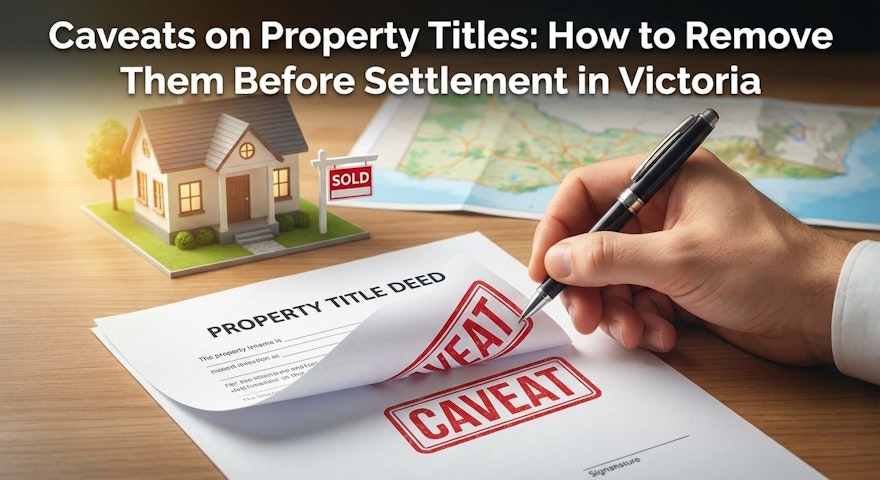
A caveat can feel like the worst possible phone call in the middle of a property move. You’ve signed the contract, the removalists are pencilled in, and you’re already picturing that first coffee near the new place. Then your conveyancer says there’s a caveat sitting on the title.
Imagine you’ve sold a townhouse in Toorak and you’re due to settle in a few weeks, because you’ve also bought in Brighton. Or you’ve just won an auction in the inner north and your sale has to line up, down to the last tram ride and key handover. That’s when a caveat stops being a dry title entry and turns into a real, practical problem.
In Victoria, a caveat is a warning recorded on the land register with Land Use Victoria. It tells the world that someone claims a legal or equitable interest in the property, and it can prevent certain dealings from being registered. If you want the longer plain English definition, see what is a caveat.
When settlement is close, timing matters. Some caveats come off the title quickly. Others take weeks, or become a court dispute. This guide walks through the common ways caveats are removed before settlement, and the steps that tend to keep Melbourne transactions moving.
Why caveats show up in Melbourne transactions
Caveats often appear in scenarios that start with good intentions and end with a messy paper trail. We see them in:
Relationship breakdowns where one party says they contributed to the deposit, renovations, or mortgage repayments
Family arrangements where mum and dad helped with the purchase on the understanding they’d be protected
Business deals where a partner or lender says the property was meant to stand as security
Trust and estate disputes where ownership and beneficial interests are being argued
Buyer protections in some transactions between signing and settlement
Not every dispute gives someone the right to lodge a caveat. A caveat is meant to protect a recognised interest in land, not just a general complaint or a debt with no property security behind it. If you’re not sure what counts, the explanation of valid caveatable interest is a helpful starting point.
What a caveat means for your sale and settlement
A caveat doesn’t stop you listing the property or signing a contract. The pain usually comes later, when the buyer’s side needs certainty that they’ll receive title free from competing claims.
In most sales, a caveat can:
spook the buyer’s lender, because the lender wants clear security over the property
delay settlement if the transfer can’t be registered while the caveat remains
trigger contract pressure, especially where there’s a linked purchase, an expiring loan approval, or a tight settlement period
There are some situations where a transaction can still proceed if the caveator is willing to sign a consent for a particular dealing, or withdraw the caveat at the right moment. Those arrangements need careful handling, and they rely on co-operation from the person who lodged the caveat.
If you want a deeper look at how caveats disrupt transactions, read our guide on selling property with a caveat.
Start with the basics: what does the caveat actually say?
Before you can pick a removal strategy, you need clarity. A caveat is recorded with details of the caveator (the person who lodged it) and the grounds they claim support their interest. Sometimes it’s very specific, for example ‘interest as purchaser under contract’. Sometimes it’s vague, and that vagueness is a clue in itself.
Your conveyancer will usually:
order a current title search to confirm the caveat is still registered
review the caveat’s details and any supporting documents that can be identified
check whether there are multiple caveats, mortgages, notices, or other dealings that complicate the picture
look at your contract and vendor statement to see what has been disclosed and what needs to be managed with the buyer
This step matters because the best next move depends on two things: your timeframe, and how strong the caveator’s position may be.
The quick reality check on timing
People often ask ‘How long will it take to get this off the title?’ The only honest answer is: it depends on the path you take and how the caveator responds.
As a general guide:
If the caveator agrees to withdraw, it may be resolved in days or a couple of weeks.
If you need a formal lapsing notice process, the law builds in a notice period of at least 30 days, and there is usually extra time for service, processing, and any last-minute court action.
If you apply to court for urgent removal, the timetable can be faster than waiting out a notice period, but it can also become contested and take longer than you’d like.
If you want more background on why caveats can linger, our article on caveat duration in Victoria explains the common reasons they stick around.
The key point for sellers is simple: if your settlement is set for four weeks away, you need a plan today, not next week.
Three common ways caveats come off a Victorian title before settlement
There are a few legal mechanisms that can lead to a caveat being removed. In practice, most sellers end up in one of these three lanes.
Withdrawal by the caveator
This is the cleanest outcome. The caveator signs and lodges a withdrawal, and once it’s processed the caveat is removed from the register.
In real life, withdrawals happen when the parties reach agreement. For example:
A separated couple signs a property settlement and the caveat is withdrawn as part of that deal.
A family loan is repaid or restructured, and a release is documented properly.
A business dispute settles, and the caveator accepts a payout or other security.
If you’re relying on a withdrawal to meet settlement, it helps to treat it like any other critical document. You want it drafted correctly, signed by the right party, and lodged in a way that is recognised by the land registry. If the caveator is unrepresented or slow to engage, even a ‘simple’ withdrawal can drift.
A lapsing notice process
Where the caveator won’t withdraw, Victorian law allows for a process that can cause the caveat to lapse unless the caveator starts court proceedings to keep it in place.
Think of it as a formal nudge with consequences. The caveator is given a clear deadline. If they want the caveat to remain, they must take steps in court and notify the Registrar. If they don’t, the caveat can lapse and fall off the title.
This path is often used where the registered owner believes the caveator does not have a proper interest in the land and is unlikely to pay for litigation. It can be effective, yet it’s not risk-free. If the caveator starts proceedings in time, the caveat may remain until the dispute is determined or settled.
A court application for removal
If settlement is close, or the caveat appears plainly improper, a court application may be the more direct route. Courts can order removal where there is no sufficient basis to keep the caveat on title, or where the evidence and practical impact point strongly towards removal.
This route can move quickly where there is genuine urgency, but it also demands preparation. You’ll need documents, a clear explanation of the dispute, and evidence about the settlement deadline and the harm caused by delay. If the caveator fights, costs can climb and the timetable can stretch.
A court outcome is never something you can guarantee in advance. What you can do is put the best material in front of the court as early as possible.
Choosing the right path when the clock is ticking
The ‘best’ option is the one that fits your settlement date and your risk position.
A few practical questions usually bring it into focus:
How many days are left until settlement, and is an extension realistic under the contract?
Is there a linked purchase that will fall over if your sale is delayed?
Is the caveator open to a negotiated outcome, or are they escalating the dispute?
Does the caveat refer to a genuine property interest, or does it look like pressure tactics?
If you’ve bought at auction, you may be dealing with an unconditional contract and a fixed settlement date. That’s common in Melbourne, and it’s also why caveats create real stress. There may be little room to ‘wait and see’, especially if your finance approval or moving arrangements are tied to specific dates.
When the caveator may have a genuine claim
It’s tempting to treat every caveat as ‘wrongful’. Sometimes it is. Sometimes it isn’t.
If the caveator contributed to the deposit, paid down the mortgage, funded renovations, or has an agreement that was meant to give them security, there may be a real interest that a court will protect. In that situation, the goal often shifts from ‘remove at all costs’ to ‘clear a path to settlement without ignoring the dispute’.
Depending on the circumstances, possible approaches can include:
A written release in exchange for a payment that is properly documented
An agreement to hold a disputed amount in a lawyer’s trust account so settlement can proceed while the dispute continues
A consent for a specific transaction, combined with an agreed plan for what happens next
Replacement security arrangements that both sides accept, so the caveat can be withdrawn without the caveator feeling exposed
These negotiations can be delicate. What looks like a quick email can turn into evidence in later proceedings. If emotions are running high, getting the language and sequence right matters.
Practical tips that reduce the chance of a caveat blowing up your sale
Caveats are easier to deal with early. Once contracts are signed and everyone is organising finance and moving dates, you’re playing on hard mode.
For sellers, a few habits help:
Get a title search early, before you accept an offer. It’s the quickest way to spot caveats and other title issues.
Arrange a contract review early, even if you’re juggling weekend inspections and late-night phone calls with the agent.
If a caveat exists, be realistic about settlement timing. A short settlement can be fine when the title is clean. It can be a trap when a caveat needs formal action.
Keep communication orderly. The buyer’s conveyancer and lender need updates that are clear and consistent, not vague promises.
For buyers, a caveat is a reason to slow down and ask for a plan. It doesn’t always mean the deal is dead. It does mean you want to know, in writing, how the caveat will be removed or managed, and what happens if it isn’t.
What to do right now if settlement is at risk
If there’s a settlement date in the diary and a caveat has appeared on title, aim for three things: clarity, speed, and a strategy that matches the legal reality.
Good next steps include:
Ask your conveyancer for a copy of the current title search and the caveat details.
Gather documents that relate to the claim: loan agreements, messages about contributions, bank records, deeds, separation documents, or anything that shows where the money came from.
Map your real deadline, including any linked purchase settlement, lender time limits, and practical moving commitments.
Get advice on the fastest lawful way forward, whether that is a negotiated withdrawal, a lapsing notice process, or a court application.
You don’t have to handle this alone. Pearson Chambers Conveyancing can review the contract and title position, talk through your options in plain language, and help you move quickly when settlement dates are fixed.
Email contact@pearsonchambers.com.au to book a complimentary Section 32 contract review and discuss the safest way to clear the title before settlement.