![[object Object]](https://umsousercontent.com/lib_lphGCikIbVHjRWIV/w8mzrofmgaa9b3om.png?w=52)
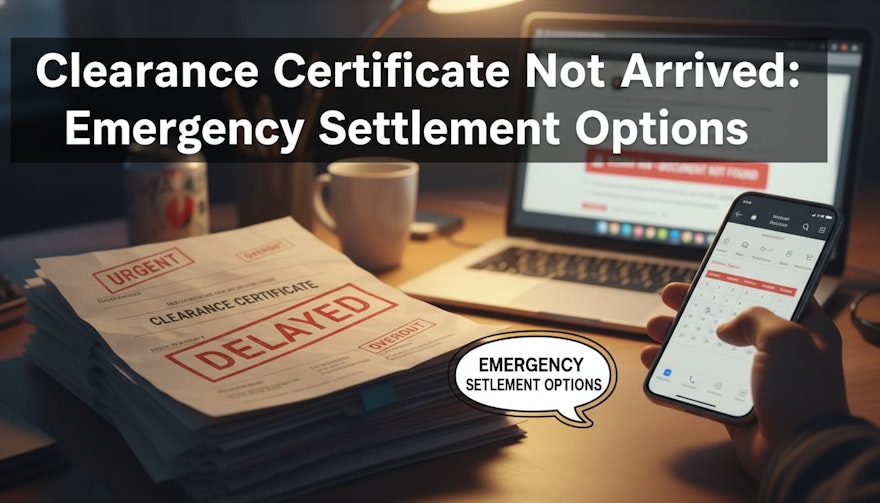
It’s the classic Melbourne scramble. Settlement is booked, removalists are pencilled in, and you’re checking your mobile between tram stops in the CBD. Then someone says the words you don’t want to hear: ‘We still don’t have the clearance certificate.’
When this hits close to settlement, it can feel like everything is about to tip over. The good news is a missing certificate doesn’t automatically mean the deal dies. There are workable routes, and the right one depends on timing, your cash flow, and what your contract allows.
This is general information for Victorian property matters, not personalised legal advice.
Which ‘clearance certificate’ is missing?
In Melbourne conveyancing, people often use the same phrase for different documents. Two come up a lot.
ATO clearance certificate (foreign resident capital gains withholding).
From 1 January 2025, buyers generally must withhold 15% of the purchase price (or market value, which is usually the contract price) and pay it to the ATO unless the seller gives the buyer a valid clearance certificate on or before settlement. Even if you’re an Australian resident, the buyer still has to withhold if the certificate isn’t provided in time. If you want a plain English refresher, see what is a clearance certificate application.
Victorian property clearance certificate (State Revenue Office).
This certificate is about state taxes that can be secured by a charge on the land, like land tax and certain other state taxes. Buyers and lenders may ask for it so they can see what, if anything, is tied to the property and make sure it’s dealt with at settlement.
If you’re unsure which certificate is missing, don’t guess. Your conveyancer can confirm what’s been ordered, what’s outstanding, and what the other side is asking for.
The first hour: get the facts before you pick a path
When settlement is close, the fastest fixes usually come from a calm, slightly boring checklist.
Check whether it has already been issued.
ATO clearance certificates are often delivered as a PDF. We regularly find them sitting in a junk folder, with an accountant, or in a shared inbox nobody checks. If you applied yourself, log in and confirm the status. If your accountant or conveyancer applied, ask them to confirm what has been received and when.
Confirm every owner has applied.
One property can have two sellers, three siblings, a trust, or a company. With ATO clearance certificates, each seller named on title generally needs their own certificate. It’s a common last minute catch.
Make sure the details match the contract and title.
A missing middle name, a recent surname change, or an old address can slow things down. If anything looks off, flag it immediately so your conveyancer can decide the safest way forward.
If settlement is in the next two days: three realistic options
Once you’re inside a tight window, these are the usual routes.
Option A: Settle on time with buyer withholding (ATO pathway)
This is the ‘keep settlement moving’ option. Settlement can still go ahead, but the buyer withholds 15% and pays it to the ATO under the foreign resident capital gains withholding rules. You receive the balance at settlement.
What it looks like behind the scenes:
the buyer (or their conveyancer) completes the purchaser payment notification so the ATO issues a payment reference number
the buyer pays the withholding amount to the ATO as part of settlement arrangements
your settlement statement is adjusted so the withheld amount comes out of what you receive
A quick Melbourne example.
You’re selling a Brunswick townhouse for $900,000 and buying a unit in Southbank. If you can’t provide the ATO clearance certificate in time, $135,000 is withheld and sent to the ATO. You receive $765,000 at settlement. If your next purchase needs that extra $135,000, you may need to speak with your broker or lender about bridging or another short term solution.
What happens to the withheld money?
The withheld amount is treated as a credit against the seller’s tax position. It’s commonly dealt with when you lodge your tax return for the year of the sale. The timing and outcome depends on your broader tax situation, so it’s worth checking with your accountant early, not after settlement.
This option is often the least disruptive when you have a chain of transactions, fixed moving dates, or a buyer who is ready to go.
Option B: Negotiate a short settlement extension
If the certificate really is close and both sides are cooperative, a short extension can work. Think one to a few business days.
What to watch:
Penalty interest and notices. Victorian contracts often allow interest to be charged when settlement doesn’t occur on the due date, and formal notices can follow if the delay drags on. The result depends on the contract wording and the facts of the delay. For a practical explanation of how this tends to play out locally, read penalty interest for late settlement.
Chains can snap. If you’re selling in Glen Waverley and buying in Williamstown, your buyer might also be selling, and their buyer might be selling too.
Banks need rebooking time. Some lenders need notice to move settlement bookings in PEXA and to reissue payout figures.
An extension can still be the right move if withholding would derail your next purchase and the buyer is willing to cooperate. It needs clear written agreement so everyone is working off the same new date.
Option C: Push for urgent processing, but plan as if it won’t land in time
The ATO says clearance certificates can take up to 28 days to process, even though many are issued sooner. If settlement is looming, you can contact the ATO, check the status of the application, and find out if anything is missing. The number commonly used for clearance certificate enquiries is 13 28 66.
If a Victorian property clearance certificate is involved, you can contact the State Revenue Office on 13 21 61 to check the status and ask what can be done for urgent settlements.
Sometimes a follow up gets a stuck application moving. Sometimes it doesn’t. The safest approach is to chase urgently while your conveyancer prepares the withholding paperwork or an extension request at the same time.
The money question: can you absorb a 15% hole on settlement day?
This is where the stress usually lives.
If you’re selling to fund a purchase, 15% can be the difference between settling and not settling. It can also affect your mortgage discharge if your payout figure is tight.
A few practical moves:
Speak to your broker or lender early. If there’s any chance withholding will apply, tell them straight away. You’re trying to avoid a Monday morning surprise when the numbers no longer work.
Ask for a revised settlement statement. Your conveyancer should show you the figures with withholding included so you can see the gap in black and white.
Keep your moving plan flexible. If you’re counting on same day settlement to move from an inner north rental into your new place, start lining up a backup plan, even if you hope you won’t need it.
If you’re a buyer reading this, remember your bank and settlement agent need enough time to complete the purchaser payment notification and organise payment.
Why certificates go missing at the last minute
Most emergencies have a simple start. They just don’t feel simple when settlement is two days away.
Applications lodged too late. ATO processing can be quick, then suddenly not, especially if extra checks are triggered.
Co owners and entity mix ups. One seller applies, the other doesn’t. Or a trust sells the property but the certificate was requested in an individual’s name.
Details don’t match. Name changes, incorrect dates of birth, old addresses, or ID details that don’t line up.
Weekend assumptions. A Friday application for a Monday settlement leaves almost no breathing room.
Confusion between ATO and state certificates. Victorian transactions can involve land tax checks, owners corporation documents, council certificates and more. ‘Clearance certificate’ gets thrown around, and people assume it’s one thing.
Where the contract comes in (and why early review helps)
When settlement is at risk, the contract terms decide what each party can demand and what it might cost to change the date. That’s one reason we encourage early contract review, even when you’re just ‘thinking about it’ after a Saturday inspection.
If you’re buying, the Section 32 pack is where many of the key disclosures sit. If you want a refresher on what it should include in Victoria, see what is a Section 32 vendor statement.
If you’re dealing with land tax and state charges, our guide is land tax adjusted at settlement explains what’s common in Victoria and what buyers and sellers should be looking out for.
A steady ‘weekend emergency’ playbook
If you’re reading this on a Friday with a Monday settlement:
Tonight
gather your ATO application receipt or reference number, plus proof of when you applied
confirm each seller on title has applied
search every inbox for the issued certificate, including junk folders
Next business morning
call the ATO on 13 28 66 and ask for the status of the clearance certificate application
if a Victorian property clearance certificate is involved, call the State Revenue Office on 13 21 61
ask your conveyancer to prepare both pathways so you’re not stuck if one option falls over
Before settlement time
make sure the buyer’s side has had enough time to complete the purchaser payment notification and organise payment, if withholding will apply
get any extension confirmed in writing if the date is changing
If you want a broader guide to what your conveyancer should be doing when settlement is under pressure, read your settlement is delayed in Melbourne: 5 actions your conveyancer should take immediately.
How to avoid the same stress next time
The most practical prevention move is simple: apply early.
ATO clearance certificate: apply as soon as you’re preparing to sell. Certificates are generally valid for 12 months, so you don’t need to wait until the contract is signed if a sale is on the horizon.
One certificate per seller: set a reminder so every owner’s certificate is ready to hand over.
Keep names consistent: if you’ve changed your surname, sort the paperwork early so it doesn’t become a settlement day drama.
Do state tax checks early: buyers often want comfort that there’s no state tax charge sitting on the land. Sorting that early keeps settlement smoother.
Need help right now?
If your clearance certificate hasn’t arrived and settlement is close, we can step in quickly. We’ll review what’s missing, work out whether withholding or a short extension is the safer move, and coordinate with the other side so settlement doesn’t become a Monday morning disaster.
Contact Pearson Chambers Conveyancing for a complimentary Section 32 contract review and clear, Melbourne based guidance.
Email: contact@pearsonchambers.com.au
This article is general information only and isn’t legal advice.