![[object Object]](https://umsousercontent.com/lib_lphGCikIbVHjRWIV/w8mzrofmgaa9b3om.png?w=52)
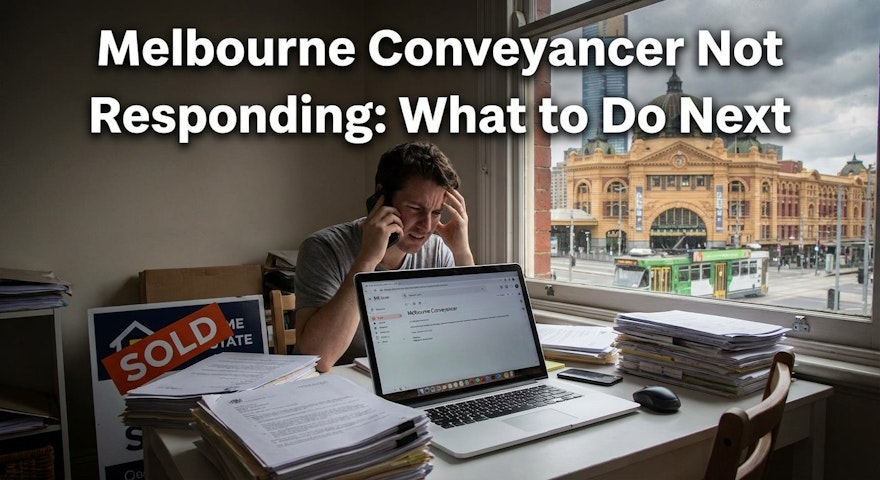
You know the feeling. It’s a grey Saturday in Hawthorn, you’ve just come back from a frantic round of inspections, and settlement is creeping closer. You’ve emailed. You’ve called. You’ve left a polite voicemail that now feels a bit too polite. Still nothing.
When you’re buying or selling in Melbourne, silence from the person meant to keep everything on the rails is more than annoying. It can put deadlines, finance and settlement at risk. The good news is you’re not stuck. There are sensible steps you can take, and you can take them without turning the whole transaction into a drama.
When silence is a real problem (and when it’s just timing)
Most conveyancers and property lawyers aren’t sitting around ignoring you for fun. They’re juggling banks, agents, other practitioners, electronic settlement tasks, and the constant back and forth that comes with Melbourne property.
That said, there’s a difference between ‘I’m in back to back settlements today’ and ‘I’ve disappeared’.
It’s time to act when:
You’ve had no acknowledgement after repeated contact attempts over several business days
You’re close to a deadline (auction, cooling off, finance approval, settlement) and you can’t get clarity
Promised call backs keep slipping with no explanation
You’re getting vague, half answers that don’t deal with what you asked (especially around Section 32 issues)
Even if they’re genuinely swamped, you still deserve a clear timeframe and a plan.
What response time is reasonable in a Victorian property matter?
Response times vary depending on where you’re at in the transaction. A simple rule of thumb: the closer you are to a critical date, the faster communication should be.
Here’s a practical guide many Melbourne clients find helpful:
| Where you’re up to | What feels reasonable | What’s not okay |
| Contract and Section 32 review (no deadline) | Acknowledgement within a day or two, detailed response in a few days | Silence that leaves you guessing before an offer or auction |
| Offer accepted, conditions ticking (finance/building) | Reply within one to two business days | Missing time sensitive questions about special conditions |
| Settlement is approaching | Same day to 24 hours for urgent items | Going quiet while figures, adjustments, or bank requirements are unresolved |
| Settlement week | Same day where possible | Being unreachable when documents must be signed or tasks must be completed |
You’re not asking for instant replies at midnight. You’re asking for a basic professional standard: ‘Got it, I’m onto it, I’ll come back to you by Wednesday.’
Start with a simple triage: who are you dealing with?
In Victoria, conveyancing work can be handled by a licensed conveyancer or by a lawyer (usually through a law firm). Day to day, the experience can look similar. When things go wrong, the pathways to escalate are different.
So, before you escalate externally, check:
Is your representative a licensed conveyancer (often their own business or conveyancing practice)?
Or are you dealing with a law firm where your matter is being handled by a solicitor or supervised conveyancing team?
If you’re not sure, look at the email signature, costs agreement, or the engagement letter you signed at the start. This matters later if you need to lodge a formal complaint.
Put everything in writing and build a paper trail
If communication has broken down, your best friend is a neat, calm paper trail.
Create a simple running log with:
Date and time you contacted them
How you contacted them (call, email)
What you needed answered (keep it specific)
Any deadlines affected (finance approval date, settlement date, auction date)
Then send one clear email that does three things:
Lists the outstanding items in dot points
Sets a deadline for a response
Flags that you’ll need to take steps to protect settlement if you don’t hear back
Here’s a tone that’s firm without being inflammatory:
‘Hi [Name], I’m still waiting on the items below and need to keep the transaction on track.
Could you please confirm by close of business [day] when you’ll provide an update (or respond in full)? If I don’t hear back, I’ll need to make alternative arrangements to protect the settlement timeline.’
Keep it short. One screen. No essays.
If they have an assistant, practice manager, or reception contact, copy them in. You’re not trying to embarrass anyone, you’re just making sure your matter doesn’t fall through the cracks.
Escalate inside the business (without burning bridges)
If the deadline passes, escalate within the practice before you jump straight to formal complaints.
What to do next depends on who you hired:
If it’s a conveyancing practice or small business
Call the main number during business hours and ask to speak with the principal or manager. Calmly explain you’re worried about timeframes and need an urgent update.
If it’s a law firm
Ask for the supervising solicitor, the principal, or the practice manager. Most firms have internal systems for stepping in when a team member is unavailable.
A useful question is: ‘Who can take over the file today so settlement isn’t put at risk?’
It focuses on a solution, not blame.
Protect your settlement date while you sort the comms
A non responsive representative can put you at risk in a few predictable ways: delayed bank documents, missed signing, late adjustments, or scrambling for answers about conditions when you should be packing boxes.
A few practical moves can steady things:
Flag it with your lender or broker: If your bank is waiting on instructions or needs updated details, delays can snowball. Let them know you’re chasing an update.
Keep the agent in the loop (carefully): Agents can help with access, keys, and practical coordination. They can’t give legal advice, so keep it about timing and logistics.
Ask what’s already been done: If you can’t get your conveyancer on the phone, request a written status update: what’s completed, what’s outstanding, what’s urgent.
Be realistic about extensions: If settlement is close and you’re not confident things are ready, an extension can be negotiated. That may avoid last minute mistakes, and it can reduce the risk of delays triggering extra costs.
If you’re hearing whispers like ‘we’ll just sort it on the day’, treat that as a warning sign. Settlement in Victoria is usually electronic and time sensitive. Last minute chaos is where errors happen.
Can you switch conveyancers mid transaction?
Yes. In Victoria, you’re generally allowed to change representation during a conveyancing matter, even late in the process, as long as it’s handled properly and quickly. If you’re thinking about changing conveyancers, the key is not to wait until the day before settlement.
Switching tends to be smoother when:
The new conveyancer can review the file promptly
Your lender is notified early
The outgoing practice releases the file without delays
Everyone knows who is responsible for what from this point forward
If you do decide to switch, follow a clear handover process. A rushed, informal swap can create its own mess, especially if settlement is near. This guide on the process for changing conveyancers explains what that handover usually involves and what to watch for.
What the handover usually looks like
Most mid transaction changes involve:
Signing an authority so your file can be released
Your new conveyancer requesting the full file (including the contract, Section 32, correspondence, and settlement workspace details)
Notifying the other side’s representative and your lender
Reviewing what’s been done and what still needs attention
Confirming settlement figures, documents, and signing requirements
If settlement is close, the new representative may recommend requesting extra time. That’s not a failure. It’s often the sensible option if key items haven’t been checked properly.
Costs when you end the relationship
This is where people get caught off guard.
Even if you’re unhappy, you may still need to pay for work already completed. The amount depends on your costs agreement and what has genuinely been done.
A few practical tips:
Ask for an itemised invoice showing tasks completed and time spent (if applicable)
Ask what disbursements have been paid on your behalf (searches, certificates, platform charges)
Check whether there are fees linked to file transfer or administrative work
If the transaction collapses entirely, your fee position may change depending on what was agreed at the start. This article on conveyancing fees when deals collapse is a helpful reference point for common scenarios.
If costs are in dispute, try to keep that separate from the urgent priority: protecting settlement (or safely exiting the contract if that’s the direction you’re headed).
Choosing a replacement you can actually reach
If you’re making a change because communication has broken down, don’t repeat the same experience. The goal isn’t just a new name on the paperwork. The goal is someone who will pick up the phone when it counts.
When you’re selecting a replacement conveyancer, ask direct questions about:
Typical response times, and who covers the file if they’re in settlement
Whether you’ll have a direct contact person (not a rotating inbox)
Their capacity to take on a mid stream matter
Experience with your type of property (apartment with owners corporation, townhouse, off the plan, inner north period home with overlays)
How they handle urgent contract reviews and Section 32 questions when a deadline is looming
It also helps to go into the first call with a short list of deal breakers. These questions to ask before hiring can help you vet someone quickly, especially if you’re trying to move fast.
A small but telling sign: do they answer your initial enquiry clearly and promptly? That’s often the best preview of what the relationship will feel like when you’re under pressure.
Making a complaint in Victoria (and what it can and can’t do)
Complaints can be appropriate where service has fallen short, deadlines were missed, money has been mishandled, or conduct is concerning.
Two points can both be true:
You may want the behaviour addressed
A complaint process may not fix your settlement problem quickly enough
So, if settlement is close, focus on stabilising the transaction first (either by getting a response, escalating internally, or switching). Then decide whether to lodge a complaint.
In Victoria, the complaint pathway depends on who you hired:
If your conveyancing was handled by a lawyer or law firm, complaints about service or conduct are generally handled through the state legal regulator.
If your matter was handled by a non lawyer licensed conveyancer, consumer and licensing pathways apply.
If you’re unsure which category you’re in, your engagement documents will usually make it clear.
When you do lodge a complaint, it helps to provide:
Your communication log
Copies of key emails
A short timeline of what happened and what the impact was (missed deadlines, extra costs, stress, risk to settlement)
Keep it factual. Stick to dates and outcomes. Long emotional narratives are understandable, but they can muddy the key points.
If settlement is days away
If you’re within a week of settlement and your conveyancer is uncontactable, treat it as urgent.
A practical ‘right now’ plan:
Send a short email requesting an immediate status update and asking for confirmation of settlement readiness
Call the office and ask for the principal or manager
Contact a replacement conveyancer and explain the timeline plainly
Notify your lender that you’re sorting representation, so they’re ready to update contact details and documents
Gather everything in one folder: contract, Section 32, special conditions, finance documents, insurance, building and pest reports, and any correspondence you have
Don’t try to wing it alone. Victorian settlements are typically electronic, and the steps are technical. You want someone with the right access and experience to step in quickly and safely.
Common questions people ask
Can I just handle settlement myself?
For most buyers and sellers, it’s not practical. The process is usually electronic and involves systems and verification steps that are designed for qualified users. A replacement conveyancer is normally the fastest and safest route.
Will changing conveyancers upset the vendor or the agent?
It’s common enough that most professionals won’t be shocked. What matters is that the other side is told who is acting, and that timeframes are managed properly.
Will my bank refuse to work with a new conveyancer?
Banks deal with changes regularly. The key is giving them the new details early so documents and instructions don’t stall.
What if the outgoing conveyancer refuses to release the file?
That can happen if fees are outstanding or there’s a dispute. A new representative can often manage the request professionally and help get the file released quickly.
Feeling stuck? We can help you steady the deal
If your conveyancer has gone quiet and you’re worried about deadlines, you don’t have to push through it alone. Pearson Chambers Conveyancing can review where things are at, explain your options, and help you protect your next steps, including a complimentary Section 32 contract review if you’re still in the buying phase.
Email contact@pearsonchambers.com.au.
This article is general information only and isn’t legal advice. For guidance that fits your exact contract, timing, and lender requirements, please get tailored help.