![[object Object]](https://umsousercontent.com/lib_lphGCikIbVHjRWIV/w8mzrofmgaa9b3om.png?w=52)
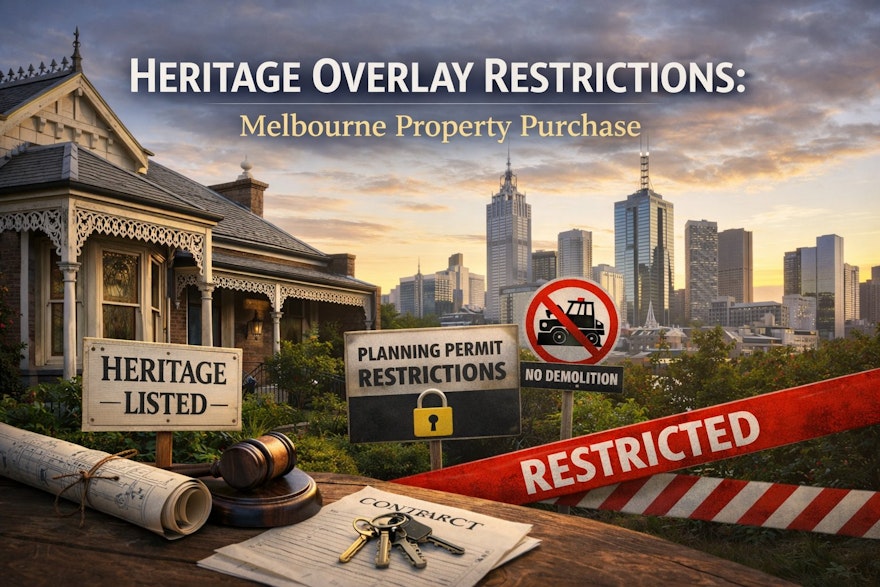
You’ve found a place with real character, maybe a terrace in Carlton, a cottage in Brunswick, or a weatherboard in Hawthorn. You can picture the future: a brighter kitchen, a rear extension, maybe a tidy front fence and solar so you’re not feeding the power company forever.
Then you spot two words in the paperwork: Heritage Overlay.
For a lot of Melbourne buyers, that’s where the nerves kick in. Are you about to buy a home you can’t touch? Will the council block your renovation? What if you just want to repaint, replace windows, or build a garage?
A Heritage Overlay doesn’t mean ‘no changes’. People renovate heritage homes all over Yarra, Port Phillip, Stonnington, Boroondara, Moonee Valley and the City of Melbourne every day. It does mean you need to do your homework early, because the overlay can affect time, cost, and what approvals you’ll need.
This is general information only, not personal legal advice. If you’re looking at a specific property, a proper contract and Section 32 review is the safest way to understand your position before you commit.
What a Heritage Overlay is, in Melbourne terms
A Heritage Overlay is a planning control in the local council planning scheme, used to protect places with heritage value. That can be a single building, or it can be a whole precinct where the street presentation is the main thing being protected.
Heritage Overlays can cover:
the building and the land around it
visible features like roof form, chimneys, verandahs, windows, fences and decorative details
sometimes trees, depending on the schedule for that place
Two houses can look similar from the street, and sit in the same suburb, yet only one has the overlay. The only reliable approach is to check the planning maps and the overlay schedule.
Heritage Overlay vs Victorian Heritage Register
Buyers often assume ‘heritage is heritage’. In Victoria there are two different systems.
Heritage Overlay: part of the local planning scheme and managed by council.
Victorian Heritage Register: state level protection under the Heritage Act, managed by Heritage Victoria.
A property can be in one, the other, or both. If it’s in both, you may need to deal with council planning controls and state heritage approvals.
Why Heritage Overlay restrictions exist
Councils aren’t trying to freeze your home in time. They’re trying to protect what makes it important. In practice, that often means the parts you can see from the street, and the details that tell the story of the building or the streetscape.
That’s why rear extensions can be approved quite often (especially where they’re set back and not dominant), while front changes and demolition tend to be tougher.
What usually needs a planning permit under a Heritage Overlay
The exact controls vary because the schedule to the Heritage Overlay can switch certain controls on or off for a particular place.
Still, there are common areas where permits are regularly required.
External alterations and new works
External building works are the most common trigger: changing the roofline, adding new openings, removing a verandah, altering materials, major changes to facades, and similar works.
A simple Melbourne example: you buy a single fronted cottage in Northcote and want a wider front window to bring in more light. Lifestyle wise it’s a winner. From a heritage point of view, changing the front elevation can be a big deal because it alters what the overlay is protecting.
Demolition, even partial
Removing a building, or pulling out features like chimneys or front verandahs, can require a permit. If the place is a key part of a heritage precinct, councils can be strict.
Painting controls and ‘unpainted surfaces’
Some properties have external paint controls, and councils can also treat painting an unpainted surface (like bare brick) as a major change to appearance.
If you’re planning a quick repaint before moving in, check this early. It’s far less stressful to plan for approvals than to repaint and hope no one notices.
Windows and doors
Replacing original timber sash windows with modern frames is a frequent source of disputes. Councils often care about proportions, profiles, glazing patterns and reflectivity. Double glazing can be possible, yet the detailing matters and ‘close enough’ can still be refused.
Fences, outbuildings and garages
Depending on the schedule, fences and outbuildings can require a permit, especially when they’re visible from the street or change the character of the frontage.
Trees
Some schedules apply tree controls. In those cases, removing, destroying or lopping a tree can require a permit, with narrow exceptions for urgent safety works.
If you’re buying a property with a big established tree close to the house, don’t assume you can ‘deal with it after settlement’. It can become part of the planning and building story.
Routine repairs and maintenance
Most councils accept ‘like for like’ repairs and maintenance without a permit, as long as you’re not changing the appearance. The tricky part is the slide from ‘repair’ into ‘replacement with something different’ (new roofing profile, different cladding, new fence style). That’s where people get caught out.
The schedule is everything
Heritage Overlays aren’t identical. The schedule can tell you if the place has:
internal alteration controls
external paint controls
tree controls
extra controls over outbuildings and fences
inclusion on the Victorian Heritage Register
That’s why ‘my neighbour got approval’ isn’t a safe guide. Your place might have a different set of switches turned on, even in the same street.
What to check before you sign (or bid at auction)
Melbourne buying moves fast. Your due diligence still needs to happen early, especially if the property is going to auction where the contract is usually unconditional.
Start with the Section 32 and contract
A Section 32 (vendor’s statement) is meant to disclose key matters about the land, including planning controls.
When we review a Section 32 for a heritage property, we look for:
the zone and overlays
any disclosed planning permits and building permits
restrictions like covenants and easements that can also limit building plans
owners corporation material for apartments or townhouses (heritage issues can still be relevant)
Generate a Planning Property Report and check VicPlan
You can generate a planning property report for an address, showing zones and overlays and linking you to the relevant planning controls.
It’s also worth checking for proposed changes and past changes. VicPlan includes tools that let you view planning information over time, which can be useful if you’re buying in an area where heritage controls are being added or adjusted.
Find the heritage citation or statement of significance
Councils usually have a heritage citation (or similar document) explaining what’s significant. Read it with your plans in mind:
Is it mainly the frontage and roof, or the whole building?
Is the significance about materials and details, or the streetscape as a whole?
Are there particular elements called out, like verandahs, fences, or chimneys?
This is the document that helps you shape a renovation that ‘fits’ rather than fights the place.
Check the permit history
If the current owner has done works, there may be permits on file. Sometimes that’s reassuring, because it shows council has accepted certain changes. Sometimes it’s a warning, especially when you can see alterations that aren’t mentioned in the disclosure.
A mismatch between what’s on site and what’s disclosed can create trouble later, so it’s worth raising early.
Everyday Melbourne scenarios (and what to think about)
‘We want a modern front’
A couple buys a weatherboard in Hawthorn and plans to strip back decorative timberwork, square off the verandah, and replace the front fence with a tall, solid screen. It might look clean and contemporary, yet it can cut straight across what the overlay is trying to protect. A more workable approach is often to keep the front respectful and do the modern move at the rear.
‘We want solar, but it’s a heritage street’
Solar panels can be possible in many heritage areas, especially where they’re not visible from the street. In some council areas, a system that is visible from a street or public park may need a planning permit.
If solar is important to you, check roof orientation and sight lines early. Sometimes the answer is a different layout or locating panels on a less visible roof plane.
‘It’s an apartment, so heritage won’t matter’
Apartments can be affected too, especially older blocks in places like St Kilda, East Melbourne, South Yarra and Armadale. External changes (awning styles, balcony enclosures, external air conditioning units, facade works) can bring heritage controls and owners corporation approvals into the same conversation.
Timing and budget: the hidden cost of heritage
Heritage controls can add steps to the planning process. A permit application may need measured drawings, detailed materials schedules, and a heritage impact statement from a specialist. Neighbour notification can also apply in some cases.
That means time. It can also mean higher design and consultant fees, especially when council asks for revisions.
The other quiet cost is trades and materials. Restoring timber joinery, matching heritage profiles, or sourcing suitable roofing can cost more than standard replacement, and you’ll want trades who actually know what they’re doing.
A quick buyer checklist for Heritage Overlay properties
A Heritage Overlay shouldn’t scare you off. It should change how you check the property.
Confirm the overlay and read the schedule for controls like paint, trees, internal controls and fences.
Read the heritage citation to see what council is trying to protect.
Check if the property is also on the Victorian Heritage Register.
Look for existing permits and compare them with what you see at inspection.
Build extra time and professional fees into your plan if major works are on your wish list.
Talk to Pearson Chambers Conveyancing before you commit
If you’re buying a Melbourne property affected by a Heritage Overlay, the best time to get help is before you sign, and definitely before auction day.
Pearson Chambers Conveyancing can review your Section 32 and contract, explain what the planning controls mean in plain language, and flag issues that often lead to delays or extra expense. We also offer a complimentary Section 32 contract review, so you can make a confident call before you commit.
Email contact@pearsonchambers.com.au to book your complimentary Section 32 review.