![[object Object]](https://umsousercontent.com/lib_lphGCikIbVHjRWIV/w8mzrofmgaa9b3om.png?w=52)
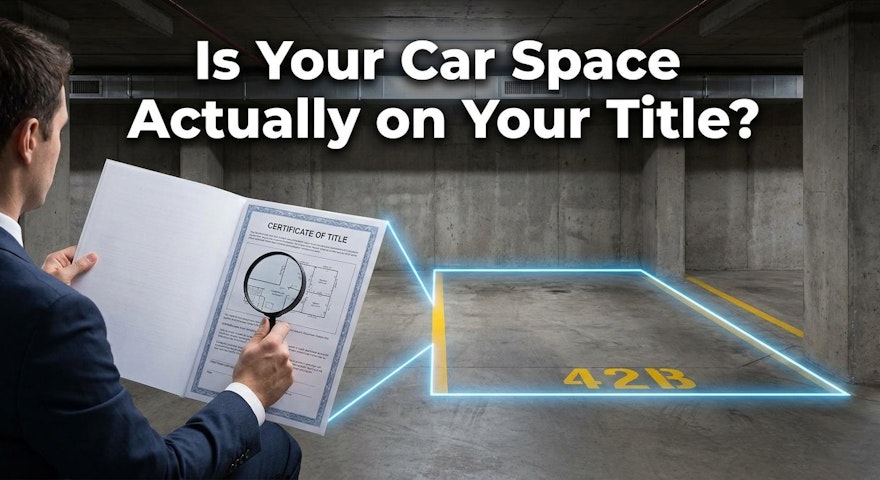
In Victoria, a car space can be held as part of your apartment lot, as a separate lot with its own title, as common property with an owners corporation lease or licence, or as an informal allocation with little legal weight. Section 14 of the Owners Corporations Act 2006 (Vic) lets an owners corporation lease or licence common property by special resolution, which generally needs 75% support by lots or lot entitlements depending on how the vote is taken. Your conveyancer checks the plan, title, contract and Section 32 before you sign, so you know whether the parking is actually being transferred to you.
Picture a Saturday inspection in Brunswick. The agent points to a neat bay near the lift and a cage beside the bike racks. It feels obvious that they come with the apartment. On paper, it may not be that simple.
Why does it matter if the car space is on your title?
If the car space is not captured properly, you may buy the apartment without getting the parking you thought you were paying for. That can affect daily use, resale value and future leasing plans.
The issue is not whether the bay looks private. The issue is what the registered documents say. A painted number on the concrete floor is not enough.
We've seen this come up when the advertising says ‘secure car space’, but the contract only describes the apartment lot. Once a buyer is emotionally attached, or has already bid at auction, fixing that gap can be awkward.
How can a car space be owned in Victoria?
A Victorian apartment or townhouse car space is usually held in one of four ways. The safest answer comes from the plan of subdivision, title and contract, not the listing photos.
1. The car space is part of your apartment lot
This is the clean and simple version. The car space sits within the same lot as the apartment, even if it is physically in the basement and the apartment is upstairs.
On the plan, the lot may be shown ‘in parts’. One lot number can include the apartment, car space and storage cage. When you buy that lot, the parking comes with it.
2. The car space is a separate lot with its own title
A separate car space lot can be fine, but it needs to be included in the sale paperwork. In that setup, you are buying both the apartment lot and the car space lot.
The car space lot should appear in the contract of sale and the transfer. If the contract names only the apartment lot, the vendor may still own the car space lot after settlement. That is a small drafting issue with a very annoying result.
Separate lots can also affect land transfer duty, because the way the purchase is structured may change how duty is assessed. Your conveyancer should flag this before you sign.
3. The car space is common property with exclusive use
Some buildings treat parking as common property owned by all lot owners through the owners corporation. A buyer may then have exclusive use of one bay under a lease or licence.
This is workable, but the paperwork matters. Under section 14 of the Owners Corporations Act 2006 (Vic), the owners corporation can lease or licence the whole or part of the common property to a lot owner or another person by special resolution. A special resolution is not a casual committee chat. It generally needs 75% support by lots or lot entitlements.
A lease and a licence can feel similar when you park there each night, but they are not always equal. A lease may be registered and may be set up to travel with the apartment. A licence may be more personal and easier to end, depending on its wording. Ask not just ‘Can I park there?’ Ask ‘Will my right survive settlement, resale and a future owners corporation committee?’
4. The car space is an informal allocation
An informal car space is the weakest option. This is where everyone acts as though apartment 3 uses space 14, but there is no title, lease, licence or registered rule to back it up.
Long habits do not always create secure rights. If a future owners corporation changes the parking map, the person relying on a handshake or old spreadsheet may have little to point to. Treat this as a warning sign, not a bonus.
How does a conveyancer check whether the car space is really yours?
A conveyancer checks the plan, title, contract and Section 32 vendor statement together. The answer only makes sense when they line up.
In practice, the check usually goes like this:
- Find the car space on the plan and work out whether it is inside your lot, a separate lot or common property.
- Match the lot numbers and parcel identifiers against the title search.
- Check the contract of sale to make sure every lot being sold is listed.
- Review the Section 32, including the owners corporation certificate, rules, minutes and any lease or licence affecting parking.
- Ask the vendor's representative to fix any gap before you sign, or before you go unconditional.
The same check matters when buying a townhouse in Melbourne. A driveway, garage, courtyard or visitor bay may feel attached at inspection, while the paperwork shows a shared arrangement.
What should the Section 32 show about parking?
The Section 32 should give buyers enough property information before signing. For apartments and units, that often includes owners corporation material explaining the parking arrangement.
Look for the plan, title details, owners corporation certificate, rules, fees, minutes, leases, licences and any contracts affecting common property. If the car space is separate, the Section 32 and contract should not leave you guessing.
A Section 32 does not prove the bay is clear of someone else's bike rack or that the remote works. It should help confirm the legal basis for the space.
What about visitor parking and accessible spaces?
Visitor and accessible spaces are not private add ons. They are usually shared facilities, unless the legal documents clearly say otherwise.
If an agent says ‘you can just use the spare visitor bay’, be careful. A visitor space is not something you can sell with the apartment later. The same caution applies to accessible spaces, loading bays and turning areas.
What if the storage cage is missing from the title?
Storage cages need the same title check as car spaces. They may be part of your lot, a separate lot, common property under exclusive use, or an informal allocation.
The risk is easy to miss because a cage feels less valuable than a car space. For apartment buyers in the CBD, Southbank, Carlton or Footscray, a secure cage can still matter. Make sure the contract and plan show what you are getting.
What should you do before signing?
Ask for a contract review before you sign, especially before an auction. Parking problems are easier to fix while the vendor still wants your signature.
Before you commit, ask:
- Is the car space part of the apartment lot?
- If it is a separate lot, is that lot named in the contract and transfer?
- If it is common property, is there a valid lease or licence?
- Does the right pass to future owners?
- Does the storage cage have the same legal status as the car space?
- Do the plan, title, contract and Section 32 all match?
A neat parking bay should not be a leap of faith. It should be clear on paper.
Frequently asked questions
How do I know if my car space is on my title in Victoria?
Your conveyancer checks the plan of subdivision and title. If the car space is part of your apartment lot or a separate lot being transferred to you, it will appear in the title material and parcel details. If it is marked as common property, it is not on your title, and your right to use it depends on a lease, licence or other formal owners corporation arrangement.
Can I buy an apartment where the car space isn't on the title?
Yes. Many Victorian buildings use common property parking with exclusive use rights rather than title ownership. The key is to check that the right is properly granted by the owners corporation, clearly documented, and strong enough for your intended use and future resale.
What happens if my car space is a separate lot?
The separate car space lot needs to be listed in the contract of sale and included in the transfer. If it is only mentioned in the advertisement, you may settle on the apartment without receiving the car space lot. A contract review should catch this before you sign.
Is exclusive use of a common property car space safe?
Exclusive use can be safe if it is properly created and documented. In Victoria, an owners corporation can lease or licence common property by special resolution under the Owners Corporations Act 2006 (Vic). A registered lease usually gives a stronger position than a loose or personal licence, so the wording needs close review.
Does a car space add to my stamp duty?
It can. If the car space is a separate lot bought with the apartment, the duty position may depend on how the transaction is structured and assessed. Your conveyancer can check whether the apartment and car space lot need to be handled together for duty purposes.
Can the owners corporation take my car space away?
That depends on the legal basis for the space. If it is only an informal allocation on common property, the owners corporation may be able to reorganise parking. If you have a properly granted and registered right, your position is much stronger.
What should I check before signing a contract for an apartment with parking?
Check whether the car space is part of your lot, a separate lot, common property with exclusive use, or an informal allocation. Make sure the contract, title, plan and Section 32 all match. The safest step is to ask a conveyancer to review the contract before you sign or bid.
About the Pearson Chambers Conveyancing team
Pearson Chambers Conveyancing is a Melbourne focused conveyancing team that works with apartment, unit and townhouse buyers across Victoria. We regularly help first home buyers understand contracts, owners corporation records, titles and plans before they commit. Car space and storage cage checks are part of the day to day work our team does when reviewing apartment contracts.
Sources we consulted
- Consumer Affairs Victoria: Buying an apartment or unit checklist
- Consumer Affairs Victoria: Seek expert advice on property
- Consumer Affairs Victoria: Owners corporations definitions
- Consumer Affairs Victoria: Voting and ballot guidelines
- Land Use Victoria: Plan of subdivision glossary
- Owners Corporations Act 2006 (Vic)
Talk to Pearson Chambers before you sign
Buying an apartment and not sure whether the car space or storage cage is actually on the title? Talk to Pearson Chambers Conveyancing before you sign. We offer a complimentary Section 32 contract review, so you can understand what the contract, plan and owners corporation documents say before you commit.
Email contact@pearsonchambers.com.au.
General information only, current as at the date of publication. Victorian conveyancing rules and legislation change frequently. Please contact the Pearson Chambers Conveyancing team for advice on your specific contract.