![[object Object]](https://umsousercontent.com/lib_lphGCikIbVHjRWIV/w8mzrofmgaa9b3om.png?w=52)
By the Pearson Chambers Conveyancing team.
Published 22 April 2026
We get asked this a lot by Melbourne buyers who are moving fast, especially after a Saturday inspection when the contract pack lands in their inbox and the services page looks almost too small to matter. It does matter, and when it is wrong, the fallout can be expensive.
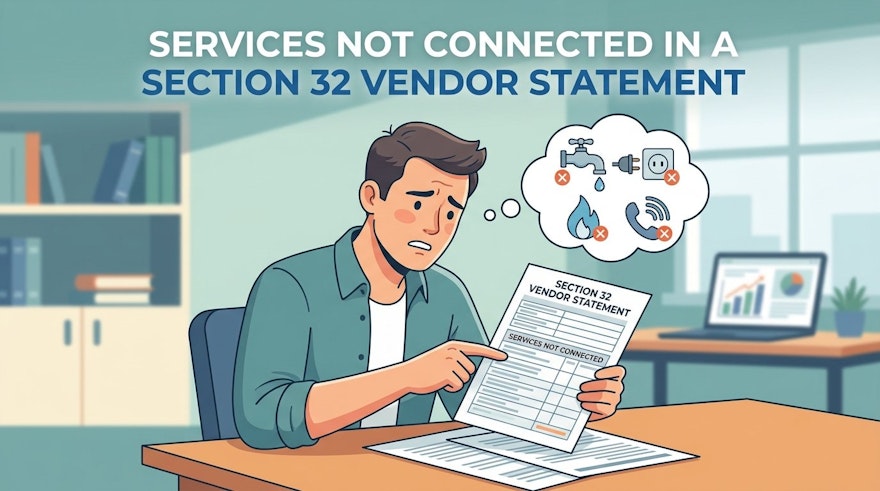
The short answer: In Victoria, section 32H of the Sale of Land Act 1962 requires a seller to say whether electricity, gas, water, sewerage or telephone are not connected to the land. If a service is left blank, that is usually read as the seller saying it is connected, not as an open question. If that statement is wrong, a buyer may have a right to rescind before accepting title and possession.
Why does a blank services box matter in a Section 32 vendor statement?
A blank box matters because section 32H works by exception. The seller is not giving you a glossy list of what the property might have, they are disclosing what it does not have.
That catches plenty of buyers out. The broader Section 32 vendor statement is already dense enough, so many people skim the services page and assume a blank means 'not sure' or 'not filled in yet'. In practice, a blank usually carries weight. If electricity is marked as not connected but sewerage is left untouched, the seller is effectively telling you sewerage is connected.
A townhouse in Tarneit, a weatherboard in Brunswick, or a weekender on the Mornington Peninsula can all present very differently once you look past the styling. If sewerage is actually septic, or the gas meter is dead, the issue can shape price, finance and whether you want to sign at all.
What does section 32H actually require?
Section 32H is narrow. It deals with five listed services only:
- electricity supply
- gas supply
- water supply
- sewerage
- telephone services
That is the whole list. It does not separately cover NBN, internet speed, solar panels, batteries, EV chargers or recycled water. Buyers often assume those sit somewhere in the Section 32 pack, but they usually do not. If those details matter to you, ask the agent, ask your conveyancer, and check the provider records yourself.
The other trap is wording. The law is about services not connected. It is not about what is available in the street or what a seller assumes still works because there is an old meter box on the wall. In our practice, we've seen buyers reassured by visible infrastructure that turned out to be historical only.
Is the water information statement the same as the services disclosure?
No, they are different documents and they do different jobs. The water information statement usually comes from the relevant water authority and is commonly attached to the Section 32 pack. The section 32H page is the seller's own disclosure.
That means the two documents should tell a consistent story. If the authority paperwork suggests there is no sewer main connection, but the services page leaves sewerage blank, that is a red flag. The same goes for water supply. A working outdoor tap does not always prove the property is connected to the reticulated network in the way the seller thinks it is.
This is one reason buyers should look at the services page together with the rest of the pack, not in isolation. A lot of the serious Section 32 red flags show up when one certificate quietly contradicts another.
What does 'not connected' mean in new estates and house and land packages?
In many new estates, it means exactly what it says, the lot is not yet physically connected and the buyer may wear the cost after settlement unless the contract says otherwise. That is common in growth corridor purchases and it is not automatically a defect.
We see this most often in places like Wollert, Beveridge, Rockbank, Officer, Tarneit and Truganina, where buyers are often buying a newly constructed house or land in a staged subdivision. The Section 32 may lawfully show several services as not connected. That does not mean the seller has done anything wrong. It means you need to understand the commercial reality before you sign.
Once you add authority charges, meter work, trenching, plumbing and site complications, the bill can move into many thousands of dollars. On a tight first home buyer budget, that can turn into a nasty surprise a few weeks after settlement.
The smart move is to turn the tick box into a number before the contract is signed. Sometimes that means pricing the connection into your offer. Sometimes it means negotiating a special condition that forces the seller to connect before settlement. Sometimes it means walking away.
What can go wrong in older Melbourne properties?
Older homes are where the paperwork can drift a long way from reality. In Fitzroy, Carlton, Richmond, Collingwood and South Melbourne, services have often been altered, abandoned, relocated or patched over more than once.
We have had clients come to us when an old Section 32 template appears to have been rolled forward without anyone checking the current position. Gas is a common example. The box says nothing, the old meter is still there, everyone assumes the service is live, then the first tradie says the property has no active gas connection. Sewerage is another.
Victorian conveyancers often point to the 2017 Supreme Court case of McHutchison v Asli when talking about this problem. The broad lesson is simple: septic is not the same as being connected to reticulated sewerage, and attaching other paperwork will not always save a badly worded services disclosure.
What should buyers check before signing?
The direct answer is this: do not treat the services page as filler. Read it slowly and cross-check it. Before any contract is signed, we would usually want these points covered:
- Check every listed service deliberately. Electricity, gas, water, sewerage and telephone should all have a clear position. No assumptions, no half-completed page, no lazy carry-over from an older file.
- Compare the services page with the water authority material. If the water information statement points one way and the seller's tick boxes point another, ask for an explanation before you sign.
- Ask whether 'connected' means live and usable now. A visible meter, old copper line or pipe stub does not prove a current supply.
- Price missing connections before you commit. If the seller says a service is not connected, work out the likely connection path and cost while you still have bargaining power.
- Check any shared infrastructure properly. If water, drainage or access depends on a registered arrangement affecting neighbouring land, ask to see the supporting documents. Shared service setups sometimes sit inside title documents or Section 173 agreements, and you want the full paper trail.
- Think about timing around settlement. Even where the issue is only account activation, leave room for delays and access problems. If you are trying to line everything up for moving day, read our guide on whether you can connect utilities before settlement, because the answer depends on the service, the retailer, access and the contract timing.
A corrected Section 32 before signing is always cleaner than an argument after the deposit has been paid.
What if the services page is wrong after you've signed?
If you have not signed yet, ask for a corrected Section 32 and do not rush because the agent says 'everyone else is ready to go'. A short pause now is usually far cheaper than a dispute later.
If you have already signed, the position needs urgent review. Section 32K of the Sale of Land Act can allow a buyer to rescind where the seller gave false information, left out required information, or failed to provide a signed Section 32 before the buyer signed. The key timing point is that the right sits there only until title and possession are accepted, which in most standard Victorian sales means before settlement is completed.
That does not mean every typo blows up a contract. But where the misstatement goes to something real, such as sewerage, water or gas connection, the issue can be serious. The seller also carries a heavy job if they want to resist rescission, because they need to show they acted honestly and reasonably and that the buyer is still substantially in as good a position.
What about gas connections in new Victorian builds?
This area has shifted, so buyers should not rely on older blog posts or old estate-agent chatter. There are now two dates that matter.
From 1 January 2024, clause 53.03 of the Victoria Planning Provisions began stopping certain new planning permits from allowing a reticulated natural gas connection for new dwellings, apartment developments and residential subdivisions that need a permit. From January 2027, Victoria moves further, with new homes required to be built all electric.
So if you are buying land or a new build in 2026, 'gas not connected' may be the expected position, not a drafting mistake. For some buyers that is perfectly fine. For others, especially anyone planning a gas cooktop, gas ducted heating or gas hot water, it is something to understand before the dream kitchen starts taking shape.
Frequently asked questions
What services have to be disclosed in a Section 32 vendor statement in Victoria?
Under section 32H of the Sale of Land Act 1962, the seller must specify whether electricity, gas, water, sewerage or telephone are not connected to the land. Those are the five listed services. A blank entry is generally read as saying the service is connected.
Does a Section 32 vendor statement have to disclose NBN or internet?
No. NBN and internet are not part of the section 32H list. If internet type or speed matters to you, you should check it separately before signing.
Is the water information statement the same as the section 32H disclosure?
No. The water information statement comes from the water authority, while the section 32H page is the seller's own disclosure about services not connected. Both should be present in the contract pack and they should not contradict each other.
Can I walk away from a contract if the Section 32 vendor statement got the services wrong?
Often, yes, but timing matters. Section 32K can let a buyer rescind before accepting title and possession if the seller gave false information, failed to give required information, or failed to provide a signed Section 32 before the buyer signed.
What does services not connected actually mean on a Section 32 vendor statement?
It means the service is not connected to the land in the way the law expects at the time of the disclosure. In practical terms, the buyer may need to organise and pay for the connection after settlement unless the contract puts that job on the seller.
Who pays to connect services after settlement in Victoria?
Usually the buyer, unless the contract of sale says the seller must do it. That is why the cost of missing connections should be discussed before the contract is signed, not after the keys are handed over.
Does a septic tank count as sewerage being connected?
No. A septic tank is not the same thing as a reticulated sewer connection. A 2017 Victorian Supreme Court case, McHutchison v Asli, is often cited on this point and is one reason conveyancers treat the sewerage box so carefully.
About the Pearson Chambers Conveyancing team
Pearson Chambers Conveyancing is a Melbourne-focused conveyancing practice helping buyers, sellers and first home buyers across the inner suburbs, the middle ring and the growth corridors. We deal with contract reviews, Section 32 statements and settlement issues every day, so we know how easily a small disclosure box can turn into a big budget problem. This is exactly the sort of issue our team checks before a client signs.
Sources we consulted
- Sale of Land Act 1962
- Conveyancing and contracts for sellers
- Contracts and disclosure statements for estate agents
- Due diligence checklist for home buyers
- Clause 53.03 residential reticulated gas service connection
- Building electrification for residential buildings in Victoria
Need a complimentary Section 32 contract review?
If you are looking at a contract in Melbourne and the services page does not feel clear, send it through before you sign. The Pearson Chambers Conveyancing team can review the Section 32 and contract, explain what the service disclosures mean, and help you decide whether to negotiate, seek amendments or step away.
Email: contact@pearsonchambers.com.au
General information only, current as at the date of publication. Victorian conveyancing rules and legislation change frequently. Please contact the Pearson Chambers Conveyancing team for advice on your specific contract.