![[object Object]](https://umsousercontent.com/lib_lphGCikIbVHjRWIV/w8mzrofmgaa9b3om.png?w=52)
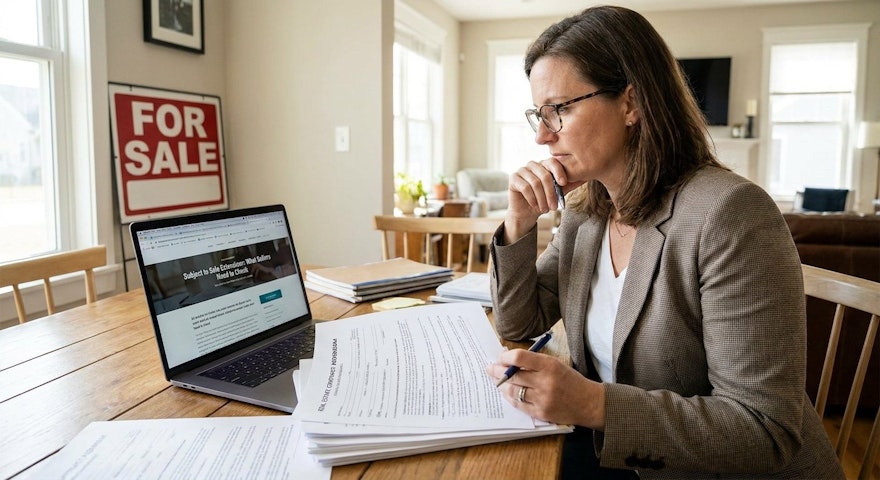
Your buyer says their own property is ‘almost sold’ and asks for another fortnight. Before you agree, check exactly what your signed contract requires them to achieve and which deadline they want changed.
The short answer: A request for another 14 days does not, by itself, extend a Victorian subject to sale condition. The buyer’s progress must be measured against the special condition in the signed contract, including the required sale milestone, deadline and any notice requirements. Extending the condition date also does not automatically extend settlement.
What does ‘almost sold’ mean under a subject to sale condition?
‘Almost sold’ has no fixed contractual meaning. What matters is whether the buyer has reached the precise milestone written into your special condition.
A buyer may say their unit has ‘sold’, but that could mean an accepted offer, a signed contract, or a sale with conditions still outstanding. Those stages are not interchangeable.
For example, a signed contract that remains subject to finance is not the same as an unconditional sale. If your condition requires the buyer’s property to be sold unconditionally by a stated date, a signed but conditional contract may not be enough.
Check the special condition, the rest of the contract and any later variations for the property to be sold, the required event, the deadline, any notice or evidence requirement, and what happens if the condition is not satisfied.
Victorian private sales can be made subject to the buyer selling an existing property, but there is no single subject to sale clause for every contract.
What evidence should a seller ask for before granting more time?
Ask for evidence that matches the contractual milestone, not just a general progress update. An agent saying ‘things are looking good’ may be reassuring, but it does not tell you whether the condition has been satisfied.
Your conveyancer can check any evidence requirement and seek relevant confirmation from the buyer’s representative.
Useful questions are whether both parties have signed the buyer’s sale contract, which conditions remain outstanding, when that sale is due to settle, whether required notice has been given, and why the extra time is needed.
In our practice, we’ve seen extension requests arrive with a simple message that the buyer’s property is ‘sold’. The useful next step is to separate the update from the contract test: if the buyer’s own sale still depends on finance, that may not meet a clause requiring an unconditional contract.
Which date does a subject to sale extension actually change?
Identify every relevant date before agreeing to anything. A contract can contain a subject to sale deadline, a separate notice deadline and a settlement date, and changing one does not necessarily change the others.
Suppose the buyer must obtain an unconditional sale by 15 September, while your settlement is fixed for 30 October. Extending the sale condition to 29 September gives the buyer two more weeks to satisfy the condition, but it does not automatically move the 30 October settlement.
If settlement is calculated from notification that the buyer’s sale is unconditional, moving the condition date may also affect settlement.
Ask your conveyancer to confirm the current and proposed deadlines, whether the sale milestone stays the same, any continuing notice period, and the effect on settlement and other rights.
Be alert to requests that change more than time. Replacing ‘unconditional sale’ with ‘signed contract’, for example, lowers the milestone the buyer must reach. That is a substantive change, not simply an extension.
What if the buyer has sold, but their purchaser needs more time?
First check whether your subject to sale condition is still operating. A problem in the buyer’s separate sale does not automatically revive a condition that has already been satisfied.
Imagine you are selling in Bentleigh and your buyer has contracted to sell a Southbank apartment. Their purchaser then asks for more time to obtain finance. If your special condition requires the apartment sale to become unconditional, the buyer may still need an extension because their required milestone has not yet been reached.
If your clause only required a signed contract and that milestone has already been achieved, the buyer may be asking for something different. They could be seeking a new protection, a settlement change, or another variation that was not part of the original subject to sale condition.
If the buyer’s sale later fails to settle, do not assume the original subject to sale condition gives them an ongoing right to walk away. Check the clause.
Send your conveyancer the request, earlier notices and the full special condition so they can identify what is still open.
Does a Victorian seller have to agree to the extension?
No, a buyer’s request alone does not oblige you to give extra time. You first need to check whether the existing contract gives the buyer any extension mechanism or other right that affects your response.
Your options may include agreeing, proposing a shorter fixed extension or refusing, subject to the contract’s wording.
Refusing extra time does not always make the contract unconditional. Depending on the clause, expiry may give one party a termination right, trigger a notice process or produce another contractual result. Granting an extension also does not need to waive every other obligation.
If your sale funds a townhouse purchase in Preston, check whether you have a linked settlement or another deadline under that contract. Giving your buyer more time does not extend what you owe your own seller.
What should be included in a written subject to sale extension?
A written contract variation should identify the exact contract, condition and change being agreed. It should leave no doubt about what the buyer must do next and by when.
For a subject to sale extension, ask your conveyancer to deal with:
- the new calendar date and, if needed, time
- whether the sale milestone itself remains unchanged
- whether evidence and notice obligations continue
- whether the settlement date stays fixed
- how an event based settlement date will be calculated
- what happens to existing escape rights or notices
- confirmation that other contract terms remain unchanged.
Use a clear calendar date rather than ‘another fortnight’, so there is no argument about when the extra period starts or ends.
Section 126 of the Instruments Act 1958 deals with written and signed evidence for agreements involving an interest in land. Property contract changes should therefore be documented carefully, and earlier emails or conversations should not be dismissed without review.
Can the seller still use an escape clause or consider another offer?
Only use rights that already exist in your contract. An extension request does not create an automatic right to give the buyer 48 hours, terminate the sale or replace them with another purchaser.
If your contract contains an escape clause, check its trigger, method of service, response period and result. You also need to check the contract's notice requirements if an escape notice, satisfaction notice or other notice has already been given.
A busy Saturday inspection in Richmond may produce a tempting backup offer, but receiving interest is different from entering another binding sale contract. Before accepting a second offer, have your conveyancer confirm when the first contract can lawfully end and how any backup offer can be documented.
What if the subject to sale deadline has already passed?
Get the complete timeline checked before you respond. Once the deadline has passed, the issue can involve expiry, notice rights and earlier communications, not just whether both sides want more time.
Send your conveyancer:
- the signed contract
- every previous extension or variation
- the buyer’s latest request
- any satisfaction, escape or termination notice
- relevant emails or messages between representatives and agents.
Do not backdate a variation or assume a later signature erases what happened at expiry.
Keep the deposit issue separate as well. If a contract lawfully ends because a condition is not met, the deposit may need to be returned. If the buyer is in default under a binding contract, different rights may apply. Refusing an extension alone does not prove that the seller is entitled to keep the deposit.
If the parties dispute whether the contract ended, legal advice may be needed before further steps are taken.
A practical seller checklist before saying yes or no
Before replying to an extension request, work through these five points:
- Read the exact milestone. Is the buyer required to sign a sale contract, obtain an unconditional sale or complete settlement?
- Confirm the present deadline. Check any time of day, notice period and earlier variation.
- Ask what remains outstanding. Match the buyer’s evidence to the clause, not to the agent’s shorthand.
- Check your own dates. Review your purchase, mortgage discharge, removal arrangements and settlement commitments.
- Document the response. If you agree to a change, have the variation record the new date and what stays unchanged.
A clear response should make the next contractual step and deadline easy to identify.
Frequently asked questions
Can a buyer extend a subject to sale condition without asking the seller?
Only if the signed contract already gives the buyer a mechanism allowing that extension. A request by itself does not change the deadline. Your conveyancer should check the clause before you treat the condition as extended, expired or satisfied.
Is a signed sale contract enough to satisfy a subject to sale condition?
It depends on the milestone in the special condition. Some clauses may require a signed contract, while others require the buyer’s sale to become unconditional or to settle. The buyer’s progress must be compared with the wording you both signed.
Does extending a subject to sale condition extend settlement too?
Not necessarily. A fixed settlement date can remain unchanged even when the subject to sale deadline moves. If settlement is calculated from an event connected with the buyer’s sale, the variation may affect the settlement date and should state the result clearly.
Can the seller ask to see the buyer’s sale contract?
A seller does not automatically have a right to the buyer’s entire sale file. Your conveyancer can check any evidence requirement in the contract and request relevant confirmation from the buyer’s representative. What is appropriate depends on the clause and the information needed to verify the milestone.
What happens if the buyer’s own sale falls through after an extension?
Check whether the subject to sale condition was still open, had already been satisfied or expressly covered a later failure. An extension does not automatically protect the buyer from every problem in their separate sale. Get the contract reviewed before accepting any notice that the purchase has ended.
Can the seller keep the deposit if more time is refused?
Refusing an extension does not, by itself, establish a right to keep the deposit. The outcome depends on the contract, whether it ends under the condition and whether any buyer default rights have arisen. Your conveyancer should confirm the position with the deposit holder before you assume the money can be released.
About the Pearson Chambers Conveyancing team
Pearson Chambers Conveyancing assists residential buyers, sellers and property owners across Melbourne and Victoria. We prepare sale documents, review contract conditions and manage residential conveyancing through settlement. Subject to sale deadlines, notices and agreed extensions are part of the contract work our team handles day to day.
Sources we consulted
- Selling property by private sale
- Conveyancing and contracts for sellers
- Property settlement for sellers
- Property deposits for sellers
- Instruments Act 1958
Get the buyer’s extension request checked
Before the current deadline passes, send Pearson Chambers Conveyancing your signed contract, earlier variations and the buyer’s extension request. We can check the required sale milestone, notice rights, settlement effect and the wording needed to record any agreed change. We can also prepare the contract and Section 32 for sellers and manage the sale through settlement.
Email contact@pearsonchambers.com.au.
General information only, current as at the date of publication. Victorian conveyancing rules and legislation change frequently. Please contact the Pearson Chambers Conveyancing team for advice on your specific contract.