![[object Object]](https://umsousercontent.com/lib_lphGCikIbVHjRWIV/w8mzrofmgaa9b3om.png?w=52)
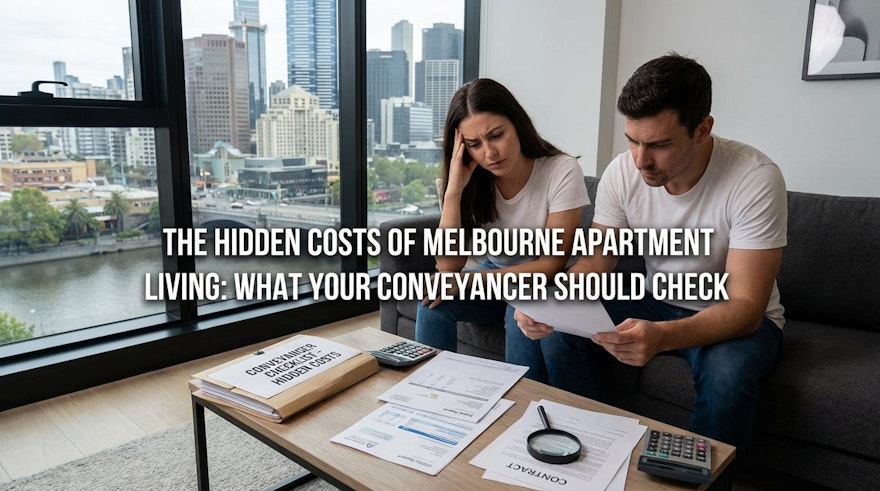
It’s a Saturday afternoon in South Yarra. You’ve just walked through a slick two bedroom apartment off Toorak Road and you’re already picturing Sunday coffees on the balcony. The kitchen looks brand new, the city view is hard to beat, and the agent keeps saying, “low outgoings”.
Melbourne apartments can be brilliant. You’re close to transport, cafes, work, and everything you actually do on a weeknight. But apartments also come with a layer of ongoing costs and shared obligations that don’t exist with a standalone house. If you don’t uncover them early, the “great buy” can turn into years of surprise bills and frustrating restrictions.
A good conveyancer doesn’t just check the title and get you to settlement. They dig into the building and its paperwork so you understand what you’re really buying into.
The quick answer
Apartment purchases usually involve ongoing owners corporation costs, plus the risk of one off special levies for major repairs. Your conveyancer should look closely at the owners corporation’s financial position, meeting minutes, insurance, disputes, planned works, and building rules (by laws). The goal is to identify costs that aren’t obvious from the inspection or the marketing, and to flag any issues that could affect your budget, lifestyle, or resale later.
The catch is simple: once you own the apartment, you take on your share of the building’s problems, even if those problems were discussed (or quietly brewing) before you arrived.
Why apartment ownership is different in Melbourne
Buying a house in Hawthorn or Pascoe Vale is fairly straightforward from an ownership point of view. You own the land and the building, and you decide what happens to it (subject to council rules).
With an apartment, you usually buy a “lot” within a shared building and you become part of an owners corporation. That structure is common in Melbourne, and it’s exactly why apartments come with extra documents, shared decision making, and shared costs.
This is where people get caught out. An apartment can feel private, but your finances are tied to the whole building.
If you want a simple explainer before you sign anything, it helps to understand how strata title properties work in practice, because that legal structure is what drives most of the hidden costs.
The ongoing costs buyers underestimate
Most buyers budget for the deposit, stamp duty, lender fees, and moving costs. Fewer buyers do the hard maths on apartment outgoings over the next five years.
1) Owners corporation fees (and how they actually behave)
Owners corporation fees cover the running costs of the building: insurance, cleaning, gardening, common area electricity, lift servicing, fire equipment checks, management fees, and sometimes concierge or facilities like a gym and pool.
These fees are not fixed forever. They can rise quickly when:
insurance premiums increase
essential compliance works are required
contractors get more expensive
the sinking fund is too low for the building’s age
If you want a deeper look at how these charges are set (and why two “similar” buildings can have wildly different costs), read up on body corporate fees and what they typically include.
Melbourne reality check: A newer high rise in Southbank or Docklands with lifts, basement parking, security doors, and a building manager usually has higher ongoing costs than a walk up block in Brunswick or Elwood. But older walk ups can still be hit with big repair bills if maintenance has been deferred.
2) The “not really optional” costs
Beyond owners corporation fees, apartments often come with expenses that don’t show up in the listing:
higher building insurance costs built into fees (especially in buildings with claims history)
fire safety and compliance costs (checks, servicing, upgrades)
additional maintenance for lifts, car stackers, automatic gates, intercom systems
shared hot water systems or central plant costs in some buildings
Even if you never use the gym or rooftop BBQ, you still contribute to maintaining them.
3) Embedded networks and limited choice
Some apartment buildings use embedded networks for electricity, gas, or internet. In those setups, you may not be able to choose your provider. Sometimes the rates are fine, sometimes they’re not, and the frustration is the lack of control.
This isn’t always obvious at the inspection. It’s something that should be confirmed in the building information and disclosures.
The big one: special levies and surprise bills
A special levy is a one off charge raised to fund urgent repairs or major works that aren’t covered by the regular budget or sinking fund.
In Melbourne, special levies commonly come up for:
lift replacement or major lift repairs
balcony membrane failures and water ingress
basement leaks and car park concrete spalling
roof repairs
facade repairs
rectification works after engineers’ reports
compliance upgrades for fire systems
The scary part is not that special levies exist. It’s how fast they can land, and how large they can be when a building has been underfunded or poorly managed.
A scenario we see often: You buy a tidy apartment in Carlton in a 12–20 year old building. Everything looks fine. Then the owners corporation receives an engineer’s report about water ingress and concrete deterioration in the basement. The works are essential. The sinking fund is low. A special levy is raised. You’re now paying thousands you never budgeted for, even though the issue started long before you owned the place.
The documents that reveal what’s really going on
Apartment due diligence is document heavy for a reason. Most of the risks are invisible unless you read the paperwork.
The Owners Corporation Certificate (and why it matters)
The Owners Corporation Certificate is one of the most important documents in a Victorian apartment purchase. It can help confirm:
current fees and any fee arrears
the budget and financial position
whether insurance is in place and what it covers
details of the managers and arrangements
known disputes, notices, or issues that have been recorded
It’s not something you want skimmed. A conveyancer should interpret it in the context of the building’s age, condition, and what the meeting minutes reveal.
Meeting minutes: the building’s diary
Meeting minutes often tell the real story behind the marketing photos.
Minutes can reveal:
repeated complaints about water leaks, mould, noise, security issues
plans for major works, quotes being obtained, or works already approved
tension between owners and the manager, or ongoing disputes
discussions about raising fees, changing by laws, or enforcement issues
If the minutes include repeated discussion of the same problem over multiple meetings, that’s usually a sign it isn’t resolved and may be expensive.
If you’re trying to learn what to watch for, pay attention to red flags in certificates and in meeting minutes, because the early warning signs are often there, just written in committee language.
The maintenance plan and sinking fund
A well run building plans ahead. Roofs, lifts, and waterproofing do not last forever. The sinking fund (sometimes called the maintenance fund) should reflect upcoming works.
A conveyancer reviewing the records is looking for:
a sinking fund that doesn’t match the building’s age or complexity
repeated “we’ll do it next year” comments in minutes
lots of reactive repairs but no structured maintenance plan
evidence that large works are imminent without money set aside
Rules and restrictions that can cost you (or change how you live)
Apartment rules aren’t just annoying. They can affect your plans and your property’s future value.
Your conveyancer should review the by laws and other building rules to check things like:
Pets
Some buildings have strict rules around pets. Even where a blanket ban is not appropriate, there can still be conditions and approval processes that matter if you have (or want) a pet.
Renovations
Want to change floors, install air conditioning, or redo the bathroom? Some buildings require approval, use of certain contractors, and strict rules about noise, hours, and waste removal. If you plan renovations, you want to know the process before you buy.
Leasing and short term stays
Many owners corporations restrict short term letting, and some impose practical limitations on leasing arrangements (for example, move in rules or security requirements). For investors, this can change the attractiveness of the property.
Car parks and storage
Not every “car space” is the same. Some are on title, some are licences, some are stackers with limitations, and some have access constraints that make them hard to use day to day.
A contract should clearly state what is included in the sale and what is common property.
Melbourne specific building issues your conveyancer should be alert to
Different pockets of Melbourne have different apartment stock, and different risk patterns.
High rise towers (Docklands, Southbank, parts of the CBD)
More building systems means more maintenance cost. Lifts, security, fire services, and building management arrangements can drive higher fees. Any compliance upgrades can be expensive and urgent.
Older walk ups (St Kilda, Elwood, Carlton, Fitzroy)
Character can be a plus, but older buildings can bring:
ageing roofs and plumbing
balcony waterproofing issues
older wiring or shared services
less formal maintenance planning
Newer builds and developer defect risk (varies across Melbourne)
Defects can take years to resolve, and legal disputes can be costly. Even if owners are pursuing a claim, legal fees and expert reports are often funded by owners along the way.
A conveyancer should check whether there are disputes, tribunal matters, or known defect issues referenced in the records.
What your conveyancer should check (that buyers often miss)
A thorough apartment conveyance isn’t just “paperwork”. It’s risk management.
Here’s what a good conveyancer should be doing in the background:
1) Reviewing the contract and Section 32 properly
This includes checking:
title and plan details
lot entitlements and liabilities (which influence fee shares)
easements or restrictions that affect the property
any disclosures that hint at building issues
2) Ordering and analysing the owners corporation records
Not just requesting them. Actually reading and interpreting:
the certificate
meeting minutes (ideally at least 12 months, often more if available)
budgets, balances, and levy history
insurance details
any notices, disputes, or proposed works
3) Confirming boundaries and what’s actually yours
Balconies, courtyards, storage cages, and even walls can involve common property issues. What feels “private” at an inspection isn’t always owned the way you assume.
4) Running the right due diligence checks
There are searches and checks that can matter more with apartments, especially where there are planning overlays, proposed developments nearby, or compliance issues.
If you’re not sure what should be done (or what your conveyancer is doing behind the scenes), it’s worth understanding common conveyancing searches and why they matter, particularly when you’re buying into a larger building.
Before you sign: an apartment buyer’s checklist for Melbourne
Use this as a practical pre exchange checklist:
Confirm owners corporation fees and what they cover (and whether they’ve increased recently).
Check for special levies raised, proposed, or hinted at in minutes and budgets.
Review the sinking fund in the context of the building’s age (is it realistic?).
Read meeting minutes for recurring issues: water ingress, concrete problems, lift failures, security concerns.
Look for disputes and defects (and whether the building is funding legal action).
Understand the rules: pets, renovations, leasing, move in restrictions.
Confirm inclusions: car park, storage, appliances, and whether any areas are common property.
Ask about embedded networks for utilities and whether you can choose providers.
Think ahead: if you plan to renovate or rent out, do the building rules support that plan?
The bottom line
Apartment living in Melbourne can be an excellent lifestyle choice, and for many buyers it’s the only realistic way to get close to the city and transport.
But you’re not just buying a floorplan. You’re buying into a building’s finances, maintenance history, rules, and future decisions. That’s why apartment conveyancing needs more than a basic tick the box review.
If you’re considering an apartment purchase in Melbourne, Pearson Chambers Conveyancing can help you understand the full picture before you commit. We’ll review the owners corporation documents, meeting minutes, by laws, and the contract so you can go in with your eyes open.
Email contact@pearsonchambers.com.au for help with your apartment purchase, including a complimentary Section 32 contract review.