![[object Object]](https://umsousercontent.com/lib_lphGCikIbVHjRWIV/w8mzrofmgaa9b3om.png?w=52)
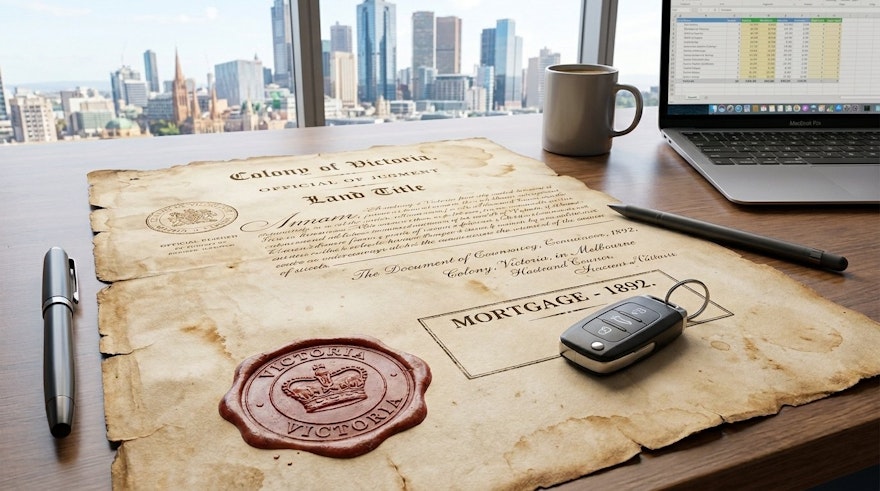
We get asked this by buyers who have done the right thing, ordered the paperwork, then spotted a mortgage on the title that the seller says was paid out years ago.
The short answer: A mortgage stays on a Victorian title until a discharge of mortgage is registered with Land Use Victoria. Paying out the loan and clearing the title are separate steps. Under General Condition 6.3 of the standard Victorian contract of sale, the seller must be able to give you an unencumbered estate in fee simple at settlement, so an old mortgage needs to be removed before your transfer can safely proceed.
Most mortgages on a title are routine. The seller has a current home loan, the lender is paid from the sale proceeds, and the mortgage is discharged through electronic settlement. The risk is the quiet exception: a mortgage that should have been removed years ago, but was never formally discharged.
For Melbourne buyers juggling finance approval, removalists, school zones and auction pressure, that small line on the title can suddenly become the thing holding up settlement.
Why can a paid off mortgage still show on the title?
Paying off the loan does not automatically remove the mortgage from the Victorian land register. The loan is the debt; the mortgage is the lender’s registered security over the property.
Once the loan is repaid, a separate document called a discharge of mortgage needs to be lodged and registered. Only then is the lender’s name removed from the title.
It feels like the bank should simply ‘hand the title back’ when the final payment clears. That is not how the register works. If the discharge step was missed, the title can keep showing the old bank for years, even when there is no money owing.
How does an old mortgage get stranded on a title?
An old mortgage is usually stranded because a discharge was prepared but never registered. The debt may be gone, yet the public record still shows the lender’s security.
Common examples include:
- the owner paid out the loan years ago, received a paper discharge, then put it in a drawer with the original paper certificate of title
- the lender has merged, changed names or stopped trading under the old brand
- the property is being sold from a deceased estate and the executor cannot find the old discharge paperwork
- the seller genuinely believed the mortgage disappeared once the loan account closed
We’ve seen this come up most often when a family property is sold after being held for decades. Everyone thought the old loan was finished, and it was, but nobody had checked whether the mortgage had actually been removed from the title.
What changed for old paper discharges on 1 March 2026?
From 1 March 2026, a discharge of mortgage signed before 1 March 2016, but never lodged, must be dealt with electronically. It can no longer be fixed by simply lodging that old paper discharge in the old way.
In practical terms, the lender or its representative needs to create and sign a fresh electronic discharge. That process depends on the lender’s turnaround time, identity checks and document handling, so it is not always a quick fix.
This does not change the usual discharge process for a current home loan being paid out at settlement. Those have been handled electronically for years. The change mainly affects the forgotten paper discharge, the one sitting in a filing cabinet, safe or deceased estate bundle.
For buyers, the message is simple: if an old mortgage appears on the title, chase it early. A problem found a month before settlement is usually manageable. A problem found two days before settlement can upset everyone’s plans.
Why does the seller’s old mortgage affect your settlement?
An undischarged mortgage is the seller’s issue, but it can still delay your purchase. Your transfer should not proceed while a prior mortgage remains registered over the same title.
Under the standard Victorian contract, the seller is expected to give clear title at settlement, subject to the contract terms and disclosed encumbrances. A mortgage still sitting on the title usually needs to be discharged before, or as part of, settlement.
That matters because settlement is not just a money handover. It is the moment when the balance is paid, the title changes hands, and you become the registered owner. If the old mortgage cannot be removed in time, your conveyancer may need to push for settlement to be extended until the title can be cleared.
What should your conveyancer do when a mortgage appears on the title?
Your conveyancer should read the title early, raise the mortgage with the seller’s side, and make sure the lender is ready to discharge it before settlement.
The usual steps are:
- Order the title search as soon as the contract is being reviewed.
- Check the registered mortgagee, dealing number and any other encumbrances.
- Ask the seller’s representative whether the mortgage is current or stale.
- Require the seller to arrange discharge with the lender.
- Confirm the lender is ready in the electronic settlement workspace.
- Check at settlement that the discharge lodges with your transfer.
This is where timing matters. A standard lender discharge can be routine. A stale mortgage to an old bank, merged lender or deceased mortgagee can take longer, because someone has to prove the debt was cleared and arrange the right document.
What if the old mortgage cannot be cleared before settlement?
If the seller cannot give clear title on the agreed settlement date, your conveyancer will usually look at extension, penalty interest and default options. The right response depends on the contract and the reason for the delay.
Often, the calmest option is a short extension so the lender can finalise the discharge. If the delay is the seller’s fault, the contract may allow the purchaser to claim penalty interest. The Victorian penalty interest rate fixed under the Penalty Interest Rates Act 1983 is currently 10% per annum, though the contract may change how interest is applied.
A default notice is the more formal step if the problem is not being fixed. Most buyers do not want a fight; they want the keys, a clean title and a settlement date they can rely on. Your conveyancer should explain the options before you agree to any extension.
What if the lender no longer exists?
If the original lender cannot be found, there may be a statutory path to remove the mortgage. This is usually a last resort option, not the first step.
Section 84 of the Transfer of Land Act 1958 deals with discharge of mortgages in Victoria. In limited cases, where the mortgagee cannot be found or cannot act, the Registrar may be able to remove the mortgage if the required evidence is provided.
This is not a quick buyer workaround. It can require careful proof, statutory declarations and proper lodgement. If you see a lender name on the title that nobody recognises, treat it as a timing risk straight away.
What should buyers check before signing?
Before signing a Victorian contract, ask your conveyancer to review the title and Section 32 statement, then explain any mortgage, caveat or other encumbrance in plain English.
For a Melbourne buyer, the key checks are:
- Does the title show a registered mortgage?
- Is it a current home loan that will be discharged at settlement?
- Does the lender name look old, unusual or inconsistent with the seller’s instructions?
- Has the seller’s conveyancer confirmed how and when the discharge will occur?
- Is there enough time before settlement for the lender to act?
- Does your lender need anything extra before it will proceed?
This is especially useful before auction, because once the hammer falls, you usually do not get a cooling off period. A quick title check before a Saturday auction in Preston, Footscray or Bentleigh can save a much larger headache later.
Frequently Asked Questions
Can an old mortgage still be on a property title after it has been paid off?
Yes. In Victoria, paying out the loan does not automatically remove the mortgage from the title. A discharge of mortgage must be lodged and registered with Land Use Victoria before the lender’s name comes off the title.
What is a discharge of mortgage in Victoria?
A discharge of mortgage is the registered document that removes a lender’s mortgage from a Victorian title after the loan has been repaid. It is usually prepared or lodged by the lender, bank or financial institution. Without registration of the discharge, the title may still show the mortgage.
How do I know if there is an undischarged mortgage on a house I want to buy?
Your conveyancer can order a title search, which shows every registered mortgage and other encumbrance affecting the property. If the title shows a mortgage that the seller says was paid out years ago, that is a red flag to chase before settlement.
Can an undischarged mortgage delay my settlement?
Yes. If a mortgage remains registered on the title, the seller may not be able to give you clear title at settlement. Settlement may need to be extended until the discharge is ready and can be lodged with your transfer.
How long does a discharge of mortgage take in Victoria?
A current mortgage being paid out through electronic settlement is often handled as part of settlement itself. An old paper discharge, missing lender paperwork or a lender that has changed names can take weeks rather than days. Buyers should treat any stale mortgage as a timing risk.
What changed for paper discharges of mortgage on 1 March 2026?
From 1 March 2026, a paper discharge of mortgage signed before 1 March 2016, but not yet lodged, must be dealt with electronically. The lender or its representative needs to create and sign a fresh electronic discharge, which may take longer than the old paper lodgement process.
Who pays to remove a stale mortgage before settlement?
The seller is generally responsible for clearing a mortgage so they can give clear title at settlement. Your role, with your conveyancer, is to identify the issue early and require the seller’s side to arrange the discharge before it affects your purchase.
About the Pearson Chambers Conveyancing team
Pearson Chambers Conveyancing is a Melbourne focused conveyancing team that helps first home buyers, sellers and investors work through Victorian property contracts every day. We review titles, Section 32 statements and settlement workspaces for clients buying apartments, townhouses and homes across Melbourne. Old mortgages on title are exactly the kind of issue our team checks before a buyer is locked into settlement stress.
Sources we consulted
- Land Use Victoria, phasing out paper certificates of title
- Land Use Victoria, discharge of mortgage
- Land Use Victoria, Customer Information Bulletin 236
- Transfer of Land Act 1958 (Vic)
- Consumer Affairs Victoria, property settlement
- Supreme Court of Victoria, penalty interest rates
Get your title checked before settlement stress starts
If you are buying in Melbourne and want the title checked properly before you sign, speak with Pearson Chambers Conveyancing. We can review the title, check the Section 32 statement, identify any mortgage or other encumbrance, and explain what needs to happen before settlement.
We offer a complimentary Section 32 contract review for Melbourne buyers.
Email contact@pearsonchambers.com.au.
General information only, current as at the date of publication. Victorian conveyancing rules and legislation change frequently. Please contact the Pearson Chambers Conveyancing team for advice on your specific contract.