![[object Object]](https://umsousercontent.com/lib_lphGCikIbVHjRWIV/w8mzrofmgaa9b3om.png?w=52)
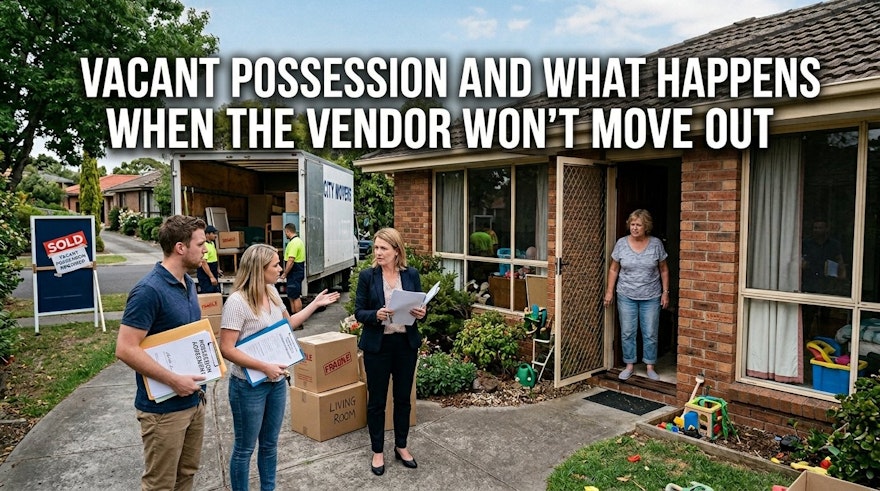
You’ve done the hard yards. You found a place you love, got through the contract stage, sorted your loan and started counting down to settlement. Then you arrive at the final inspection and the vendor’s furniture is still there. Or worse, someone is still living in the property.
It’s the kind of moment that makes your stomach drop.
For a lot of Melbourne buyers, vacant possession sounds like dry contract language until something goes wrong. Then it becomes one of the most important promises in the whole deal. If the vendor does not move out on time, your move can be thrown off, your costs can climb quickly, and what should have been an exciting handover can turn into a very tense day.
The good news is that buyers in Victoria are not stuck without options. If your contract requires vacant possession, the vendor has to deliver the property in a state that lets you take real possession of it at settlement. Your conveyancer’s job is to protect that position and act quickly if the handover is not right.
What does vacant possession mean in Victoria?
In simple terms, vacant possession means the property is handed over so you can move in and use it straight away.
That usually covers three things:
- no one is still living there
- there is no continuing right for another person to occupy it, such as an ongoing tenancy
- the property is not left so full of the vendor’s belongings that you cannot properly take possession
In the standard Victorian contract, buyers generally have a right to inspect the property during the seven days before settlement, and the default notice machinery sits in General Conditions 34 and 35 if a party fails to meet its obligations.
This is where buyers sometimes get tripped up. Vacant possession does not mean the property has to be spotless enough for a magazine shoot. It does mean you should be able to walk in, collect the keys and actually take over the place without finding the garage stacked with old mattresses, the back room still full of boxes, or a renter who says they are not leaving.
A forgotten broom in the laundry is one thing. A house in Brunswick or Glen Waverley that still looks half occupied is something else entirely.
Why this matters so much on settlement day
Settlement day already carries enough pressure. Money is moving, banks are involved, removalists are booked and you may have already given notice at your rental. If the property is not vacant when it should be, it can upset everything.
That is why the final inspection matters so much. Victorian buyers commonly do that inspection in the week before settlement, often the day before or the morning of settlement itself, to check that the home is in substantially the same condition and that vacant possession is on track.
If you are buying by private sale, protections earlier in the transaction can matter too, including the cooling-off period. Once you are close to settlement, though, the real issue is whether the vendor has complied with the contract and whether your conveyancer is ready to push back if they have not.
The three common ways vacant possession problems show up
The vendor is still living there
This is the clearest breach.
You turn up for the inspection and the vendor is still packing, the beds are still assembled, and there is clearly no realistic way the property will be empty in time. Sometimes their next purchase has been delayed. Sometimes the move has simply gone off the rails. Sometimes they assume they can stay another night and hand over later.
That is not something a buyer should casually accept.
If the contract requires vacant possession at settlement, the property needs to be ready then, not when it suits the vendor. It can feel awkward in the moment, especially if the agent is downplaying it, but this is not just a moving hiccup. It is a contract problem.
The tenant has not left
This catches buyers more often than it should.
If a property is sold with vacant possession, it is the vendor’s responsibility to make sure any renter has lawfully vacated in time. In Victoria, from 25 November 2025, notice periods for rent increases and certain notices to vacate were extended from 60 days to 90 days, giving renters more time to move.
That change matters in practice. If the vendor misjudged the timing, or if there is a fixed term rental agreement still running, the buyer should not be left carrying the risk. You do not want to discover a week before settlement that the tenant in the St Kilda apartment you are buying still has a lawful right to stay there.
This is one reason your conveyancer should review the contract and Section 32 vendor statement carefully before you sign.
The vendor has moved out, but left a mess behind
This is the grey area.
Sometimes the vendor has technically left, but the property is still full of furniture, rubbish, building materials or odds and ends that make it impossible to move in properly. A few minor forgotten items might not amount to a serious breach. A garage packed to the ceiling, a shed full of old tools and paint, or piles of hard rubbish in the backyard are different.
Buyers often underestimate how expensive this can be. You might need rubbish removal, skip bins, extra labour or delayed moving arrangements before you can even unpack.
Your final inspection is your safety net
You should always take your pre-settlement inspection seriously.
This is not just a quick look through the front door to make sure the lights still work. It is your chance to confirm that agreed fixtures and fittings are still there, that the property has not been damaged, and that vacant possession is actually being delivered.
Try to inspect at least a couple of business days before settlement where possible. That gives your conveyancer time to raise any issue before the transaction is due to complete. If there is already a concern, do another inspection on settlement day itself.
Open cupboards. Check the garage, storage cage, shed and yard. Take photos if anything looks wrong. Compare the condition to the marketing photos and your own notes from when you bought it. If special promises were added to the contract, especially special conditions in the contract about cleaning up, removing goods or doing repairs, make sure those points have actually been met.
What your conveyancer does if the vendor has not moved out
This is where experience matters.
A good conveyancer will usually tell you not to settle if vacant possession has not been provided. That can feel stressful in the moment, especially if your move is already booked, but settling too early can leave you in a much weaker position.
The usual steps look like this.
1. They confirm the problem in writing
Your conveyancer contacts the vendor’s legal representative straight away, explains what has been found at inspection and puts the breach on record. If you have taken photos or video, that evidence can be very useful.
2. They hold settlement off if needed
If the vendor has not met a key obligation, the buyer is generally not the party at fault for refusing to complete at that moment. That is a big protection. It means you should not be pressured into settling on an occupied or unusable property just because the day has arrived.
3. They try to get a practical outcome fast
Sometimes the problem can be fixed quickly. The vendor may need another day to clear the property, remove rubbish or finish the move. In that kind of situation, your conveyancer can negotiate a short delay and make sure your position is protected on paper.
If the vendor asks to remain in the property after settlement, do not agree to anything informal. If that sort of arrangement is ever considered, it needs proper drafting and careful thought. A casual promise can create a fresh dispute you really do not want.
4. They can serve a default notice
Under the standard Victorian contract, a default notice can be issued if a party has failed to meet its obligations. The notice must identify the breach and give the defaulting party at least 14 days to remedy it, with rights then flowing if they still do not fix the problem.
5. They help preserve any claim for loss
If the vendor’s failure causes extra costs, those losses may need to be documented carefully. That can include short term accommodation, storage fees, extra moving costs and added legal expense. Keep every receipt, invoice and email.
6. They advise whether ending the contract is on the table
If the breach is serious and not fixed after the required notice period, ending the contract may become an option. That is usually a last step, not the first one, but it can be available in the right case.
Can you claim compensation?
Potentially, yes.
The exact amount depends on the contract, the facts and what losses you can show. In a vacant possession dispute, buyers often look at losses such as:
- temporary accommodation
- storage fees
- extra removalist costs
- additional legal costs
- interest or finance losses in some cases
Each matter turns on its own facts, so broad promises are not helpful here. What matters is acting quickly, documenting the issue and getting tailored advice before the position drifts.
How buyers in Melbourne can protect themselves
A few sensible steps can make a big difference.
Read the contract properly before you sign, not just the headline price and settlement date. Ask whether the property is being sold with vacant possession or subject to a tenancy. If the place is tenanted, get the lease details early.
Do not give notice on your rental too soon. We have seen buyers get ahead of themselves, particularly when they are excited about a first home purchase, only to find settlement shifts and they are left scrambling for somewhere to stay.
Use the final inspection properly. It is one of the simplest and most useful protections in the whole settlement process, yet plenty of buyers still treat it like a formality.
And if something looks wrong, speak to your conveyancer straight away. Not after another chat with the selling agent. Not after hoping it sorts itself out. Straight away.
Frequently Asked Questions
What is vacant possession in a property contract?
Vacant possession means the buyer gets the property free from occupants, free from any ongoing right for someone else to stay there, and clear enough for the buyer to take real possession. In Victoria, it is a basic handover issue with serious consequences if it is not properly met.
What happens if the vendor doesn't move out by settlement day in Victoria?
If the vendor has not moved out by settlement day, the buyer should usually avoid settling until the breach is addressed. Your conveyancer can notify the vendor’s side, seek a delay, preserve your rights and, if needed, issue a formal default notice.
Can I delay settlement if the vendor hasn't provided vacant possession?
Often, yes. If the vendor has failed to meet a key obligation under the contract, the buyer is generally not the party in default for refusing to complete while the property is still occupied or materially cluttered.
What are my rights if the tenant hasn't moved out of a property I'm buying?
If the property was sold with vacant possession, the vendor is responsible for making sure the tenant has lawfully left in time. Since 25 November 2025, Victoria has required 90 days’ notice for certain notices to vacate, which means timing mistakes can easily spill into settlement if the vendor has not planned properly.
How much compensation can I claim for a vacant possession breach in Melbourne?
That depends on the losses you can prove and the rights available under your contract. Common examples include accommodation, storage, added moving costs and extra legal expenses, so keep clear records of every extra cost caused by the delay.
What is a Default Notice under General Condition 34?
A Default Notice under General Condition 34 is a formal notice used under the standard Victorian contract when one party has breached its obligations. It identifies the problem and gives the defaulting party at least 14 days to fix it before stronger rights may be exercised.
Should I settle on a property if the vendor's belongings are still there?
Usually not. Minor forgotten items may not justify stopping settlement, but if the belongings left behind materially interfere with your ability to take possession, settling too early can make the dispute much harder to sort out.
Get the right support before settlement day turns messy
Vacant possession problems can turn a happy settlement into a stressful stand-off very quickly. The key is not to panic, not to settle too soon, and not to assume the agent will sort it out for you.
If you are buying in Melbourne and want tailored guidance before you sign, or you are already facing a vacant possession issue and need help now, contact Pearson Chambers Conveyancing for a complimentary Section 32 contract review.