![[object Object]](https://umsousercontent.com/lib_lphGCikIbVHjRWIV/w8mzrofmgaa9b3om.png?w=52)
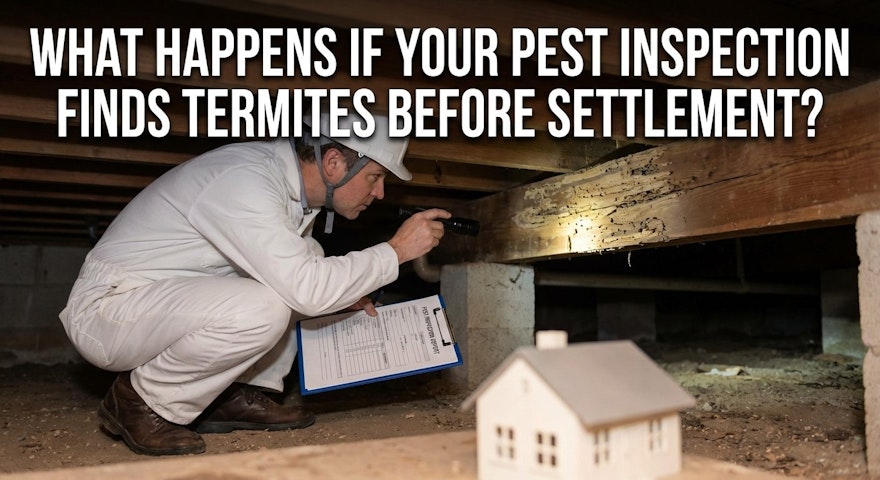
Picture this. You've found the perfect place in Croydon. Three bedrooms, a lovely backyard, and a price that actually works with your budget. The building report comes back fine, mostly cosmetic stuff. Then the pest inspector calls.
Termites.
Your stomach drops. The house you've been dreaming about for weeks suddenly feels like a ticking time bomb. But here's what nobody tells you: discovering white ants before settlement isn't necessarily a disaster. Sometimes it's actually a gift.
The phone call nobody wants
Sarah and Marcus found themselves in exactly this situation last winter. They'd put an offer on a weatherboard cottage in Ringwood, a suburb where older homes tend to have character and, occasionally, unwanted guests living in the timber framing. Their inspector uncovered active infestation beneath the floors. Significant harm to several bearers and joists. The report recommended immediate remediation and structural repairs.
"We thought we'd lost the house," Sarah told us later. "We were devastated."
But they hadn't lost anything. Not yet.
Your choices when white ants appear
In Victoria, the cooling off period exists precisely for situations like this. If you've signed a Contract of Sale with standard cooling off rights intact, you have three business days to withdraw. You'll forfeit $100 or 0.2% of the purchase price, whichever amount is greater, but that's nothing compared to buying a dwelling with serious structural compromise.
However. Withdrawing isn't always the smart move.
Infestation severity varies enormously. A small colony caught early might require remediation costing two or three thousand dollars. Extensive harm to load bearing structures could run into tens of thousands. Some dwellings are genuinely unsalvageable. Most fall somewhere between these extremes.
Your report should specify whether the colony is active or historic, which timbers are affected, the extent of harm, and recommended treatments. That knowledge becomes your negotiating ammunition.
Renegotiating after the discovery
Here's where things get interesting. Most vendors don't want their property to fall through. They know that any future buyer will also order an inspection, and those white ants aren't going anywhere without remediation. They're motivated to deal.
Common approaches include:
A price reduction to cover remediation and repairs. Your inspector might quote $2,800 for chemical barrier installation. A builder quotes $15,000 to replace harmed bearers. You request $20,000 off the purchase price to handle both plus account for inconvenience and risk.
Alternatively, the vendor arranges remediation before settlement. This works well for active colonies where you want the problem handled by professionals chosen by a party with financial incentive to do it properly. Though you'll want your inspector to verify completion afterward.
Some buyers request the vendor obtain a structural engineer's report at their expense, clarifying exactly what repairs are needed. Engineers see things differently than pest professionals. Their perspective adds another layer of understanding.
Contracts can also include special conditions. Perhaps settlement extends by four weeks to allow for remediation and reinspection. Perhaps funds are held in trust pending completion of specified works. Your conveyancer can advise on language that protects your interests.
When withdrawing makes sense
Not every infestation is fixable. Or rather, not every situation merits fixing.
We worked with a young couple in Eltham last year who discovered their dream Californian bungalow had severe harm throughout the entire subfloor structure. The report ran to fourteen pages. Their building professional estimated repair costs between $80,000 and $120,000, with significant uncertainty about what they'd uncover once they started opening walls.
They withdrew. It hurt.
But they found another dwelling six weeks later. Better layout. No white ants. The cooling off fee was money well spent.
Consider stepping back when harm is extensive and repair costs remain uncertain. When the vendor refuses any negotiation on price or conditions. When structural engineers express concern about integrity. When you sense the problems run deeper than anyone can see.
Your gut often knows before your head catches up. Trust it.
The Section 32 angle
Every Victorian property sale involves a Section 32 vendor statement. This document discloses what the vendor knows about the dwelling, including previous white ant treatments or harm.
Check this carefully. Has the property been treated before? Did previous owners lodge insurance claims for infestation harm? Are there any building orders or notices related to pest activity?
If the vendor knew about white ants and failed to disclose this, you might have legal recourse. The vendor statement requires honesty about material facts. Concealment of known infestation problems could constitute misleading conduct.
Your conveyancer reviews the Section 32 as standard practice. Mention any pest concerns, they'll know what to look for.
Insurance complications worth knowing
Standard home insurance policies generally don't cover white ant harm. This catches many new homeowners by surprise.
White ants are considered a maintenance issue rather than an insurable event. The logic goes that regular inspections should catch problems early, making prevention the homeowner's responsibility. Fair or not, that's how insurers see it.
Any infestation harm you inherit becomes your problem entirely. No claims. No payouts. Just repair bills.
Some specialist insurers offer coverage as an add on. Premiums tend to be steep and conditions strict. Most Victorian homeowners simply rely on regular annual inspections as their protection strategy.
Knowing this changes how you negotiate. The vendor can't promise their insurance will cover anything. You can't assume yours will either. The harm needs to be addressed or priced into the purchase.
Getting another opinion
One inspector might describe moderate harm. Another might call the same situation severe. Terminology isn't standardised, and experience levels vary.
If your initial report raises concerns, consider commissioning another assessment. Choose someone with specific timber pest qualifications, not just a general building professional who adds pest checks as a side service. The Australian Environmental Pest Managers Association maintains a directory of accredited professionals.
Ask for photographs. Ask for measurements. Ask for remediation recommendations from multiple providers. Knowledge is leverage.
And remember that the inspector works for you, not the real estate agent. Some agents try to recommend their preferred professionals, the ones who happen to write reassuring reports. Choose independently.
Remediation explained simply
If you proceed with an affected dwelling, you'll need to understand remediation basics.
Chemical barriers involve drilling into concrete slabs and injecting termiticide around the perimeter. This creates a treated zone that kills white ants attempting to enter. Cost ranges from $2,000 to $5,000 depending on dwelling size and access difficulty.
Baiting systems use monitoring stations placed around the dwelling. When white ants find the bait, they carry it back to the colony. The colony dies. These systems require ongoing monitoring contracts, typically $400 to $600 annually.
Physical barriers work best during construction. Stainless steel mesh or treated sheeting installed under slabs and around penetrations. Not really available for existing homes, but worth knowing about if you're building later.
Heat remediation can eliminate white ants from affected timbers without chemicals. Professionals tent an area and raise temperatures above 50 degrees for several hours. Effective but expensive and not always practical.
Most Victorian homes end up with chemical barriers as the primary defence, supplemented by annual inspections to catch any new activity.
Repairs after the colony is gone
Remediation handles the living colony. It doesn't repair harm already done.
White ants eat timber from the inside out. A floor joist might look perfectly normal from outside while being structurally compromised within. Proper assessment requires probing suspected timbers, and sometimes removing sections to examine properly.
Common repairs include replacing harmed bearers, joists, and stumps in subfloors. Sister joisting alongside weakened timbers to restore strength. Rebuilding sections of wall framing. Replacing architraves, skirting boards, and door frames where harm extends to visible areas.
Get quotes from builders experienced with infestation harm specifically. General builders sometimes underestimate complexity. A contractor who specialises in restumping and subfloor work will understand what they're dealing with.
The emotional side of discovering an infestation
Property purchases are emotional. Nobody talks about this enough.
You've imagined living in that house. You've pictured where your furniture will go, which room becomes the nursery, how the backyard will look with a barbecue and some outdoor chairs. Discovering white ants threatens all of that.
Some buyers become fixated on making the purchase work regardless of cost or risk. They've fallen in love. Logic takes a back seat.
Others swing too far the opposite direction, withdrawing from dwellings with minor issues that could be easily resolved. Fear drives the decision rather than rational assessment.
Try to find middle ground. The house isn't perfect, no house is. But can the problems be fixed at reasonable cost? Will you feel confident living there once remediation is complete? Can you reach a fair deal with the vendor?
Talk to your conveyancer before making emotional decisions. They've seen dozens of these situations. Their perspective helps.
Timeframes you should expect
Active colony remediation typically happens quickly once booked. Most pest companies can schedule within a week or two. The remediation itself takes a day.
But. Remediation effectiveness isn't immediate. White ants need time to encounter the chemical barrier and carry it back to their colony. Complete colony death might take several weeks.
Reinspection usually happens four to six weeks after remediation. The inspector returns to confirm no active white ants remain and to assess whether further work is needed.
If the vendor is handling remediation before settlement, you'll want your conveyancer to build appropriate timeframes into special conditions. Rushing this process invites problems.
Structural repairs take longer still. Subfloor work might require council approval depending on scope. Builders have lead times. Materials need ordering. A comprehensive repair job could stretch across two or three months.
Factor this into your settlement negotiations. You might request extended settlement to allow repairs. Or settle on time with funds held pending completion. Your conveyancer can advise on mechanisms that protect both parties.
Moving forward with confidence
Discovering white ants before settlement is stressful. Absolutely. But you're in a far better position than the homeowner who uncovers an infestation three years after purchase with no recourse against anyone.
The inspection system worked exactly as intended. Problems were identified before you committed irrevocably. You have choices, leverage, and time to make informed decisions.
Whether you negotiate, withdraw, or proceed with full knowledge of what you're buying, you're making that choice with open eyes.
How Pearson Chambers Conveyancing can help
Navigating pest discoveries requires careful contract management. Special conditions need precise language. Settlement variations must protect your deposit. Negotiations with the vendor require documentation that can be enforced.
Our team has guided many Melbourne buyers through exactly this situation. We know how to structure conditions that give you genuine protection. We understand what vendors typically agree to and where they'll push back. We've seen how these things resolve.
If your inspection has raised concerns, email contact@pearsonchambers.com.au. We offer complimentary Section 32 contract reviews, and we're happy to discuss your specific situation without obligation. Sometimes just talking through the choices with someone experienced makes the path forward clearer.