![[object Object]](https://umsousercontent.com/lib_lphGCikIbVHjRWIV/w8mzrofmgaa9b3om.png?w=52)
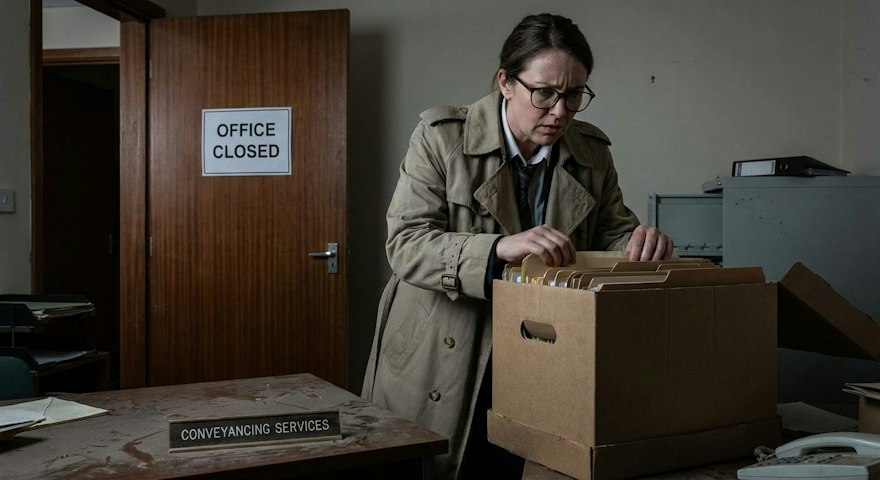
A closure notice arrives from your conveyancing firm, but your Victorian property settlement is still ahead. The immediate task is to find the records and establish who, if anyone, has accepted responsibility for the unfinished work.
The short answer: Start by identifying who holds the closed practice's records, then ask a replacement conveyancer to assess the transaction promptly. Treat the file, acceptance of the ongoing work and custody of money as separate questions. Give the incoming representative your contract and any urgent notices or date-related correspondence even if the former practice's file has not yet arrived.
Start with whoever holds the records
Use the closure notice to identify the contact for your matter. A person storing the practice's files may only be holding the records, so ask whether they are also taking on the unfinished conveyancing work.
Provide the former practice's full name, your matter reference and the property address. Ask where the complete file is held, whether any part has been sent elsewhere, and what is needed to release the records to the representative you appoint. Keep the response with the closure notice so the incoming conveyancer can follow the same record trail.
If you cannot establish where the records are, the next enquiry depends on the type of practice that closed:
- A law practice: the Victorian Legal Services Board and Commissioner may be able to help locate records held by a law practice that no longer exists.
- A licensed conveyancing business: Consumer Affairs Victoria has a general enquiry channel that can provide guidance. Do not assume Consumer Affairs Victoria holds the file, will appoint a replacement or can recover the records in time for settlement.
An unanswered phone call alone does not establish that a practice has closed. These steps are for a confirmed closure, such as a closure notice or other reliable confirmation that the practice has ceased operating.
Compare the recovered file with your own copies
A file handover shows what records have been received. It does not by itself confirm what work has been completed or whether the transaction is ready to settle.
Give the incoming representative the documents you already hold, including the signed contract, the Section 32 vendor statement, any agreed changes, correspondence about dates, notices, payment receipts and the latest progress update. Section 32 is the seller's property disclosure statement.
Ask for your copies to be compared with the recovered file so gaps can be identified. Suppose you emailed the former practice asking it to seek a different settlement date, but neither your copy nor the recovered file contains a reply confirming agreement. That gap needs checking rather than treating the requested change as settled.
Licensed conveyancers must keep written records of client instructions, advice, transaction calls and enquiries. Those records can help distinguish work completed from work merely requested or still needing confirmation. A missing record needs investigation; it does not prove that the task was never done.
Trace money separately from the file
Ask for records of money connected with the matter as well as the conveyancing file. Receiving documents does not show that any money has also moved to, or become controlled by, the incoming representative.
For money held in a licensed conveyancer's trust account, ask for the relevant receipts, payment records and client ledger. The ledger records money received and paid for the particular matter. Compare those records with your own receipts and ask which amounts remain held, which have been paid out and who presently holds any remaining amount.
Not every payment necessarily went through the closed practice's trust account. Give the incoming conveyancer the original payment instructions and proof showing where each payment was sent. Any next payment or transfer should be based on separately confirmed arrangements and the required client authority.
Confirm who has accepted the unfinished work
Records custody and acceptance of the ongoing transaction are not the same thing. Ask the incoming representative to confirm what work they have accepted, which records are still missing and which unresolved task needs attention first.
The contract sets the settlement date. Provide any written variation, proposed change or urgent notice and ask the incoming representative to check the current position. Keep a proposed later date separate from a confirmed change while the handover is being reviewed.
About the Pearson Chambers Conveyancing team
Pearson Chambers Conveyancing provides residential conveyancing services for purchases, sales and title-transfer work in Melbourne and across Victoria. If a practice has closed before settlement, the team can discuss the contract, available records and the work involved in taking over the unfinished matter.
Sources we consulted
- Victorian Legal Services Board and Commissioner: help locating legal records
- Consumer Affairs Victoria: enquiries and contact options
- Victorian legislation: conveyancers' professional conduct regulations
- Consumer Affairs Victoria: conveyancer trust-account records
- Consumer Affairs Victoria: electronic settlement and client money
- Consumer Affairs Victoria: property settlement and settlement timing
Discuss your contract and approaching settlement
If your conveyancing practice has closed with settlement still ahead, contact Pearson Chambers Conveyancing at contact@pearsonchambers.com.au. Send the contract, closure notice, any urgent notice and known date changes so the team can review the contract, timing and next steps and discuss availability.
General information only, current as at the date of publication. Victorian conveyancing rules and legislation change frequently. Please contact the Pearson Chambers Conveyancing team for advice on your specific contract.