![[object Object]](https://umsousercontent.com/lib_lphGCikIbVHjRWIV/w8mzrofmgaa9b3om.png?w=52)
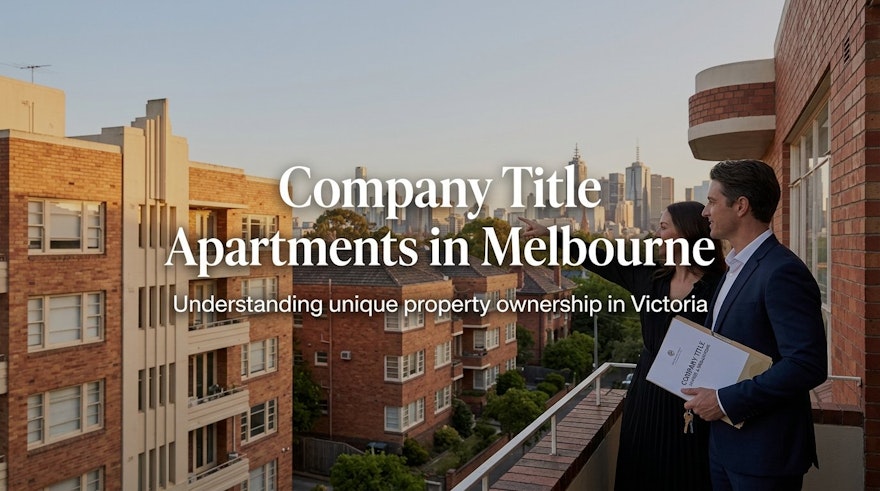
You’re at a Saturday inspection in St Kilda. The apartment is full of charm, the price feels far more reachable than the newer blocks nearby, and you can already picture the morning coffee on the balcony before jumping on the tram into the CBD.
Then the agent mentions two words you may not have expected: company title.
That’s usually the moment buyers pause. Fair enough too. Most first home buyers in Melbourne spend months learning about auctions, deposits, lenders and strata title, only to find an older apartment that sits outside the usual script.
Company title isn’t automatically a bad thing. Some of Melbourne’s most appealing older apartments are held this way. Still, it does change what you’re buying, how you finance it, what rules apply after settlement and how easy it may be to sell later. If you’re looking at an older block in St Kilda, Elwood, South Yarra or Carlton, it’s worth slowing down and checking the paperwork properly before you get attached.
What company title actually means
With a standard apartment purchase, you usually buy a registered lot and your interest is recorded on title. With company title, a company owns the whole building and the land beneath it. Instead of buying the flat itself, you buy shares in that company. Those shares give you the right to occupy a particular apartment under the company’s constitution and related documents.
So, in practical terms, you’re not stepping into the usual apartment ownership model. You’re stepping into a company structure that controls the building and sets the house rules.
Some buyers also confuse company title with stratum title, which is another older style of ownership you might still hear about in Melbourne property conversations. They’re not the same thing, and that distinction matters when your conveyancer starts reviewing the deal.
Why company title still shows up in Melbourne
Company title tends to appear in older apartment blocks, especially those built before modern subdivision and owners corporation arrangements became the norm. That’s why you’ll often see it in character-filled buildings across inner Melbourne and the bayside suburbs.
Think older Art Deco blocks in St Kilda East, boutique buildings in Elwood, mansion conversions in South Yarra, and small older developments near the university end of Carlton. These places can be beautiful. High ceilings, solid brick walls, leafy streets, less of the glass-and-gym feeling you get in some newer towers.
That appeal is real. So is the extra homework.
How company title differs from the usual apartment purchase
The biggest shift is this: most apartment buyers are used to buying land-based property rights. Company title is share-based.
That changes the whole feel of the transaction.
In a standard apartment deal, buyers are used to reviewing the title, the owners corporation material and the contract pack. In a company title deal, your rights often sit inside the company constitution, occupancy agreements, meeting records and share transfer documents. The Owners Corporations Act does not run the show in the same way, so the usual protections and procedures many buyers expect may not map across neatly.
That’s why buyers can’t treat company title as just another old apartment. It isn’t. It needs its own line of enquiry.
Finance can be the sticking point
This is where many first home buyers come unstuck.
Lenders usually see company title as a more specialised form of security. The buyer pool is smaller, the documents are different, and a sale can involve more than simply transferring a registered lot. Because of that, some lenders won’t consider company title at all, while others may ask for a larger deposit and apply tighter lending rules.
That doesn’t mean finance is impossible. It does mean you should sort it out early. A casual online borrowing estimate is not enough here. You want a broker or lender who has dealt with company title before, and you want your borrowing position tested against the exact property rather than a generic apartment scenario.
It’s also worth asking the selling agent for the building’s company title documents early. There’s no point falling in love with a place in Elwood if your lender pulls back once the structure is clear.
What your conveyancer should be checking
This is where extra due diligence matters most.
In a regular apartment purchase, buyers often focus on title, the contract and the owners corporation records. If you’ve ever looked into how to read an owners corporation certificate, you’ll know how much a strata purchase can reveal through those records alone.
Company title asks for a different set of checks.
Your conveyancer should carefully review the company constitution, recent meeting minutes, financial statements, any house rules, share transfer process, insurance arrangements and ASIC records. Those documents can tell you a lot about the building’s culture and risk level.
For example:
- Are pets allowed, tolerated, or banned outright?
- Can you renovate the kitchen without board consent?
- Are there planned major works to the roof, façade or common plumbing?
- Is there a history of disputes between residents and directors?
- Are there arrears, poor record keeping or signs the company is not being run properly?
- Do the rules make it hard to lease out the apartment later?
This is also the point where buyers should ask how the transaction has been documented. In some company title deals, the usual land sale paperwork may not apply in the way buyers expect. Your conveyancer should explain whether a Section 32 vendor statement has been provided, what protections apply to your deal, and whether any cooling-off rights are available or limited by the structure.
That advice is worth getting before you sign, not after.
The day-to-day restrictions can be stricter than buyers expect
Many first home buyers assume apartment rules are broadly similar from one building to the next. Company title can be much more controlled.
Because the building is company-run, the constitution and board decisions can shape everyday life in a very direct way. You may need consent for renovations. You may face tighter rules around pets, hard flooring, subletting or using the property as anything other than your main home. In some buildings, selling your shares to a new buyer also needs board approval.
That can be a plus for some buyers. Older company title blocks are often quieter, more stable and less investor-heavy. Residents may value the building’s character and want to protect it. If you want a calm building with long-term neighbours, that can feel reassuring.
Still, it does reduce flexibility. If your plans change in two years and you want to rent the place out, or you meet someone and want them to move in, the company rules may matter more than you expected.
What happens if there’s a dispute
This is another area where buyers should go in with their eyes open.
For company title in Victoria, there is a path to VCAT for certain neighbourhood-type disputes, such as noise, resident conduct, pets, parking, use of common areas, and some repair and maintenance issues. That can help when the problem is really about living side by side in the building.
But not every disagreement fits neatly into that box. If the dispute is about company governance, board conduct, share transfers or wider corporate issues, the process may be more involved and less familiar than a typical owners corporation dispute.
That’s one reason the building’s culture matters so much. When you buy into company title, you’re not only buying an apartment lifestyle. You’re buying into a small corporate community.
Resale can be slower, even when the apartment is lovely
This is the part buyers don’t always think about at the start.
A company title apartment may look like good value compared with a nearby standard apartment. Sometimes that price gap is what gets a first home buyer through the door in the first place. But the same feature that makes it cheaper for you can also limit your future resale pool.
Your next buyer may face the same lending issues, the same board approval process and the same questions about rules and flexibility. That can mean fewer buyers, longer selling campaigns and stronger price negotiation from purchasers who know company title is a niche market.
Some buildings do talk about converting to a standard subdivision model over time. If that ever happens, it may improve finance options and resale appeal. Still, conversion is not a quick box-ticking exercise. It usually needs broad shareholder support, professional advice, compliance work and plenty of patience.
First home buyer help, grants and duty
This is where buyers really need tailored advice.
The Victorian First Home Owner Grant is aimed at eligible new homes, so many older company title apartments will not qualify. That part is usually the easier one to work out.
Stamp duty is where things can become less straightforward. Victoria does offer first home buyer relief within current value thresholds, and many buyers naturally assume those savings will apply across the board. With company title, that assumption can be risky. The duty treatment may depend on how the interest is structured and assessed, especially where the deal involves shares and a right to occupy rather than a standard transfer of a registered lot.
So if you’re comparing your options, don’t rely on a rough online guess or what a friend received on a townhouse purchase in the outer suburbs. Ask your conveyancer to explain your likely position early. If you want a broader picture of the usual benefits, our guide to first home buyer entitlements in Victoria is a useful starting point.
Some buyers also ask whether title insurance has a role in risk management. It can be worth discussing as part of the wider picture, though company title transactions need careful advice because the ownership structure is not the same as a standard title-based purchase.
So, is a company title apartment a bad idea?
Not at all. For the right buyer, it can be a smart entry point into a suburb they otherwise couldn’t afford.
If you’re buying to live there, you like older buildings, you’re comfortable with the house rules and your finance is lined up, company title may still be a very good fit. Some buyers are perfectly happy trading flexibility for character, location and price.
The trouble starts when buyers treat it like a normal apartment purchase and rush through the contract. Company title rewards careful buyers. It punishes casual assumptions.
Frequently Asked Questions
What is a company title apartment, and how is it different from strata title in Melbourne?
A company title apartment usually means a company owns the whole building and you buy shares in that company, along with a right to occupy a particular unit. With strata title, buyers usually own a registered lot and share rights in the common property. That difference affects finance, rules, resale and the paperwork your conveyancer needs to review.
Can I get a home loan for a company title apartment?
Yes, sometimes, though the lender pool is usually smaller than it is for a standard apartment. Some lenders may want a larger deposit or more detailed assessment of the building and documents. It’s wise to sort out property-specific finance checks before you make an offer.
What are the main risks of buying a company title property in Melbourne?
The common pressure points are finance, board approval requirements, stricter rules about pets or renovations, and a smaller resale market later on. The quality of the company records also matters a great deal. A careful review of the constitution, minutes and finances can uncover problems before you commit.
Does the First Home Owner Grant apply to company title apartments in Victoria?
Usually not if the apartment is an older established dwelling, which many company title properties are. Duty concessions are also not something to assume automatically, because the treatment can depend on how the interest is structured. Your conveyancer should check that position for your exact deal.
Do I need board approval to sell a company title apartment?
Often, yes. Many company title structures require the company or board to approve a share transfer to the incoming buyer. That can add another layer to the selling process and may narrow your buyer pool.
Can a company title building be converted to strata title?
Sometimes, yes, though it is usually a substantial project rather than a simple administrative step. It may involve broad shareholder agreement, subdivision work, compliance checks and extra cost. Buyers should treat conversion as a possibility to investigate, not a promise.
What should my conveyancer check before I buy a company title apartment?
They should review the constitution, meeting minutes, financials, insurance, share transfer process and the contract documents in full. They should also explain what buyer protections apply to your transaction and where the structure creates extra risk. That early advice can save a lot of stress later.
Speak with Pearson Chambers Conveyancing before you sign
A company title apartment can open the door to a great Melbourne location and a genuinely appealing first home. Still, it needs a closer review than a standard apartment purchase. The structure, the company rules and the finance side all deserve proper attention before you put pen to paper.
At Pearson Chambers Conveyancing, we help Melbourne buyers cut through the fine print and understand what they’re really buying. If you’re looking at a company title apartment, contact us for tailored guidance and a complimentary Section 32 contract review before you commit.