![[object Object]](https://umsousercontent.com/lib_lphGCikIbVHjRWIV/w8mzrofmgaa9b3om.png?w=52)
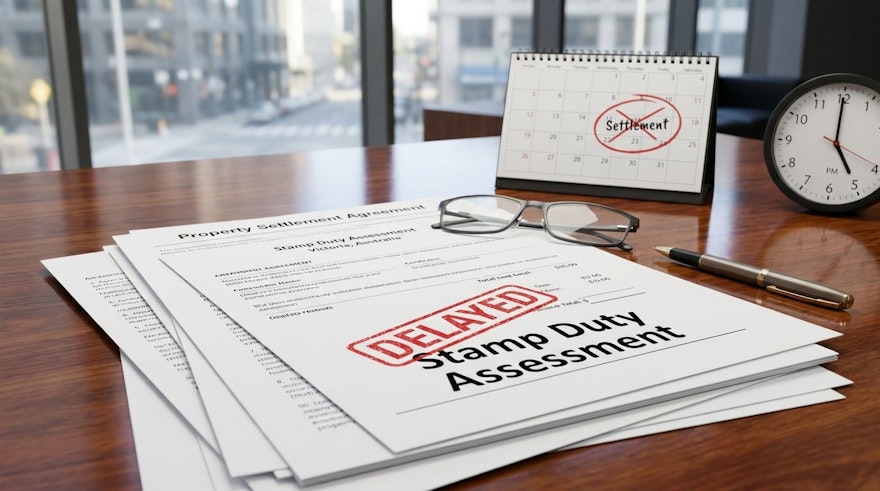
Settlement is close, your finance is ready, and the moving boxes are already stacked, but the Victorian duty transaction is still waiting for manual assessment. That unfinished tax step can stop an otherwise ready purchase from settling on the date in the contract.
The short answer: A complex Victorian land transfer duty transaction can take the State Revenue Office (SRO) up to 30 days to assess, so it should be lodged at least 30 days before settlement. Duties Online must assess and certify the transaction before an electronic settlement can proceed. If certification is still pending, your conveyancer should check the lodgement and evidence, make a written urgent request where the SRO process allows it, and deal with any required settlement extension in writing.
What does a delayed stamp duty assessment mean?
A delayed assessment does not, by itself, mean the SRO has rejected your concession or decided you owe more duty. It usually means the transaction cannot be completed through the standard automated path and needs an SRO officer to review the information before it can be certified.
Duties Online separates transactions into standard and complex assessment paths. Standard transactions can be processed automatically when the information fits the system rules. Complex transactions need manual review because of their structure, claims or arrangements.
This is a different issue from calculating how much stamp duty is payable. You might know the likely duty amount and still be waiting for the SRO assessment that allows the electronic settlement process to move forward.
Why can a normal home purchase need manual assessment?
A home purchase can look simple from the buyer's point of view and still be treated as complex in Duties Online. The assessment path is driven by the information lodged, not by whether the contract feels routine.
Complex transactions can include claims for exemptions, concessions or reductions that need checking, unusual transaction structures, arrangements that affect dutiable value, and restricted or combined transactions that cannot be assessed on their own.
The SRO also warns that incomplete or inconsistent information can lead to manual review. If details in the contract, electronic lodgement and Digital Duties Form do not match, the information may need to be corrected before the matter can progress.
Your conveyancer cannot simply choose the faster assessment path. Duties Online determines the path from the transaction details, claims and lodgement category. If the result is unexpected, the sensible first move is to check the data and supporting material rather than immediately starting again.
How long can an SRO manual assessment take?
The SRO says complex transactions should be lodged at least 30 days before settlement and can take up to 30 days to assess before certification. That is a processing window, not a promise that every matter will be finished on a particular day.
For Melbourne buyers, this matters most when the contract has a short settlement period. A Saturday auction with a 30 day settlement leaves little room if the duty form is not completed promptly or the transaction later needs manual review.
In our practice, we've seen this risk become clearer when the settlement date looks comfortable on the calendar but a concession claim, nomination or unusual transaction detail still needs supporting documents. A signed form is useful, but it is not the same thing as a lodged, assessed and certified duty transaction.
The earlier the duty work starts, the more time there is to fix mismatched details, obtain evidence and respond to an SRO request before the contractual settlement date becomes the immediate problem.
Can settlement proceed before the duty transaction is certified?
For an electronic Victorian property settlement, the practical answer is no. Duties Online must assess and certify the transaction before settlement can proceed.
Certification matters even where an exemption means no duty is payable. The duty transaction still needs to be dealt with in the settlement process. For electronic settlements, the certified duty amount is transferred to the SRO as part of settlement, and the title documents are lodged through the electronic process.
That is why a buyer can have final loan approval, cleared funds and a satisfactory final inspection but still be unable to settle. The missing step is not simply payment. It is the completed duty assessment and certification.
Our guide to Duties Online explains how the duty process connects with electronic conveyancing. When settlement is approaching, the key status is whether the duty transaction is ready for the settlement workspace, not merely whether the form has been signed.
What should your conveyancer check first?
The first step is to confirm exactly where the transaction sits and whether the SRO has everything needed to assess it. Guessing about the cause can waste valuable time.
Your conveyancer should check:
- the Duties Online status and lodgement date
- the contract date and contractual settlement date
- the names, ownership shares and property details
- the exemption, concession or reduction being claimed
- the lodgement category used
- whether the Digital Duties Form is complete and signed
- whether the required supporting documents were supplied
- whether the SRO has asked for more information.
If the assessment path is unexpected, the SRO's current process points users back to the transaction details, claims and evidence. Starting a new lodgement without understanding the problem can create more work, particularly where a change affects the parties, structure or claim.
Buyers also need to respond quickly when their conveyancer asks for documents. Identification records, declarations, valuations, contracts or evidence supporting a concession cannot be supplied by the conveyancer unless the client provides what is needed.
Can your conveyancer ask for an urgent SRO assessment?
Yes, a written urgent assessment request can be made where settlement is less than 30 days away, but the request does not guarantee that the SRO will complete the assessment before settlement.
The SRO says it considers factors including whether the transaction is restricted by the system, whether it is high value, and whether all required supporting documents were supplied at lodgement. It also identifies some complex transaction types that are more likely to be considered for urgent assessment.
The SRO says an urgent request will not be considered simply because the parties were unaware of the process or did not allow for the standard processing timeframe. In other words, a looming Friday settlement date is not enough on its own.
A useful urgent request starts with a complete file. Your conveyancer should check the data, claim, category and evidence first, then explain the contractual timing and reason for urgency in writing.
What happens if certification will not arrive by settlement?
The contract still controls the settlement date. An SRO assessment delay does not automatically move that date or remove the consequences of a buyer failing to settle on time.
If certification is unlikely to be ready, your conveyancer should contact the seller's representative before the deadline and seek a written extension where appropriate. The seller may agree, refuse or propose terms. Depending on the contract and circumstances, those terms may deal with default interest, costs, possession and the replacement settlement date.
A phone call between agents is not a safe substitute for a documented change. If the settlement date is being moved, the contract position and the electronic lodgement need to be managed together.
The SRO says the scheduled settlement date for an electronic complex lodgement can be revised before the original date has lapsed, using the required process. If the date has already passed, different steps can apply. A certified transaction can remain valid for a further three days after its scheduled settlement date if no changes are made, but that grace period does not fix a transaction that is still waiting for assessment.
If the deadline is close, our guide to what happens when a buyer delays settlement explains why the contract wording matters. The safest course is to have your conveyancer deal with the extension and duty status before the original date passes.
What does a delayed assessment look like in a Melbourne purchase?
Imagine you have bought a unit in Preston with a 45 day settlement and the duty transaction needs manual review. Your lender is ready, your final inspection is booked and you have arranged the move, but the duty transaction is still not certified.
Your conveyancer checks that the Digital Duties Form is signed, confirms the transaction details against the contract, checks the concession or exemption claim, and makes sure the supporting evidence has been lodged. If settlement is now less than 30 days away, they can prepare a written urgent assessment request explaining the timing and the complete lodgement.
At the same time, they should not assume the request will solve the timing problem. If certification may miss the contractual date, they can contact the seller's representative and deal with a possible extension in writing. Running those steps together protects the transaction while the SRO assessment continues.
How can buyers reduce the risk of a duty delay?
Start the duty work as soon as practical after the contract is signed. A short settlement period can disappear quickly once finance, inspections, identity checks and duty documents are all moving at once.
Give your conveyancer accurate names, dates of birth, ownership shares, intended use and concession information promptly. Tell them about nominations, related purchases, family arrangements or other features that may affect the duty treatment.
Ask three simple questions:
- Is my transaction standard or complex?
- Has it been lodged with all required evidence?
- Has it been assessed and certified for settlement?
Our stamp duty deadline guide can help separate assessment timing, settlement timing and the payment rules. Those are connected steps, but they are not the same deadline.
Frequently asked questions
What is a complex stamp duty assessment in Victoria?
A complex stamp duty assessment is a land transfer duty transaction that Duties Online cannot assess automatically from the information lodged. The SRO manually reviews the transaction's structure, claims or arrangements before it can be certified.
How long does an SRO manual assessment take?
The SRO says a complex duty transaction can take up to 30 days to assess and should be lodged at least 30 days before settlement. The actual timing depends on the transaction and whether the lodgement and supporting documents are complete.
Does a first home buyer concession always need manual assessment?
No. A first home buyer concession does not automatically mean the transaction will be manually assessed. Duties Online determines the assessment path from the lodged details, claim and category, so your conveyancer should check the actual status.
Can my conveyancer fast track a stamp duty assessment?
Your conveyancer can make a written urgent assessment request where settlement is less than 30 days away. The SRO applies its published considerations, so an urgent request is not a guaranteed fast track and should be supported by a complete lodgement.
Can I settle while the duty assessment is still pending?
An electronic Victorian settlement cannot proceed until Duties Online has assessed and certified the transaction. This applies even where an exemption means the certified duty amount is nil.
Will the seller automatically give me more time?
No. An SRO delay does not automatically extend the settlement date in your contract. Any extension should be negotiated through the parties' representatives and recorded in writing before the deadline where possible.
About the Pearson Chambers Conveyancing team
Pearson Chambers Conveyancing is a Melbourne focused conveyancing team helping Victorian residential buyers, sellers and property owners with contracts, Section 32 statements, duty documents and electronic settlements. We focus on making the legal and settlement steps clear, especially when a deadline is close. Delayed duty assessments are part of the day to day settlement work our team can help buyers manage.
Sources we consulted
- Standard and complex duty assessments
- After you lodge a duty transaction
- Digital Duties Form
- Complete a Digital Duties Form
- Lodgement categories and checklist
Talk to us before settlement is at risk
If your Victorian stamp duty assessment is still pending and settlement is close, contact Pearson Chambers Conveyancing promptly. Send us your contract, Section 32 statement, duty correspondence, Digital Duties Form status and settlement date so we can review the duty lodgement, the contractual deadline and the practical next steps with the seller's representative.
For a settlement problem, the priority is to understand the contract position early, check what the SRO still needs and deal with any extension before the deadline passes.
Email: contact@pearsonchambers.com.au
General information only, current as at the date of publication. Victorian conveyancing rules and legislation change frequently. Please contact the Pearson Chambers Conveyancing team for advice on your specific contract.