![[object Object]](https://umsousercontent.com/lib_lphGCikIbVHjRWIV/w8mzrofmgaa9b3om.png?w=52)
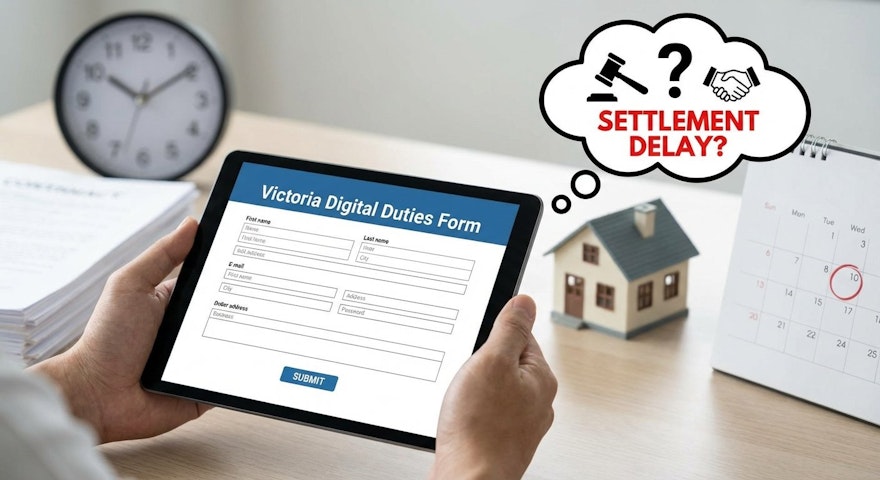
If you’re buying or selling property in Melbourne, settlement can feel like a juggling act. The bank wants documents, the agent wants a clear plan, you’re squeezing in a final inspection between work meetings, and someone’s always calling while you’re stuck behind a tram on Swanston Street.
Most Victorian settlements now run through digital systems. That’s a good thing, until one small step isn’t ready and the whole chain slows down.
A common culprit is the Digital Duties Form.
It sounds like routine admin. It isn’t. If it’s started late, filled out with wrong details, or left sitting unsigned, it can hold up duty processing and that can flow straight into settlement timing.
This guide covers what the form does, who starts it, when it should be done, and the real world ways it can delay settlement in Victoria.
What the Digital Duties Form actually does
The Digital Duties Form is part of Victoria’s duty process for property transfers. It’s been a compulsory step for many years now, and it sits inside the normal duties workflow rather than being an optional add on.
In plain English, it helps the State Revenue Office assess the transaction for land transfer duty (what most people still call stamp duty). It also captures the details needed when a buyer is claiming an exemption or concession.
So even if you think you’re not paying duty, you still need the form done properly.
Where people get caught is assuming duty is only a ‘buyer problem’ that sits off to the side. In practice, duty, lodgement, and registration are tightly linked in the digital process. If the duties side isn’t ready, the transfer side can’t always move cleanly either.
Why the form can affect settlement in a very real way
Settlement day in Victoria is a coordinated handover. The buyer’s funds are paid, adjustments are made for rates and outgoings, the transfer is ready to lodge, and keys are released.
That all works best when the digital workflow is tidy in the background.
Victoria has moved heavily towards electronic lodgement, which means digital readiness is no longer a niche issue. Most property transactions are lodged electronically now, and the duty and registration steps are built into the same broader settlement rhythm.
When the Digital Duties Form is incomplete, you can lose time in the final stretch. Sometimes it’s a quick fix. Sometimes it isn’t, especially if the file needs manual checking or the form has already been claimed into a duties transaction and needs rework.
Who starts the Digital Duties Form in Victoria?
This is the point most people misunderstand.
In Victoria, the Digital Duties Form is generally started by the vendor (transferor) or the vendor’s representative. In other words, it’s usually the seller side that kicks it off.
That sounds counter intuitive because duty is mainly paid by the buyer. Still, the form begins with contract details that come from the transferor side, and those details help pre populate parts of the buyer side section.
If nobody starts it early, the buyer’s conveyancer can’t always just ‘do it later’. They may be waiting for the form to exist in the first place.
What each side usually does
Every file has its own quirks, but a typical division of work looks like this:
Seller side (transferor representative): creates the Digital Duties Form and enters the contract details.
Buyer side (transferee representative): completes the buyer details, answers the concession or exemption questions, and progresses the duty transaction so settlement can proceed.
Buyer side also: generates the settlement statement information that’s needed in the digital workflow.
So yes, the buyer’s representative is still central to getting duty sorted, but the starting gun is usually fired by the seller side.
The quick question that prevents a lot of stress
Early in the matter, ask:
‘Has the Digital Duties Form been started yet, and is anything needed from us to complete it?’
It’s a small question that can stop the classic last minute scramble where the agent assumes it’s done, the seller assumes the buyer started it, and the buyer assumes the seller’s team is handling it.
When should the Digital Duties Form be done?
The best answer is well before settlement week.
The tricky part is that there are different official timing benchmarks depending on what stage you’re talking about and how complex the transaction is. That can make the guidance feel inconsistent if you only hear one number.
A practical way to understand it is:
There is a strong push to start early, with guidance that points to around 30 days before settlement as a safe target in many files.
There is also guidance that, for a standard matter, the seller side should have their part completed at least 10 days before settlement so the buyer side has time to finish, check, and generate what’s needed.
Some transactions need 30 days lead time because they’re assessed manually, even if settlement is scheduled sooner.
Those numbers aren’t fighting each other. They’re all pointing to the same idea: leave a buffer, and don’t make settlement week the time you start chasing identity details and correcting spelling.
A practical Melbourne timeline that works in real life
Most Victorian settlements are set in the contract and often fall somewhere between 30 and 90 days. In Melbourne, plenty of homes still settle around the 30 day mark after an auction or a well timed private sale.
Here’s a sensible rhythm we see work well:
Within the first week after signing
Confirm who will start the Digital Duties Form.
Make sure the seller side has the final contract details ready to enter.
Buyers: start gathering the personal details you’ll be asked for (names, dates of birth, entity details, and concession information).
Two to three weeks after signing
Buyer side should be completing their section and checking everything against the contract and other documents.
Any ‘are we eligible?’ questions about concessions should be raised now, not when you’re also packing boxes.
Ten days before settlement
Treat this as a minimum comfort line for a standard matter. By this point, you want the duties work in a checking and confirming phase, not a ‘we’re still waiting on information’ phase.
Final week
You want calm, not chaos. Final inspection, bank signing, adjustments, and settlement booking are enough without chasing duties rework at the same time.
If you’re feeling fuzzy on the dates in your contract, it’s common to mix up finance timing and settlement timing, especially when there are special conditions. This plain language explainer can help: Whats The Difference Between Settlement Date And Finance Date In A Victorian Contract
Which transactions need more lead time?
Some matters are better treated as ‘early priority’ from day one because they’re more likely to trigger extra checking or manual assessment.
Examples include:
Off the plan purchases (especially where the developer’s timing shifts or the buyer’s circumstances change).
Company or trust buyers, where entity details must be entered precisely.
Nominations or changes to the purchasing party after signing.
Related party transfers, family arrangements, or transactions linked to a broader restructure.
Deceased estate transfers or family law related transfers.
First home buyer concessions or exemptions, where the supporting information needs to line up cleanly.
Off the plan files deserve a special mention because duty timing issues often sit beside bigger settlement delay problems. If you’re in that space, this may help: Off The Plan Settlement Delays Your Rights And Options In Victoria 2026
How the Digital Duties Form can delay settlement
The form itself isn’t always complicated. The delays usually come from timing, mismatched details, or rework that pops up too late.
Here are the issues we see most often in Melbourne conveyancing matters.
The seller side hasn’t started it early enough
This is the classic one.
If the transferor side hasn’t created the form, the buyer side can’t complete their section in the normal way. That missing first step often isn’t noticed until finance is ready and everyone thinks settlement is on track.
By then, you’ve lost your buffer.
The details don’t match the contract or transfer documents
The duties system is only as good as what’s entered. If the form details don’t match the legal documents, the workflow can stall while everyone figures out what needs to be corrected.
Common examples include:
Names that don’t match the contract exactly (middle names, spelling, order of names).
Entity names entered incompletely (trusts and companies are the usual trouble spots).
Wrong dates, especially birth dates, which can block signing steps.
Price or party details that don’t align with the contract.
On screen these can look like small typos. In settlement week they can become the reason settlement can’t proceed.
The buyer hasn’t supplied the information needed to finish the form
A lot of delays aren’t ‘system problems’. They’re simply waiting on the purchaser.
That might be identity details, slow replies, uncertainty about concession eligibility, or a late change to how the buyer is purchasing. Buyers also sometimes assume their broker or bank has shared everything with their conveyancer. Often they haven’t.
If you’re buying, treat your conveyancer’s questions as settlement protection, not paperwork for paperwork’s sake.
Signing steps are blocked
The form isn’t complete until the required information is entered and the necessary signing steps are done. Some errors, like date of birth mismatches, can stop signing and create a loop of correction.
This is why good conveyancers press for accurate details early. It can feel repetitive, but it’s part of keeping settlement on rails.
Errors are found late and the file needs rework
Late corrections are where time disappears.
Once the Digital Duties Form has been claimed into a duty transaction, changing details may require extra steps before edits can be made. That can mean backing out of parts of the workflow so the correction can be entered properly.
Nobody wants that happening at 4 pm the day before settlement.
Concession or exemption assumptions turn out to be wrong
This one can hit buyers hard, especially first home buyers who have planned their cash flow tightly.
If a buyer assumes a concession applies and later learns it doesn’t, the duty amount can change. That can mean the buyer needs extra funds at short notice, which can affect settlement readiness even when everything else looks fine.
If your buying structure changes after signing, or you’re not sure about eligibility, raise it early. Waiting doesn’t make it easier.
A second issue pops up and there’s no buffer left
The Digital Duties Form is rarely the only moving part. Title issues, document discrepancies, and last minute settlement adjustments can all crop up late.
If the duties side is already behind, a new issue can be enough to tip the file into a settlement delay, especially when you’re trying to settle on a Friday and your removalist is booked for Saturday morning.
Caveats are a good example of something that can appear unexpectedly and create timing pressure. If that’s on your radar, read: Caveats On Property Titles How To Remove Them Before Settlement In Victoria
If settlement is delayed, can duty issues follow?
A delayed settlement can sometimes create extra duty admin after the event.
If late settlement interest becomes payable under the contract, that interest can affect the duty position in some matters. There are also situations where duty needs to be reassessed and re lodged after settlement, depending on the amount and the circumstances.
You don’t need to panic about this, but you do need to tell your conveyancer or solicitor if late settlement interest is in play so the file is handled properly.
Practical steps that reduce delay risk
You don’t need to know the duties system inside out. A few habits make a real difference, and they take far less time than dealing with a delayed settlement.
Buyers: keep it moving early
Ask early who has started the Digital Duties Form and whether the seller side has created it yet.
Provide your full details promptly, including correct names and dates of birth.
If you’re buying through a trust or company, send the exact entity details early and don’t guess them.
If you’re claiming a concession or exemption, raise eligibility questions early and respond quickly if supporting information is requested.
Tell your conveyancer immediately if the purchaser name or entity is changing.
In the week before settlement, ask: ‘Is anything still outstanding on the duties side that could delay settlement?’
Sellers: don’t assume it’s ‘the buyer’s job’
Make sure your conveyancer has accurate contract details and starts the form early.
Sign documents promptly when requested.
If you’re buying and selling at the same time, treat any hint of delay as a planning issue, not a minor inconvenience.
If the buyer side seems slow, ask for a specific progress update before settlement week, not just ‘we’re on track’.
Investors and repeat buyers: keep duties near the top of the list
Investors often focus on finance, tenancy plans, and cash flow. That’s sensible. Still, duties timing can be the hidden delay that pushes everything back and causes knock on costs.
If you’re thinking about holding costs or vacancy risk as part of your broader plan, this is a useful read: Vacant Residential Land Tax 2026 How Melbourne Property Investors Can Avoid The New Charges
The practical takeaway for Melbourne settlements
The Digital Duties Form can look like a small admin task. In Victoria it has a direct impact on settlement readiness.
The key points are simple:
The seller side usually starts the Digital Duties Form by entering the contract details.
The buyer side completes the buyer details and progresses the duty side of the transaction so settlement can proceed smoothly.
Timing matters. Aim for early completion, and treat ten days before settlement as a minimum comfort line in standard files, with more lead time for complex matters or anything likely to need manual checking.
If you’re buying or selling in Melbourne, it’s worth treating duty preparation as part of settlement planning from the start, not a loose end for later.
Pearson Chambers Conveyancing helps buyers, sellers, and investors across Melbourne with clear, practical support from contract review through to settlement. If you’d like tailored guidance, or you want a complimentary Section 32 contract review, get in touch with our team.
Email: contact@pearsonchambers.com.au
This is general information only and not personalised legal advice. Your matter may need advice based on your contract, title, and settlement arrangements.